
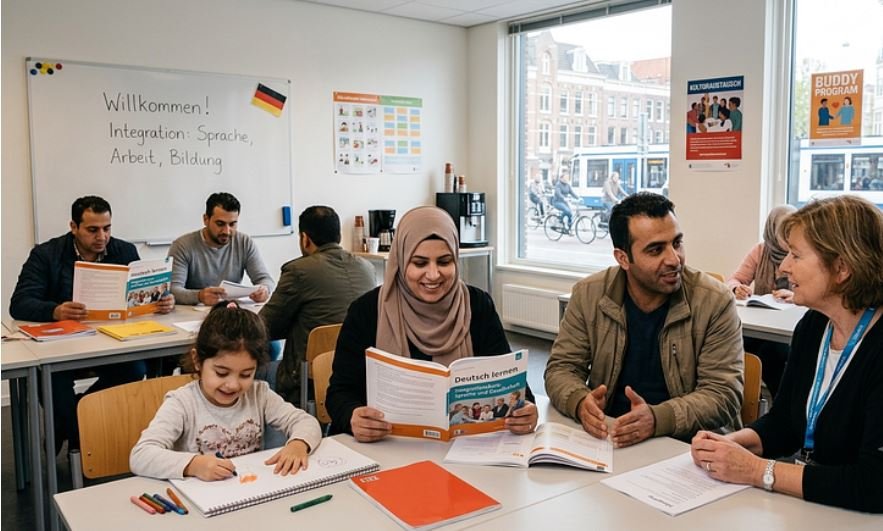
Once the asylum decision is made, the real process begins: language courses, school, work and building ties with society. For those who are rejected, it is life in a legal gap. The final part of the series looks at what comes after the decision.
Social Reality and Integration Processes
The social and human process that begins after the decision is just as critical as the administrative and legal dimensions of the asylum procedure. Whether or not status is granted, people’s struggle to build a life in a new place is shaped directly by legal gaps, integration mechanisms and the socio-political dynamics of the host society.
This article looks at the grey areas after a rejection, integration policies in European countries, opportunities in education and employment, and the impact of rising anti-migration politics on these processes.
Living in a Legal Gap: Life after a Rejected Application
Asylum seekers who remain in the country after exhausting all legal and administrative appeals are described in the literature as “undocumented migrants” or as people in a legal gap. Although formal protection has been withdrawn at this stage, international human rights law and humanitarian aid mechanisms continue to provide certain safeguards.
In many European countries, civil society organisations, churches and local authorities set up emergency accommodation and humanitarian support to prevent people who have lost their legal status from ending up on the street.
- Netherlands: Humanitarian shelters run by the big city municipalities, known as “bed-bad-brood” (bed, bath, bread), meet the basic needs of undocumented migrants.
- Belgium: In winter, emergency shelter initiatives such as the Capacité d’accueil d’urgence are activated to prevent loss of life. The historical tradition of church asylum can also offer temporary protection during deportation proceedings.
- Germany: Duldung (temporary suspension of deportation), which has a distinctive place in the German legal system, is not a residence permit; it is granted when a person cannot be deported for legal or practical reasons (health problems, diplomatic crises with the country of origin or the inability to obtain travel documents). People with this status can be granted access to work, subject to conditions, and to basic healthcare.
In addition, some Southern European countries offer periodic regularisation mechanisms for people who have been undocumented for a certain period and have become socially integrated:
- Spain: Through the arraigo (rootedness) mechanism, people who have lived in the country without permission for a certain period (generally two years since the reform of May 2025) and meet further conditions, such as an employment contract or social ties, can obtain legal status.
- Italy: Depending on labour market needs, undocumented workers are periodically brought into the system through sanatoria (regularisation) schemes.
Language Courses and Cultural Orientation
For people granted international protection or refugee status, learning the language of their new country is one of the most important steps in adapting to a new society. Language proficiency is not just a skill that makes daily life easier; it is also a basic condition for access to education, employment and healthcare and for communicating effectively with public institutions. For this reason, most European countries regard language training and social integration programmes as an integral part of their integration policies.
Concrete examples of this approach can be seen clearly in Germany, the Netherlands and Belgium. In Germany, the integration courses (Integrationskurs) run by the Federal Office for Migration and Refugees (BAMF) usually consist of 600 hours of language teaching and 100 hours of classes on society, law and everyday life. Under the inburgering system in the Netherlands, newcomers are expected to pass language and civic integration exams within a set period. In Belgium, integration programmes differ by region: participation is largely compulsory in Flanders, and in Wallonia it is also compulsory for certain groups of newcomers.
Stages of Social Integration
Integration is not limited to learning the language; it has many dimensions, including education, participation in the labour market and psychological rehabilitation.
Education Rights and Children
Under international conventions, the right to education of asylum-seeking and refugee children is inviolable. Across Europe, all children, regardless of status, have the right to attend compulsory, free state schools.
- Germany: Although it varies from state to state, children are placed in schools within three to six months of arrival. To speed up integration, special language classes known as “Willkommensklassen” (welcome classes) are used.
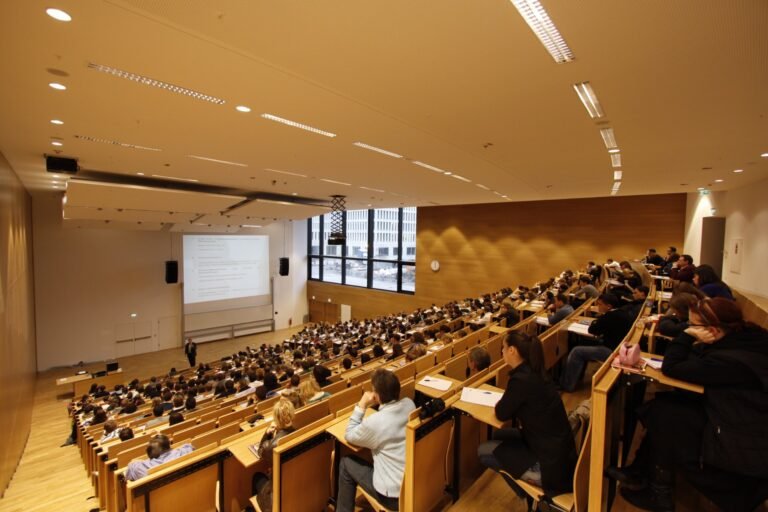
- Higher education: For refugees of university age, there are international scholarships such as DAFI (the Albert Einstein German Academic Refugee Initiative) as well as national and local academic support funds.
Entering Working Life and Bureaucracy
Although people with refugee status have the right to access the labour market, the language barrier, differences in workplace culture and, above all, the process of recognition of qualifications create significant obstacles. In Germany, public bodies such as the Jobcenter run employment projects and traineeships specifically for refugees, while in the Netherlands a BSN (citizen service number) is issued at a certain stage; it is needed for work and other administrative matters, while the right to work itself depends on the person’s status and related conditions.
Psychosocial Support
Easing the effects of war, migration routes and past trauma is critical for the sustainability of integration. There are cultural psychiatry centres and civil organisations specialising in this area. Clinics such as Refugio and the Solingen Trauma Centre in Germany and i-psy in the Netherlands offer refugees psychological support that is sensitive to their language and culture.
Society, Political Parties and the Role of the Media
Migration and asylum are among the most heated topics in European politics and sociology today. Host societies’ attitudes towards refugees are not uniform; they vary considerably depending on local government, economic indicators and geography (between big cities and rural areas).
Political Populism and Its Social Effects
In recent years, the rise of far-right and anti-immigration populist parties across Europe (the AfD in Germany, PVV/FvD in the Netherlands, Vlaams Belang/N-VA in Belgium) has directly affected migration policies and the social climate. The rhetoric of political actors can create anxiety about the future and a sense of legal insecurity among asylum-seeking communities. At this point, it is important to prevent the spread of misinformation and to be aware of the basic safeguards provided by international and domestic law.
Media Perception and Two-Way Adaptation
Crime stories or integration problems involving refugees in the media can fuel social prejudice. On the other hand, successful integration stories and “buddy” (social matching) programmes that bring local people and refugees together play an important role in reducing social divisions.
In conclusion, asylum and integration processes depend not only on individual effort but also on the legal and social infrastructure the host country provides. Although building trust in the police and institutions in Western societies takes time, pursuing one’s rights always through legal and legitimate channels is the most fundamental rule for the process to succeed.
Sources
- BAMF – Integration courses bamf.de
- UNHCR – DAFI scholarship unhcr.org
- Government of the Netherlands – Civic integration rijksoverheid.nl
The views expressed in this article are the author’s own and do not necessarily reflect PUGAT’s institutional position. Editorial Principles
Monthly · free
Compass of the Month
PUGAT’s monthly newsletter.
Read next

What is PUGAT? A non-profit community publishing independent analysis from Europe on security, migration and society in Turkish, German and English.
Go to the homepage