

The US State Department's 2021 Trafficking in Persons Report placed Turkey on the list of countries that use child soldiers. The article examines the grounds of the report and the link to the Syrian National Army.
Turkey has been included in the list of countries stated to use “child soldiers” in the “Trafficking in Persons Report” published by the US State Department in 2021.
In truth, this is a huge black stain smeared on our country’s face, and normally it should dominate the country’s agenda and occupy us for days. But in my beloved country not a day passes without a new scandal, corruption story or natural disaster, so that such a serious matter might stay fresh and those responsible might in the end be held to account.
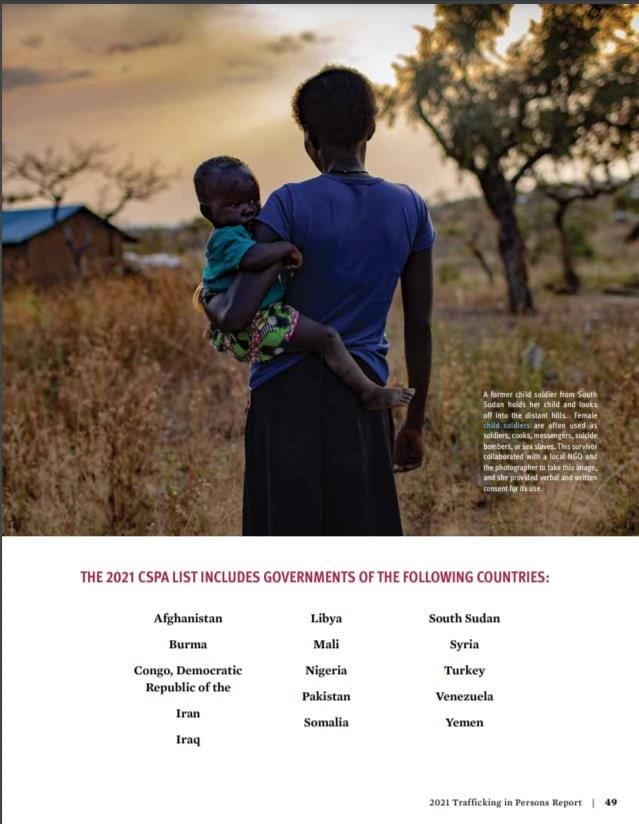
Yes, in the Trafficking in Persons Report published by the US State Department in June 2021, Turkey unfortunately appeared on the list of countries using child soldiers. Our country’s name is mentioned together with countries such as Afghanistan, Iran, Iraq, Libya, Nigeria, Pakistan, Somalia, Syria and Yemen, which are on the list of less developed countries and are governed by anti-democratic systems. So what is it that put our country on such a list of shame? Europe, “envious” of us, or the corrupt leaders of the current political structure?
The “Trafficking in Persons Report” has been published by the US for years. For the first time, a NATO ally has been included in this list. The report is of course not just a list of the names of countries using child soldiers. Some details are also given. For example, it states that the Turkish Government has long given “tangible support” to the opposition Sultan Murad division in Syria, which uses child soldiers, and that it was involved in the civil war in Libya, where child soldiers were employed. Of course, other questions also come to mind. Which country’s citizens are these children sent as soldiers? Who runs this organisation? What benefit do those who organise it gain in return? Many questions come to mind, but there is no institution, police unit or justice mechanism to which we can put them.
So what did Turkey do in response to this report? Was a counter-argument developed, was a counter-report written denying the story? Of course not. Because, unfortunately, what the report describes is true. The Foundation for Political, Economic and Social Research (SETA), a think tank known for its closeness to the AKP, had published a report a year earlier covering the same subject in full detail. That report stated that the Syrian National Army (SNA), backed by Turkey, openly used soldiers of child age.
Burhanettin Duran, a member of the Presidential Security and Foreign Policy Board, who wrote the foreword to the report, says: “The author of the report presents data-based information on the SNA, Turkey’s local ally in Syria, and introduces the SNA and its soldiers to the Turkish public. Although there are various studies on the SNA in the Turkish literature, this report is a first in its field in providing concrete figures and data.” In other words, it is confirmed from the most authoritative mouth that the SNA is an ally of Turkey and that the information in the report is accurate.
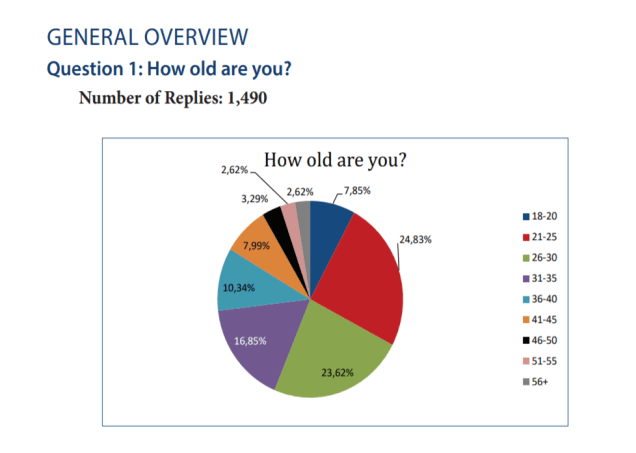
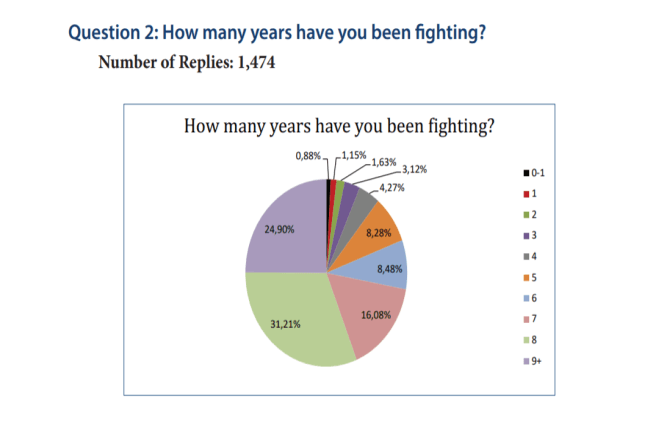
While the report states that 7.85 per cent of the SNA militiamen who answered the survey were between 18 and 20 years old, it says that only 3.66 per cent had been fighting in the SNA’s ranks for 2 years or less. This shows that at least 4 per cent of SNA fighters began fighting in Syria when they were under 18. Shortly after the report was published, officials who had accidentally revealed a truth hastily took the report down. The full text of the report can be accessed at this link.
In another report on the subject published in 2004, a total of 27 countries were placed on the list of countries using child soldiers. Later the use of child soldiers was recognised as a war crime by the International Criminal Court, and as a result of several deterrent measures this number fell only to 17 in 2007. By 2021 the number of these countries of shame had fallen to 15, but unfortunately Turkey, a NATO country, was added to the list. And how painful it is that the grave situation our country has been thrown into did not occupy the country’s agenda for even a single day.
In all the media outlets close to the AKP Government, an attempt was made to paint a picture in which this stemmed from the US’s hostile attitude towards Turkey, in which the US was making such political moves in pursuit of its interests in the region, and in which this was ultimately a trap set for Turkey.
According to a statement by the United Nations last year, 8,500 children were sent to the front in conflict zones around the world, and 2,700 of them lost their lives. The same report stated that violations against children such as killing, maiming, abuse, abduction and child soldiering occurred most in Somalia, Congo, Afghanistan, Syria and Yemen. While Turkey has for years been trying to tell the international arena that the PKK puts weapons in children’s hands and sends them into fighting, by entering the list of countries using child soldiers it has also been placed in the position of a country contradicting itself.
In another report titled “THE CHILD SOLDIERS OF THE PYD/YPG”, published in 2018, the SETA Foundation mentioned above shows that the PKK systematically uses child soldiers in the areas where it is active and examines how this is treated in international law. Like the report SETA took down, this report is based on similar data. Moreover, the subject is supported as a source by many documents, legal texts, books and news reports published internationally. In short, both reports are based on real information and data, rest on solid foundations as sources and reflect the facts. That is, it has been shown with clear documents that both the PKK and the SNA use child soldiers. If a new peace process is launched in the coming days and Erdoğan sits down with the PKK again, this published report too may be taken down for editorial reasons.
In conclusion, the use of child soldiers is prohibited by the United Nations Convention on the Rights of the Child. Turkey signed this convention in 1990 and ratified it in 1995. The politicians who have put our country in such an unwanted situation must pursue a policy that serves our national interests and is in keeping with universal values.
Monthly · free
Compass of the Month
PUGAT’s monthly newsletter.
Read next


What is PUGAT? A non-profit community publishing independent analysis from Europe on security, migration and society in Turkish, German and English.
Go to the homepage