
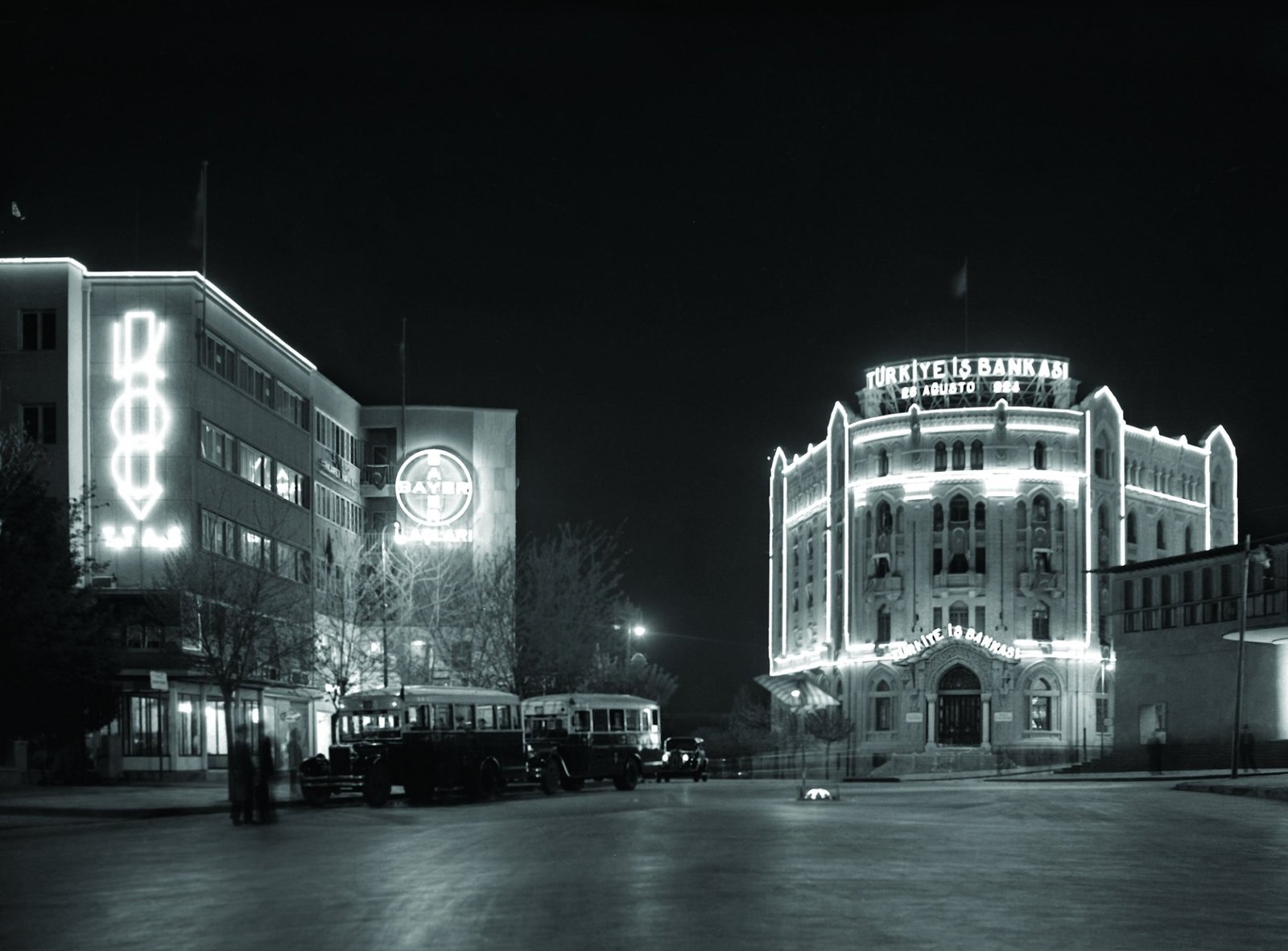
A gravestone in Munich bears the name “Cicero”. The novel-like life of İlyas Bazna, who, as the British ambassador’s valet during the Second World War, sold the Allies’ most secret documents to the Germans.
Image: Directorate General of Press and Information / Wikimedia Commons, No restrictions
In Munich’s Perlacher Forst cemetery there is a gravestone, granite stone number 97, with the name “Cicero” carved on it in capital letters. In this grave lies one of the thousands of forgotten figures of the Second World War, a man who lived a life like a novel.
Last week, after watching the film Cicero starring Erdal Beşikçioğlu, I decided to tell the story of İlyas Bazna, regarded as one of the important spies of the era, which I had prepared long ago but never found the chance to publish.
When he was born in 1904 in Pristina, today the capital of Kosovo, his homeland was still part of the Ottoman Empire.
During the Balkan Wars of 1912, Bazna’s family, along with the millions of refugees streaming south, moved first to Thessaloniki and then to Istanbul. His family sent him to the military school in Istanbul.
When the city was occupied by British, Italian and French troops after the First World War, İlyas Bazna was a lad of 16. He worked as a labourer in a French transport unit and learned French and how to drive.
He was a wild youth: he was thrown into military prison for stealing and wrecking a French officer’s motorcycle, escaped, and committed a few more crimes on the run.
The French military court in Istanbul sentenced İlyas Bazna to three years in a penal colony in Marseille. There he learned French so well that his command of the language would later impress Sir Hughe Knatchbull-Hugessen, the British ambassador in Ankara.
A Weakness for Money, Women and Power
After the war, while singing Western music at receptions in Ankara, the heart of the young republic, Bazna caught the eye of the British ambassador and in 1943 began working as his valet.
In wartime, it was whispered in the foreign missions that Ankara, capital of a strategic country like Turkey, was full of agents, and naturally the whispers reached İlyas Bazna’s ears too.
Bazna began to think that he was suited to the job and that a great opportunity to get rich lay before him. After working there for a while, he made a decision that would affect not only his own life but the lives of millions.
He would become a spy.
First Contact
When he offered his services as an agent to the German Embassy of the day, he did not inspire much confidence. This way of recruiting an agent was suspicious. But in time his performance caught the Germans’ attention.
Like many spies, he was driven by money, pleasure and a passion for power.
After receiving twenty thousand pounds sterling for the first information he handed over, his motivation grew even stronger. İlyas Bazna was not a Nazi, but he was supplying Hitler’s regime with top-secret Allied documents.
He worked with discipline and avoided attention. Every morning he gave Sir Hughe, the British ambassador he served as valet, his immaculately pressed trousers and brushed jacket, and every evening his pyjamas along with a strong sleeping pill.
At first the Germans did not trust Bazna much, a man who offered them photographs of the Allies’ most secret documents and demanded exorbitant sums. But Bazna managed to win over Ludwig Moyzisch, an officer of the Reich Main Security Office in Berlin who was known in Ankara as a harmless commercial attaché.
The SS Officer Says Hitler Will Give Him a Villa
Ludwig, too, was an ambitious officer. İlyas Bazna was now a spy working for Germany under the code name Cicero.
Ludwig’s first task for Cicero was to obtain documents giving the exact location and timing of the bombing raids in the Balkans. If he succeeded, Ludwig said, Hitler would give him a villa after the war.
To get hold of the documents he wanted, Cicero took care to be at the ambassador’s side at every moment.
As time went on, thanks to the Verdi arias and Schubert songs he sang in his fine voice, he became the ambassador’s favourite.
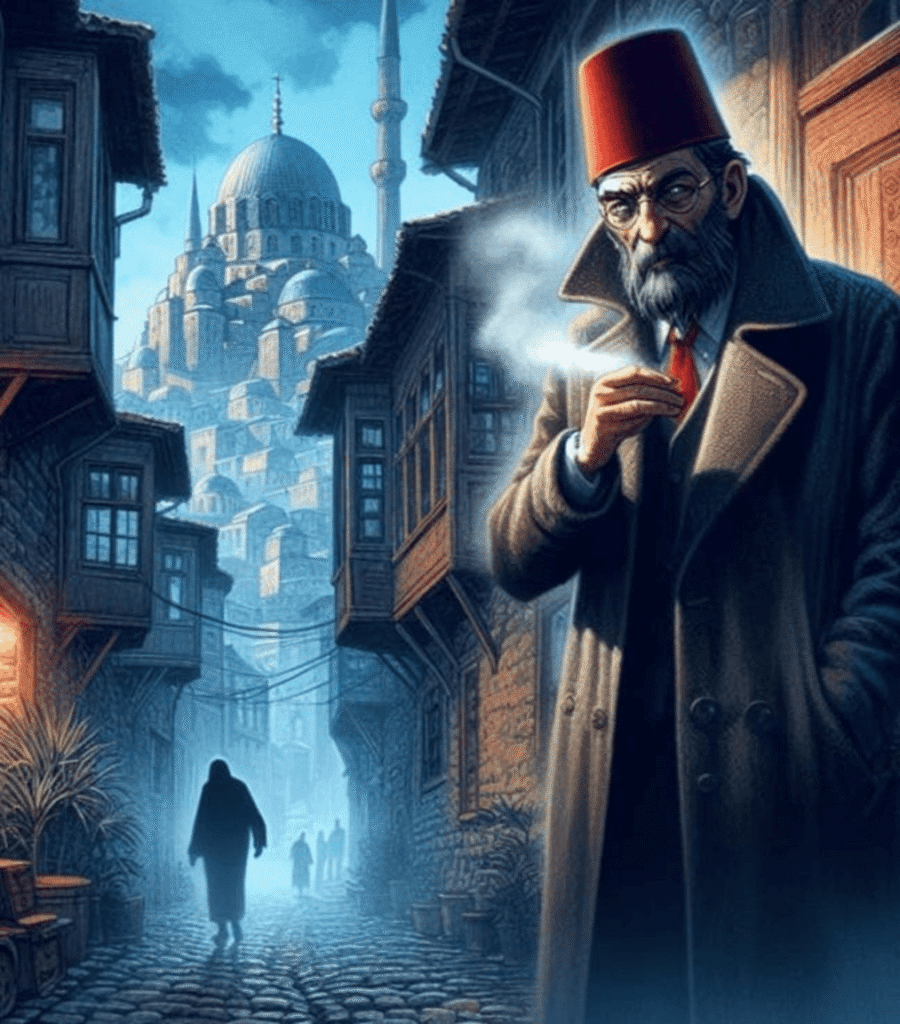
Don’t take “favourite” in a positive sense. The ambassador dressed Bazna in fanciful uniforms of embroidered silk with a Turkish fez on his head, and through him humiliated the Turkish nation in front of his guests. İlyas Bazna, of course, was aware of all this and took his revenge many times over.
Cicero Learned of the Allies’ 1944 Invasion Plans, but the Germans Did Not Believe Him
The documents Cicero photographed were usually papers the ambassador read before going to sleep and left in the cabinet beside his bed. The more important documents were in the steel safe in his study.
When, with German technical help, Cicero managed to copy the key he needed to reach the safe, he entered a new phase. Thanks to the ambassador who had made a monkey of him, he had got into the heart of Britain.
The Name of Operation Overlord
Cicero obtained such documents that before long he attracted the attention of Hitler’s headquarters as well.
Cicero learned the code name of the Normandy landings, which the Allies called “Operation Overlord”, and passed it to the Germans. But this was such valuable information that the intelligence office in Berlin could not believe it; they thought it was British deception and said Cicero was a double agent.
Yet the information proved correct.
Captain Ludwig Moyzisch, Cicero’s contact in Ankara, later described it in his memoirs as follows:
“After the war the British Secret Service, probably to save its own honour, claimed that ‘Cicero had been under their control’. In other words, a double agent.”
Ludwig was right: Cicero was not a double agent. The embassy staff, above all the British ambassador, had underestimated İlyas Bazna, who did not speak a word of English, and paid dearly for it.
Love Is Blind
As I said at the start, Ankara was swarming with spies at that time.
One of them was Cornelia Kapp, who worked as Moyzisch’s secretary at the German embassy while passing information to the Americans. Ms Kapp was a beautiful and impressive woman. According to the film’s version of events, Cicero, who had until then been careful about everything, succumbed to his weakness for women and began to flirt with Ms Kapp.
Before long, Ms Kapp began to suspect that he was the traitor the Allies had been looking for for some time.
İlyas Bazna knew he had given himself away and sensed the approaching danger. One morning in April 1944 he left the embassy with two suitcases of British pounds.
At noon, as the sun was heating the air in earnest, while he waited at the railway station for the Istanbul train with two suitcases of money in his hands, he thought of Sir Hughe, the ambassador who used to have him sing while he bathed, and smiled.
The meaning of that smile was the pleasure of a valet who prepared a hot bath every day, savouring his victory over a short, fat, know-it-all ambassador and the empire he represented.
When things had calmed down, İlyas Bazna returned to Ankara and again set out to do big things. With the foresight that “people all over the world want to forget the war; tourism will boom”, the company he founded began building a hotel on the slopes of Uludağ near Bursa.
At first all went well; even the government helped. Then suddenly banks and some businessmen in Istanbul complained to the police, and counterfeit banknotes began turning up here and there.
Until then Bazna had been enjoying the life of luxury, unaware that his new life was a balloon about to burst. Because the Turkish state was also a partner in the consortium, a huge scandal broke out, construction of the hotel was halted, and İlyas Bazna was arrested.
Yes, the British pound notes that İlyas Bazna, code name Cicero, had received from the Germans for his services were indeed counterfeit.
The notes printed by the Nazis at the Sachsenhausen concentration camp north of Berlin to damage the Bank of England had been used in Turkey too. Apart from the first twenty thousand pounds, all the payments had been made in this counterfeit money.
In his memoirs, Bazna describes how the story of this money followed “a strange path”, beginning and ending in Turkey:
“At the start of the war Turkish textile mills were sending linen to Germany. Such fine material could not be found anywhere else. This Turkish linen was later turned into paper of the kind used by the Bank of England and used to print counterfeit money.”
Last Stop
After his false wealth, İlyas Bazna was back where he had started. He was now a poor man. He moved into a modest flat in Istanbul’s Laleli district, remarried and had four more children.
Finding nothing to ease his pain, he wrote to German Chancellor Konrad Adenauer asking for help because he had once served the “German Reich”. By then no one wanted to hear about such things. In the reply, his requests were politely refused.
When he emigrated to Munich as a guest worker in 1960, he knew he was really too old to be a worker. He barely managed to find a job as a night watchman at a factory and also worked on his memoirs.
He died in Munich on 21 December 1970.

Sources
- L. C. Moyzisch, Operation Cicero (1950)
- Richard Wires, The Cicero Spy Affair (1999)
The views expressed in this article are the author’s own and do not necessarily reflect PUGAT’s institutional position. Editorial Principles
Monthly · free
Compass of the Month
PUGAT’s monthly newsletter.
Read next


What is PUGAT? A non-profit community publishing independent analysis from Europe on security, migration and society in Turkish, German and English.
Go to the homepage