
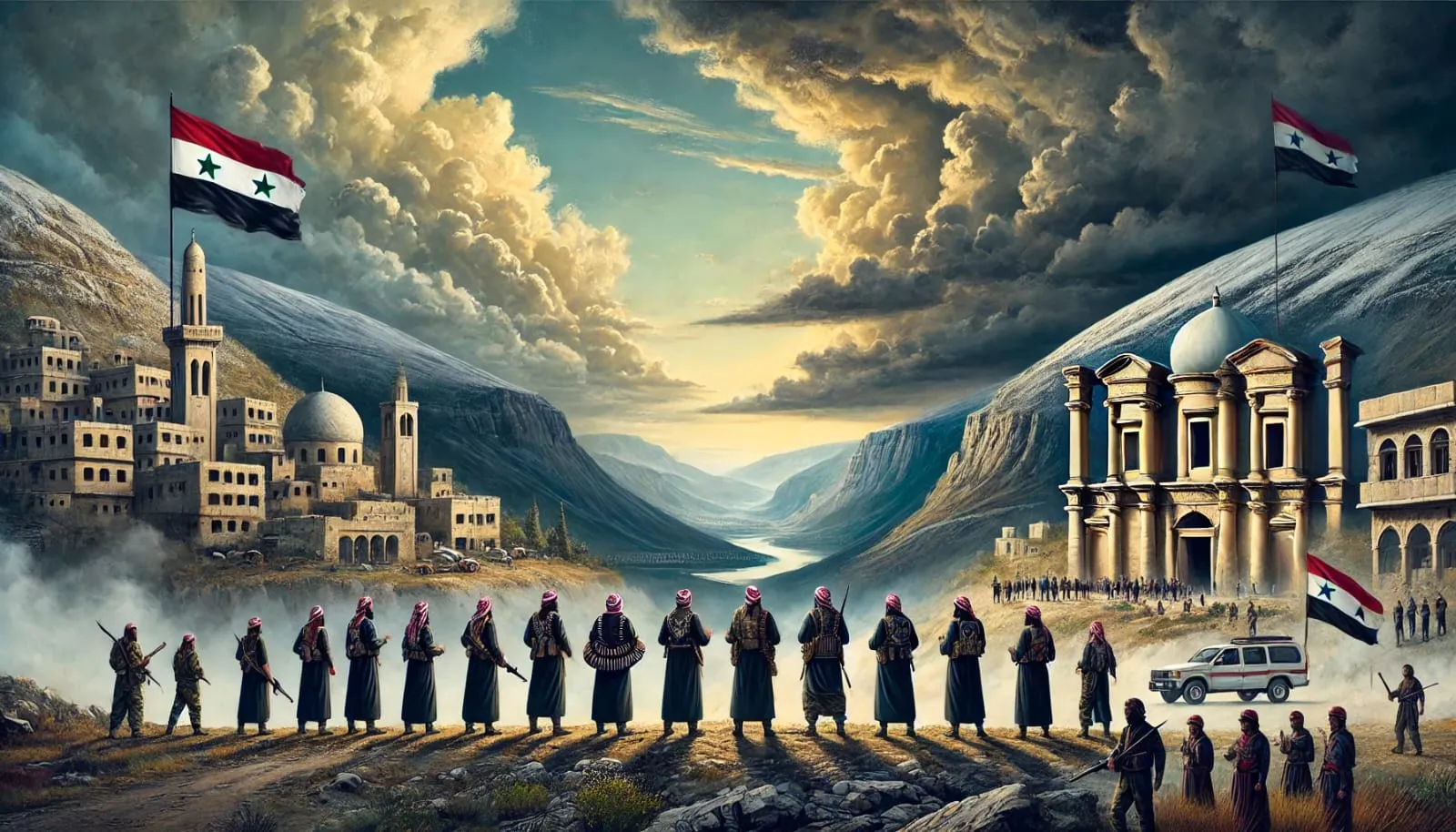
Druzism is a belief system, but with their strong identity the Druze are perceived almost as a separate people. With influence far beyond their numbers in Lebanon, Syria and Israel, this community holds a critical position in Syria’s new balances.
Although I call them a “people” in the title, Druzism is in fact a belief system. Over time the Druze have built such a strong cultural and social identity that it has become inevitable for them to be perceived as a separate people.
Having preserved their identity throughout history through a closed social structure, the Druze have carved out a place of their own in the social, political and military balances of power. Today, the new political balances and uncertainties that have emerged in Syria raise many questions about the future of this community.
In this article we will look at the influence of the Druze in history and in the modern period, the power they hold and the new challenges they face.
The Birth and Historical Development of Druzism
It emerged in the 11th century with the acceptance of the Fatimid Caliph al-Hakim bi-Amr Allah as a divine figure. Hamza ibn Ali, regarded as the founder of the faith, shaped this teaching. Druzism is notable for its strict commitment to monotheism and its belief in reincarnation. A large part of its religious texts is reserved for those initiated into the doctrine, known as the ‘uqqal.
Throughout history the Druze have been regarded as heretics by other sects and excluded. While this usually pushed them to live in isolation in mountainous regions, it also led them to become masters at preserving their religious identity and developing political strategies in order to survive in the complex structure of the Middle East.
Having gained semi-autonomous status in Lebanon in the Ottoman period, the Druze at times played an active role in regional power struggles. In the 19th century, as the Ottoman Empire weakened, bloody clashes with the Christian Maronites, particularly in Lebanon, left a deep mark on the community. Nevertheless, there were later attempts at reconciliation between the Druze and the Maronites.
Today, the roughly 1 to 1.5 million Druze living in Lebanon, Syria, Israel and Jordan stand out not only as a religious minority but also as an influential community with social, political and military power.
The Druze in Israel: Loyalty and Privilege
Since Israel’s founding in 1948, the Druze have stood out as the group most loyal to the state among non-Jewish communities. That they are one of the two non-Jewish communities, together with the Circassians, obliged to serve in the Israel Defense Forces (IDF) is a sign of this loyalty.
In the Israeli army the Druze have the opportunity to rise not only as soldiers but up to the ranks of officer and general. Druze generals such as Amal Asad and Imad Fares have taken part in major army operations. This has raised both the economic and the social status of the community.
The Druze’s attachment to Israel has set them apart from other Arab communities. While this has drawn criticism and even hostility from pro-Palestinian Arabs, it has also caused divisions within the community. In the bigger picture, however, the privileged place the Druze have gained in Israeli society has been a gain for the Druze in other countries of the region.
The Druze of Syria
The Druze in Syria, whose number is estimated at about 700,000 to 750,000, live mainly in the Suwayda region.
Although they tried to remain neutral throughout the civil war, they were at times targeted by the Assad regime, opposition groups and ISIS. Known as a warrior community, the Druze managed to build a strong self-defence mechanism. Even so, the ISIS attacks on Suwayda in July 2018 killed hundreds of people, and many Druze were taken hostage.
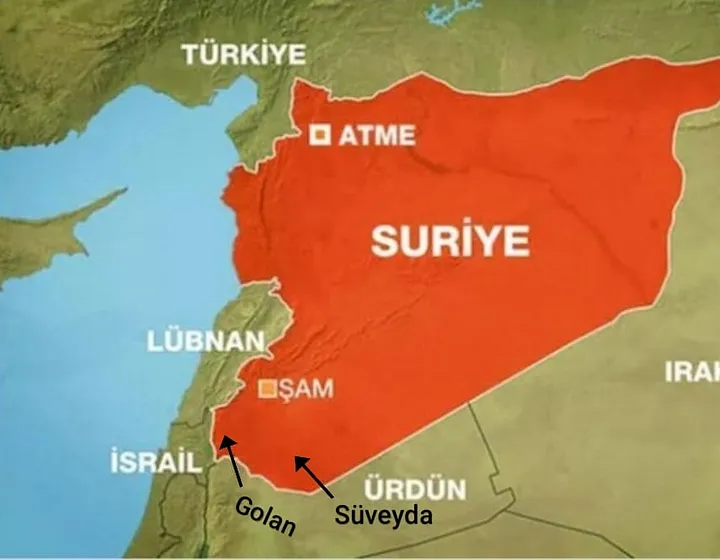
In the new picture emerging in Syria, the approach of the new administration led by Hayat Tahrir al-Sham (HTS) towards religious minorities is still full of uncertainty. So far, however, HTS has not made any direct or indirect threat against the Druze. Among the most important reasons for this are that the Druze, although few in number compared with other minorities, form an influential force politically, economically and militarily, and the close relations they have built with Israel. Update (October 2026): The situation changed fundamentally after this article was written. In clashes in Druze towns near Damascus in April–May 2025 and in Suwayda in July 2025 between the Druze on one side and Bedouin tribes and forces linked to the government on the other, more than a thousand people were reported killed, most of them Druze; Israel struck government forces entering Suwayda and targets in Damascus. As of October 2026, Suwayda is largely controlled by armed groups close to Sheikh Hikmat al-Hijri, and relations with Damascus remain deadlocked.
The Importance and Future of the Druze in the Middle East
The Druze hold a special place in the Middle East’s balance of religion, politics and military power. While they are accepted as a privileged minority in Israel, in Syria they are fighting for their status. Their closed social structure and strict rules offer both advantages and disadvantages in the strategies they have developed to preserve their identity.
The Druze are trying to strike a balance between preserving their traditional values and globalisation. This process affects both the dynamics within the community and its relations with the outside world.
Conclusion
Druzism is not only a religious belief but also a political and social identity. Despite the oppression they have faced in every period of history, the Druze have developed effective strategies to preserve their identity and gain power in the complex conflict dynamics of the Middle East.
Bold enough not to shy away from clashing with the superpowers of their time, from the Crusader armies to the Ottoman armies, this community has also managed to achieve many gains through the art of politics. In the final analysis, their privileged position in Israel and the uncertainty in Syria increase the importance of this community in the Middle East.
The future of the Druze seems to depend on their ability to adapt both to the demands of the modern world and to the ever-changing political balances of the Middle East. Will their closed, secretive social structure and historical pragmatism help them find a way through this difficult period? We will all see.
Sources
- TDV Encyclopaedia of Islam – Druze islamansiklopedisi.org.tr
- Harvard Divinity School – Druze in Syria rpl.hds.harvard.edu
- National Library of Turkey – Druze and Druzism dijital-kutuphane.mkutup.gov.tr
- Al Jazeera – Suwayda remains in deadlock (26 October 2026) aljazeera.com
The views expressed in this article are the author’s own and do not necessarily reflect PUGAT’s institutional position. Editorial Principles
Monthly · free
Compass of the Month
PUGAT’s monthly newsletter.
Read next


What is PUGAT? A non-profit community publishing independent analysis from Europe on security, migration and society in Turkish, German and English.
Go to the homepage