

Democratic or totalitarian, states sometimes step outside the rules they have set themselves. Assassinations and terrorist attacks are among the darkest tools of covert operations, and the truth often comes out far too late.
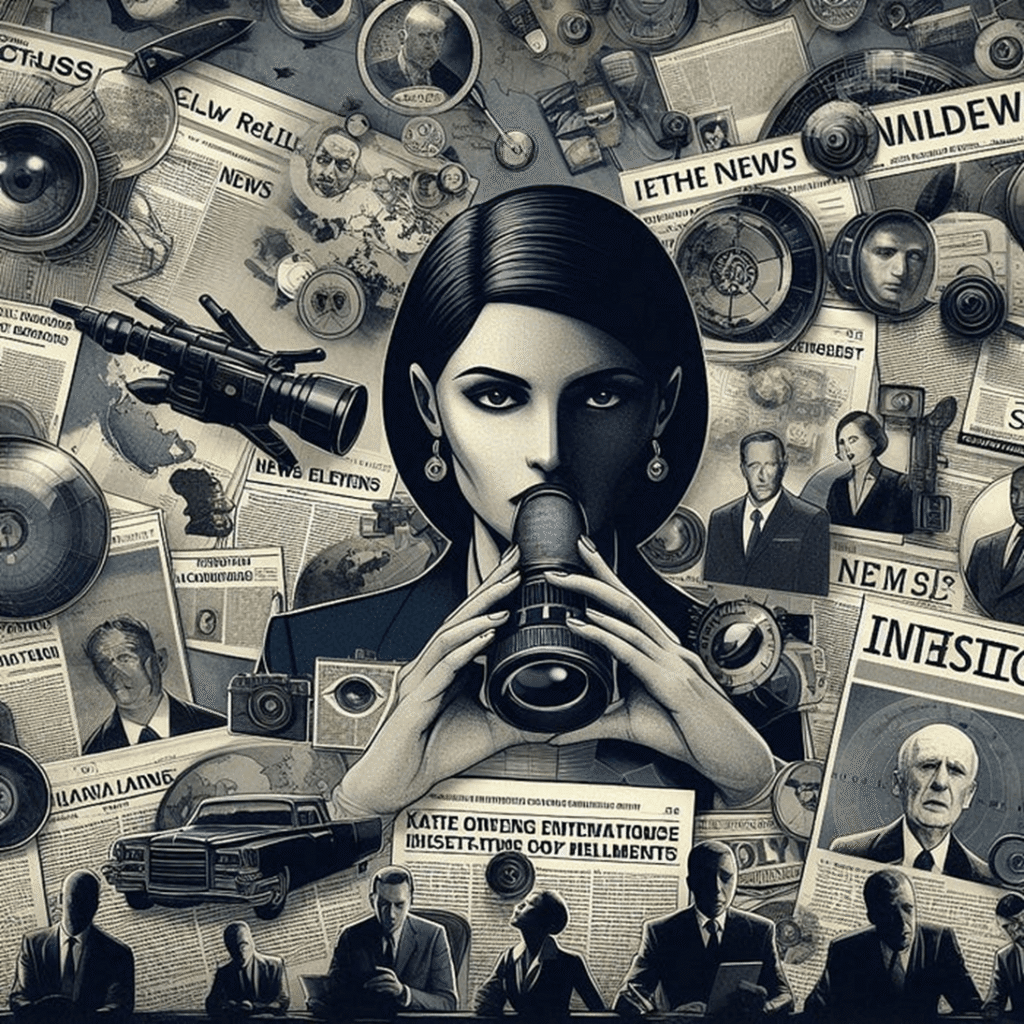
Image: In-text image: created by the author with AI
As the guardian of social order, the state makes laws and ensures that they are applied fairly.
But if the state does not obey the rules it has made itself, it is no different from a gang. Every country, from democracies to authoritarian regimes, claims that its laws are being upheld, because preserving the legitimacy of state authority is essential.
In democracies and semi-democratic systems it is vital to protect the standing of state authority in the eyes of the people; in totalitarian regimes the situation is different.
To avoid a crisis of legitimacy internationally, totalitarian governments give the impression that the laws are being obeyed.
Yet democratic states and totalitarian regimes alike may, for various reasons, use methods that allow them to step outside the limits set by law, at home or in other countries. In the literature these methods are called “covert operations”, and they usually serve the hidden agenda of state authority.
Controversial as they are, covert operations are established foreign and domestic policy tools that many countries use regularly. In step with humanity’s progress over the last century, these operations have become ever more sophisticated.
The Main Methods of Covert Operations
• Creating political groups in the target country or influencing existing ones.
• Running black propaganda campaigns against opponents or against the government in power in order to sway public opinion.
• Conducting paramilitary activities (using civilians with military training) through elite units such as special forces.
• Encouraging the use of every kind of illicit money source, above all drug trafficking, to finance operations such as black propaganda. Example: the Iran–Contra affair
• Setting up illegal structures under the guise of action against terrorist groups (example: Turkish Hezbollah in the 1990s)
• Supporting or manipulating terrorist groups.
• Clearing the way for the mafia.
• Carrying out political assassinations and kidnappings
• Carrying out sabotage and bombings, or having them carried out
• Spreading disinformation through the press and media.
Each of the headings above can be applied directly as a covert operation, or it can be used to conceal another covert operation.
It is in the nature of the business that the public learns of such activities only in exceptional cases or after a very long delay; that is why, despite their considerable political consequences, covert operations cannot be fully investigated by the legal system or the media. In a complex web of events, the public is steered towards conspiracy theories.
After the terrorist attack in Moscow, videos of terrorists brutally killing people caused outrage on social media. Conspiracy theories spread in the aftermath. Before, during and after the attack, even the capture of the perpetrators, their interrogation in front of cameras and the release of that footage, bore the hallmarks of psychological operations. In the end, dozens of brutal videos of the attack reached billions of people through television screens and social media and created outrage, fear, anxiety and confusion in public opinion, exactly as the planners intended.
So How Does It Work? Why Does the Truth behind Assassinations and Terrorist Attacks Remain Hidden?
Let us try to answer these questions in the rest of the article.
From Julius Caesar to John Kennedy, assassinations and massacres that changed the course of history have caused many world-shaking ruptures through their consequences. States, which should guarantee life, have at times been accused of being behind many political assassinations. That is why methods such as assassinations adopted by those who run the state as a covert-operation tool, or terrorist acts like the one in Moscow, have remained in use in almost every era.
The nature of covert operations carried out through assassinations and terrorist acts changed after the Second World War, above all with the arrival of nuclear weapons technology. The existence of nuclear weapons made states reluctant to fight each other directly. This strengthened the tendency towards conflict through indirect methods such as covert operations. The key feature of assassinations in the post-war world order is that they are more complex and those who ordered them are much harder to identify. Another feature of this period is that, along with the rise in mass killings, the victims include more heads of state, senior officials, police officers, soldiers and intelligence officers than before.
Looking closely at political assassinations and attacks, two methods can be said to stand out.
The first method is the “sting operation”, in which, depending on the target and the aim of the assassination, an agent provocateur engages potential individuals, who will later become part of a criminal investigation, and persuades them to commit a crime. In this view, the terrorists in the Moscow attack, and even the terrorists several levels above who gave them their orders, are all the outermost doll of the matryoshka, the ones who were persuaded. The role of the agent provocateur, also called the “catalyst element”, in political assassinations is to conceal the real perpetrator of the covert operation.
Such operatives should not be confused with those used by intelligence services for crime-prevention intelligence. Catalyst elements may be people of that kind, but they may also be senior, educated people with status. What must not be forgotten is that in assassinations and attacks carried out as covert operations, the aim of the perpetrator and the aim of the power instigating them in the background are different.
The second method is “provoke and let it happen” operations. Among groups under surveillance, a group capable of carrying out assassinations and attacks is first provoked, then expected to act through the space deliberately left open. As an example, let us take the DHKP-C terrorist organisation’s latest attack on the police checkpoint in front of the Istanbul Palace of Justice in Çağlayan.
Prepared to die, the militants attacked the police checkpoint at the courthouse entrance; one civilian lost her life, police officers and civilians were wounded, and both attackers were killed. The “fedai action”, the suicide-style attack, is a method frequently used by organisations such as the DHKP-C and the PKK. In such attacks, the most important message to the organisation’s base is that “the militant runs towards death for the sake of the cause”. The “fedai” carries out the attack as ordered within the organisation’s hierarchy and “sacrifices” himself. Among left-wing organisations the DHKP-C is known as “the sharp vinegar of the left”, and it is not an organisation that expects the support of the broad masses. If it is “provoked”, it does not postpone its attack according to the circumstances.
In the bigger picture, whose interests an attack serves is not something such organisations care about. For an organisation no one had heard of to become the focus of the world’s attention after the Moscow attack is an opportunity that terrorist organisations, even when they act as subcontractors, dream of.
What Is Needed to Avoid Falling Victim to Covert Operations?
It is important that the state’s activities are disclosed transparently to the public and carried out within the legal framework and under public scrutiny.
Ensuring the separation of powers and strengthening independent judicial bodies is essential to preventing covert activities and bringing perpetrators to justice.
Protecting freedom of expression and freedom of the media matters for informing the public and holding the government to account. Independent media should be supported and censorship prevented.
Supporting the work of civil society organisations and encouraging participation helps strengthen democratic processes and prevent covert activities.
The views expressed in this article are the author’s own and do not necessarily reflect PUGAT’s institutional position. Editorial Principles
Monthly · free
Compass of the Month
PUGAT’s monthly newsletter.
Read next

What is PUGAT? A non-profit community publishing independent analysis from Europe on security, migration and society in Turkish, German and English.
Go to the homepage