
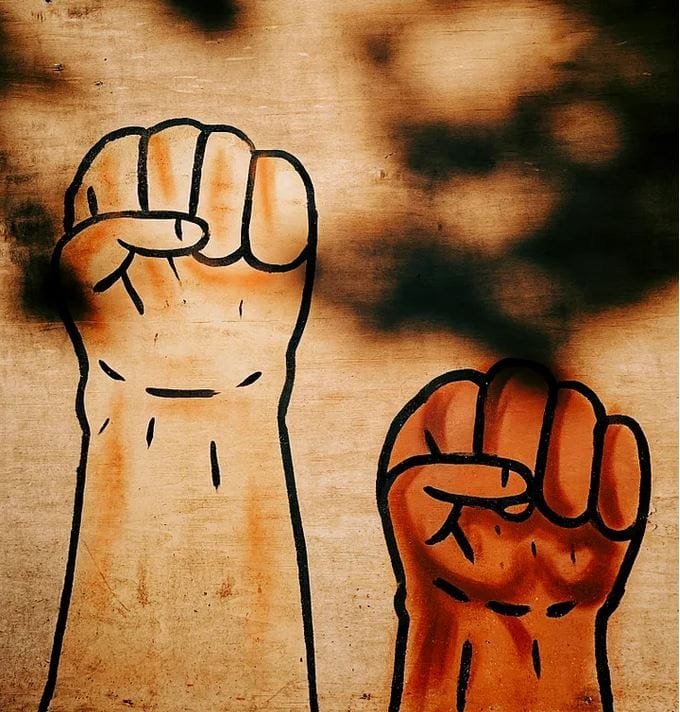
Does talking about justice change anything in an environment where lawlessness has taken root? For the author, the greatest danger is the belief, growing stronger every day, that speaking will come to nothing.
Is there any point in talking about law today? In an environment where lawlessness has taken such deep root and spread so widely, can talking about justice really change anything?
We believe that law is the main pillar of social order. We think it exists to secure justice, to gain rights or not lose them, and to protect individuals against arbitrary interference.
At the same time, we are faced with the fact that the gulf between law existing and law functioning, between our expectations and the reality that emerges, is the source of major social problems.
What happens where there is no justice? Arbitrariness reigns, might is considered right, rights are taken from those seen as weak, and this process becomes taken for granted. People first fly into fits of anger, then grow tired, and finally accept the situation they are exposed to with something like learned helplessness. And this acceptance, in any case, ensures that oppression continues.
Law turns into a mechanism of power in the hands not of justice but of those in power. Who the guilty are is decided not according to the law but according to the interests of the political power. Courts are shaped according to the strong, opponents are cowed. And society, despite witnessing a new violation of the law every day, applauds the leading actors (whether they are good or bad) as a silent and contented spectator.
Of course, the danger is not only that those in power trample on the law. The silence of the political and social opposition in the face of lawlessness, and at times even its complicity, makes this bad system sustainable. Instead of waging a real struggle for change, the opposition prefers to stay within the limits of the system. This passivity makes injustice an inevitable fact. And in the end silence normalises injustice.
Yet defending the law is not merely a matter of nostalgia; it is also an effort to shape the future.
History has shown again and again that the most oppressive periods prepared the ground for the greatest changes. Today history is repeating itself, and the present state of deliberately not speaking stands before us as a sign that tomorrow we will lose the law completely.
The Anatomy of Silence and Helplessness
Societies do not collapse all at once. Oppression becomes normal over time and evil becomes banal. First the brave speak, then their voices are muffled, then everyone falls silent, and from that point on only fear speaks.
Is silence only a matter of fear? Of course not. And a greater threat than silence is the belief, growing a little stronger every day, that speaking will come to nothing. People have accepted that the law no longer works. Seeing that every reaction to an injustice comes to nothing swells the crowd of the silent even further.
Almost everyone who defines themselves as an opponent now weighs their words. Resistance to oppression has been replaced by adaptation to oppression. Reactions to lawlessness have become more controlled, feebler.
Becoming inured is the most dangerous state. When lawlessness continues for a long time, a large part of society perceives it as normal. Many people no longer even count injustice among their personal troubles.
So how can we break this silence?
First of all, we must resist the normalisation of lawlessness. We must always remember that fear is a shackle and that only resistance can break it. For justice can only be brought into being by those who demand it.
The Meaning and Impact of Talking about Law
So is there any point in talking about law today? In an environment where lawlessness has taken such deep root and spread so widely, can talking about justice really change anything? It is one of the questions we ask most often and to which we seem condemned to hear or voice the most hopeless answers.
The value of law in a society is measured not by how much it is talked about but by how much it is silenced.
Law lives not only in the courts but in the conscience of society. Lawlessness grows strongest when the voices defending the law are cut off. If talking about law loses its meaning, lawlessness has already won and we have all become living slaves.
Silence is the murderer of justice. Defending it is not an intellectual effort but a struggle for existence. Explaining today how law has turned into an instrument of oppression is not possible by claiming that the law still exists. One has to expose how it has been usurped. And the way to do so lies less in wishes than in laying bare the shackles that surround our existence.
An Indifferent and Unconcerned Society
Whereas under normal circumstances violations of the law should make headlines as scandals, today people consume injustices like the headline of a celebrity story.
So how does a society come to this? The main reason is that people do not care that standing by in the face of injustice means becoming complicit in it. The most dangerous aspect of lawlessness is getting used to it. And this is exactly where the vicious circle begins: Anger gives way to indifference, and indifference cements oppression.
Law can become the common ground of society only when it is defended. If injustice is merely watched, one day everyone will find themselves as a victim inside the scene they were watching.
That is exactly what we are living through. Those who bring the drama in their own neighbourhood to the headlines do not hear the groans in the neighbourhood opposite or next door. Those poisoned by power, those spewing hatred out of resentment and those dizzy with the desire for revenge all act on the same motivation: “As long as the law serves me, justice is done. My own troubles are enough for me.”
What Is to Be Done? Silence or Struggle?
In an order where justice has vanished, this is the most fundamental question that burns in one’s mind: What is to be done?
Some choose to remain silent. Because they think speaking will change nothing.
Some stay silent to protect themselves. Because raising one’s voice has a price.
And some fight. Because they know that the price of silence will be much heavier.
Today, under despotic regimes, the legal system, the perception of it and the struggle for it are trapped between these three options.
Every stance that focuses on winning rather than on making the road safe is bound to be defeated one day. Fine, but how?
The day we understand that we must fight not only to win but also not to lose, we will have taken our place among the winners. Rebuilding the law is not only the task of lawyers or politicians. It is the responsibility of everyone who wants justice, and indeed of everyone who needs it.
Hope and Resistance
Today it is being imposed on society, openly or by implication, that injustice is fate. In this way an attempt is made to break society’s will to resist. Yet history’s greatest transformations began in the darkest periods.
History tells of the winners in a single sentence, but of those who resisted in stories of heroism. Even if not in official history books, this is how it happens in the memory people pass on. And the real winners are those who resist.
Lawlessness never ends of its own accord. But no regime of oppression lasts forever either. Oppression inevitably gives birth to its opposite.
So where is hope?
Hope lies in choosing not to be silent, in solidarity, in resistance.
Yes, resisting is hard today.
But tomorrow it is those who speak, not those who stay silent, who will win.
History will write not of those who stayed silent, but of those who resisted.
Justice has returned even in the darkest times.
And it will return again.
The views expressed in this article are the author’s own and do not necessarily reflect PUGAT’s institutional position. Editorial Principles
Monthly · free
Compass of the Month
PUGAT’s monthly newsletter.
Read next


What is PUGAT? A non-profit community publishing independent analysis from Europe on security, migration and society in Turkish, German and English.
Go to the homepage