The Optimal Target in the Opposite Camp: Metin Gürcan
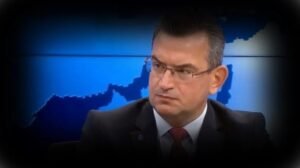
The arrest of former soldier and security expert Metin Gürcan on espionage charges raised the question of who is chosen as a target in polarised politics, and why.

Format
The arrest of former soldier and security expert Metin Gürcan on espionage charges raised the question of who is chosen as a target in polarised politics, and why.
We are a society that can stay estranged from relatives for years. The author asks how the same grudge is reflected in the state’s foreign policy and domestic politics, and how the “land of peace” produces its own enemies.
Almost every era begins or ends with a migration. The author asks why people who have lost hope leave their countries and what brain drain costs a country.
Armin Laschet, nicknamed “Turkish Armin”, was the favourite in Germany’s 2021 election but lost through small mistakes. The author comments ironically on the lessons the German election holds for Türkiye.
Has ASELSAN been sold, will military land be sold? The author criticises “political trading” in a political order where even the state’s most vital institutions can become the subject of bargaining.
Fifty-six specialist sergeants serving in Libya were dismissed for filing a collective complaint of mobbing with CİMER. Through the battalion commander’s words, the author questions the notions of hierarchy and honour in the army.
Espionage is one of the easiest crimes to allege and the hardest to prove. Starting from Metin Gürcan’s arrest, the author questions the political use of espionage charges.
The fire that broke out in the Reichstag building on 27 February 1933 opened Hitler’s path to absolute power. The third part of the self-coup series tells the most famous example in history.
King Cleomenes III of Sparta moved against the institutions of his own state to make his power absolute. The second part of the self-coup series tells the first known example in history.
Young men who harm themselves to avoid military service, people who burn their property to collect insurance… Can states take a similar path? The first part of the self-coup series.
From an adviser who uses cocaine to a police officer dealing drugs, one scandal after another is coming out. The author argues that these revelations stem not from investigative journalism but from the powerful’s “nothing will happen to me” attitude.
Cement holds a building together; law holds a society together. A commentary on law as the mortar that keeps society together when conscience, morality or religion alone are not enough.
After the trench operations, the government’s answer to the Kurdish question was TOKİ housing and trustees. The author comments on the impasse in which, although the people chose the HDP at the ballot box, the PKK’s guns remained decisive.
Like the Irish soldiers written off in the Siege of Jadotville, the soldiers in the trench operations paid the price for political mistakes. The author asks where the responsibility lies.
Love of the homeland is more than attending martyrs' funerals or competing over crowd size at rallies. The fourth part of the Collective Consciousness series looks at how values are wrongly coded into minds.
Topics
Latest articles