
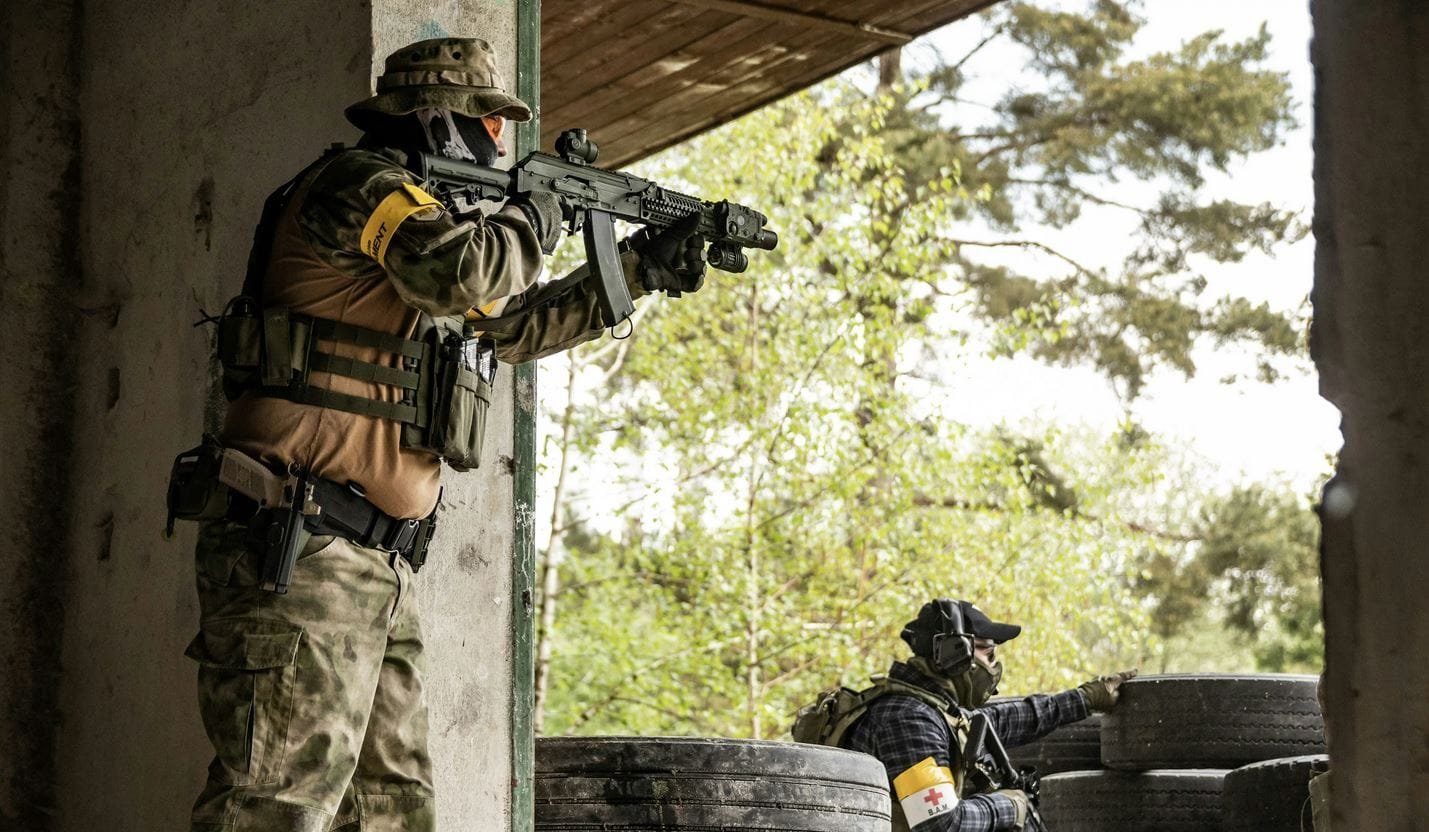
The West gives Ukraine enough support not to lose, but not enough to win. Even so, whenever “game changers” such as HIMARS, Storm Shadow and sea drones arrived, the course of the war shifted.
Image: In-text images: Krišjānis Kazaks, Timon Studler / Unsplash
Led by Britain, the Western powers had promised Ukraine weapons, ammunition and financial support, but it turned out that there was a limit to the support they would give.
Wary of Russia’s wrath, these countries give Ukraine only enough support to defend itself or to slow the Russians down. Unfortunately, this support falls far, far short of what would be needed for a Ukrainian counter-offensive or for Ukraine to gain a position of deterrence.
The most serious criticism from experts is that the aid given to Ukraine will not take the war beyond the operational level.
In other words, wear the adversary down and weaken it, but do not deal the fatal blow. Military experts call this war a “war of attrition”. What it means is this: neither Russia nor Ukraine should win.
The ultimate goal is to push Russia’s military strength down to lower levels, to gauge its readiness for war and, in the long run, to create an economically impoverished Russia.
The list of support Ukraine would need to win the war is endless. Yet it is an undeniable fact that weapon systems supplied by the West in particular have changed the course of the war.
A look at the chronology of the war shows that whenever Ukraine received superior technology, it retook lost territory, halted Russian offensives and strengthened its position. The list of technology and equipment described by military experts as “game changers” in this war, able to tip the balance, is not that long.
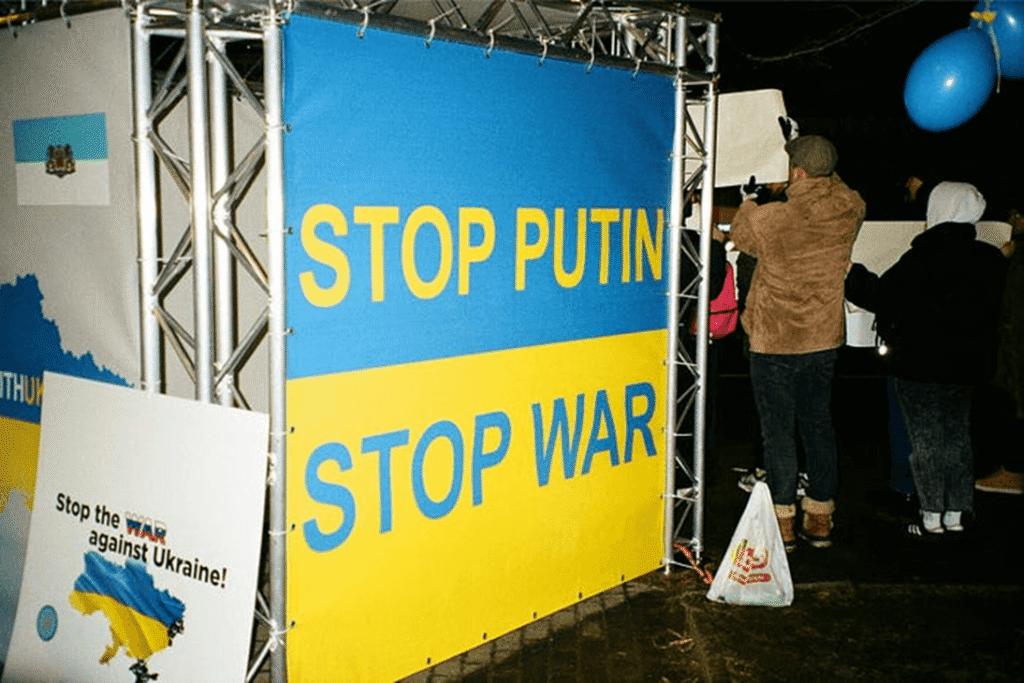
The First “Game Changer” to Join Ukraine’s Ranks: the American HIMARS
This rapidly deployable, highly mobile rocket system fired its first salvos at Russian positions with slogans of revenge for looting, massacre, rape and destruction, and soon hit dozens of Russian supply depots, air defence batteries and command posts.
Known as “sniper artillery” for hitting targets close to civilian settlements with pinpoint accuracy, HIMARS gave Ukraine both firepower and hit-and-run capability. These mobile artillery systems, which overshadowed Russia’s tactical superiority, were promptly acquired by the armies of Latvia, Estonia and Poland as well.
HIMARS, which entered the US Army’s inventory in the 2000s and was also used in Iraq, badly dented Russian morale, but this tactical advantage did not last long. Hit on its own ground for the first time, Russia soon adapted to HIMARS’s destructive capability. It moved its logistics areas and headquarters out of HIMARS range and blunted the rockets’ effect with electronic warfare.
The Second “Game Changer”: Storm Shadow (SCALP)
An air-launched cruise missile developed by Britain and France.
Its most important success was hitting the Chonhar bridge, which links Crimea with the Russian-occupied part of the Kherson region. Besides a warhead of about 450 kilograms and stealth features, Storm Shadow has technology that lets it fly only a few hundred metres above the ground to avoid detection. That is why it is so important for Ukraine’s counter-offensive.
The missile’s range of some 250 kilometres (155 miles) allows Ukrainian jets to launch it while staying out of range of Russian air defence systems.
The Third “Game Changer”: Sea Drones
Having lost about 80% of its navy with the occupation of Crimea, Ukraine is trying to stay afloat with weapons and tactics of its own design, because of the West’s sluggishness in delivering arms.
Indeed, because of the new methods adapted to the battlefield, the Ukraine–Russia war has been likened to a military technology laboratory. The famous sea drones (Magura and Sea Baby) are among the weapon systems Ukraine has very successfully brought to the battlefield.
These uncrewed boats, about five metres long, can be remotely steered up to 800 kilometres. Able to stay at sea for 60 hours, the small boats are equipped with cameras, GPS and explosives. Thanks to sea drones, Russia’s advantage at sea appears to have been broken.
Since the start of the war, 20% of the missiles falling on Ukrainian territory had been fired by the Russian navy; when the drones went into action, Russian sailors were left stunned and silent for a long time.
Ukraine was so successful in its tactical attacks on surface and underwater targets that roughly a third of Russia’s Black Sea Fleet was destroyed. Soon afterwards, the famous admiral commanding the Black Sea Fleet, who had successfully led the navy in the Syrian operations for a full seven years, was immediately removed. Some ships of the Black Sea Fleet were also moved from offensive to defensive positions.
In military terminology, Ukraine’s tactic of attacking a huge navy with small drones, and ultimately succeeding, is called “asymmetric warfare”.
Nor should the impact of drones used in air attacks be overlooked.
The most prominent in this drone fleet are drones supplied from Turkey and Taiwan.
The Fourth “Game Changer”: the F-16
Because of surface-to-air missiles (SAM) and anti-aircraft artillery (AAA), neither country can be said to have full air superiority.
The fighter jets’ first role will probably be to support air defence by intercepting cruise missiles. Given Ukraine’s limited air defence capacity, the F-16s to be supplied will relieve Ukraine’s air defences.
The F-16s’ second task will be to disrupt Russian air defences, because with the HARM missiles they carry they can attack anti-aircraft systems directly. Russian air defence systems exposed to such attacks will be so costly that they cannot be replaced once destroyed.
Dozens of F-16s from the air forces of Norway, Belgium, the Netherlands and Denmark are due to join the Ukrainian air force, but unfortunately the F-16s alone will not be enough. Pilot training, support crews, communications, early-warning systems and munitions are also needed. Building this infrastructure takes years and cannot be fully fielded during a conflict. (Update: The first F-16s reached Ukraine in August 2024.)
The Fifth “Game Changer”: the German Leo
Counted among the best tanks in the world, the Leopards were earmarked for Ukraine’s counter-offensive. With the Leopards, Ukraine was able to move away from the cumbersome armour left over from the Soviets, but although it said it needed at least 300 tanks, only around 100 came to its aid. As a result, although the Russian advance was halted in many battles, the counter-offensive that was launched did not deliver the expected results.
While the American Abrams tanks were being debated because of their high fuel consumption and logistical burden, the German Leos came to the fore; but Anglo-Saxon fighting spirit also gave way to German patience. The delivery of the Leos fell victim again and again to German indecision, out of the worry that it might be too aggressive.
Unfortunately, it is doubtful whether the tanks, delivered late and in insufficient numbers, can get past the extraordinary fortifications the Russians have built in the areas they seized. According to recently published satellite images, the Russians have dug in in the occupied areas as if they never meant to leave. After seeing these fortifications, Marcus Keupp of the Military Academy at ETH Zurich put this question to Ukraine:
“Why didn’t you build fortifications?”
The Sixth “Game Changer”: the German Taurus
According to experts, these missiles could make an important, if not decisive, contribution to Ukraine’s operations.
Although the indispensable effect of the missiles supplied by Britain, France and the US is plain to see, the failure to supply them in the quantities requested caused disappointment. The more effective Taurus missiles, meanwhile, were held up by Germany’s caution towards Russia. After all, it is obvious that these missiles would not be used against ordinary targets.
Their first target is said to be the Crimean Bridge, regarded as one of the symbols of Russian sovereignty over Crimea. Though hit several times, this huge 19-kilometre bridge has been repaired by Russia and remains in use.
The second target of the 500-kilometre-range Taurus would be strategic sites on the Russian mainland. For the Russians these missiles represent a red line and come with a list of threats ranging from the use of nuclear weapons to strikes on countries that support Ukraine.
According to The Insider, the Russians are merely bluffing, but testing whether the opposite is true is a scenario no one wants. According to the Russian military expert Ilya Kramnik, even if a decision to give Ukraine the Taurus were taken today, delivery would take months.

In short, the delays, disruptions and hesitancy in supplying the weapon systems the Ukrainian army urgently needs cannot keep pace with the momentum of the war.
Russia’s economy and military capacity, which entered the war with dozens of shortcomings and have kept it going regardless, appear to be holding up better than expected. The Anglo-Saxon wing and France, for their part, blame Germany for not making the desired effort, without looking at their own indecision and sluggishness.
And the war, designed as a proxy war, is being fought to be won through the death throes of a Ukraine that trusts in Western support.
Sources
- aljazeera.com aljazeera.com
- armyupress.army.mil armyupress.army.mil
- smallwarsjournal.com smallwarsjournal.com
- wilsoncenter.org wilsoncenter.org
- businessinsider.com businessinsider.com
- armyupress.army.mil armyupress.army.mil
- abcnews.go.com abcnews.go.com
- theins.ru theins.ru
- rand.org rand.org
- airandspaceforces.com airandspaceforces.com
- apnews.com apnews.com
- reuters.com reuters.com
- apnews.com apnews.com
- ft.com ft.com
- youtube.com youtube.com
- army-technology.com army-technology.com
- rferl.org rferl.org
The views expressed in this article are the author’s own and do not necessarily reflect PUGAT’s institutional position. Editorial Principles
Monthly · free
Compass of the Month
PUGAT’s monthly newsletter.
Read next

What is PUGAT? A non-profit community publishing independent analysis from Europe on security, migration and society in Turkish, German and English.
Go to the homepage