
How was the search for a legal basis conducted in Ankara before the trench operations began? The author, who worked as a lawyer and lecturer at the gendarmerie schools, describes the grey legal areas of the operations.
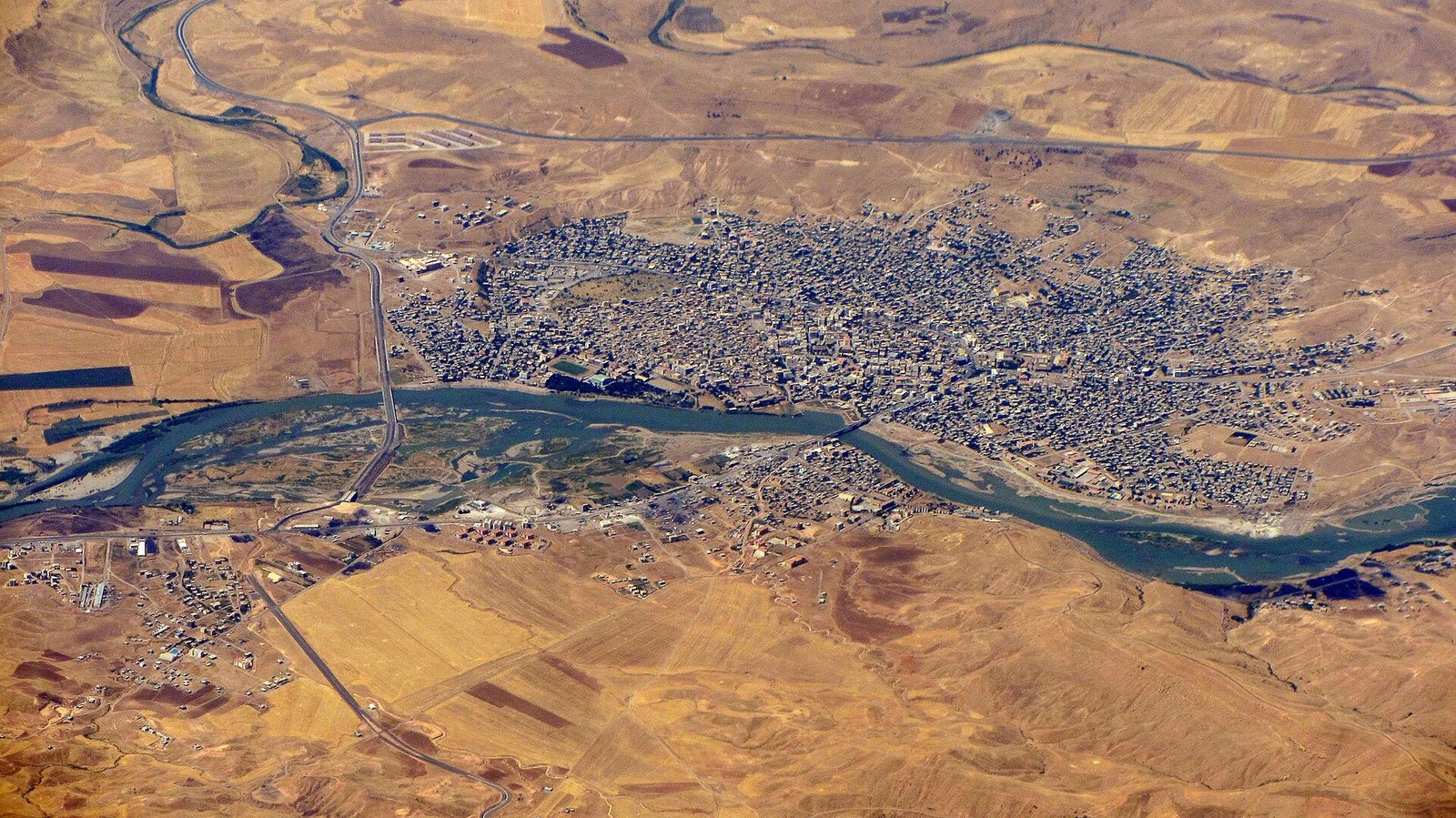
This article will discuss some of the work carried out in Ankara to find a legal basis before the “operations in residential areas/urban operations” conducted in the cities of Diyarbakır, Şırnak and Mardin and known to the public as the “Trench Operations”.
PUGAT author Ali Çağlar recently wrote a series of articles on the subject. I think these articles must be read by anyone sensitive to the issue, as they reveal what happened in the region through the account of an officer who was there himself.
I, on the other hand, will take you to Ankara, just before these operations.
I was working as a lawyer and lecturer at the Gendarmerie Schools Command. These operations had not yet begun. One day the colonel who headed the Department of Legal Sciences gathered a group of legal officers. He said that the Gendarmerie General Command had ordered a report/opinion to be prepared.
In fact, such reports and opinions were usually requested from the ‘Legal Counsel’s Office’ attached to the Gendarmerie General Command, but from time to time similar requests also came to the Gendarmerie Schools Command in Beytepe.
The subject was the “Counter-Terrorism in Residential Areas” operations planned in the Southeast. Yes! I am talking about the trench operations. A study was requested on this critical issue.
The request concerned the military personnel who would take part in the counter-terrorism operations to be carried out in residential areas in the region. It asked how military personnel taking part in such a knife-edge task could be exempted from possible future trials and compensation payments, and an opinion was requested on how any unlawful situations could be brought within the framework of the law.
The colonel heading the Department of Legal Sciences must also have known the problematic aspects of the matter, for he asked, “Isn’t there a grey area?” and wanted the work to focus on grey areas that could be described as “legal loopholes” and to make use of them.
*****
The team set to work, reviewed the legislation and compiled the relevant ECtHR judgments. Of course, the conclusion of the completed report was negative.
These operations contained fundamental legal problems with regard to the civilians living in the region. In such a situation, the risk of civilian casualties was indeed very high. There was also the possibility that PKK elements would use civilians during the events. In such cases, the state, as the administration, also had a “social risk liability”.
The personnel taking part in the operations, for their part, could later face a “recourse mechanism” for damages caused during an activity carried out in the course of the public service they performed and with the means provided to them for this duty (Constitution Art. 40/2, 129/5 and other relevant laws). To put it more plainly, the state that would pay these damages could later seek recourse against the personnel who caused the damage in proportion to their fault, that is, demand the expenditure back from them.
In addition, difficult situations in which “the personnel themselves would be held responsible” could arise, such as the difficulty for soldiers of questioning an unlawful order because of their professional reflexes based on obedience, exceeding the limits of the order given (Military Penal Code Art. 41) and resorting at times to excessive use of force (Turkish Penal Code Art. 256).
Such faults could always occur given the nature of the task, but this time things were different. The talk was of a “sui generis” conflict environment in an area where civilians also lived. Such a task carried far more serious risks than usually expected, above all “violations of the right to life”. Personnel taking part in such an operation, in which violations of the right to life and irreparable psychological traumas would occur, as well as extensive material damage, could not easily get out of the criminal proceedings, whose emergence was regarded as almost certain, by saying “An order was given, and I carried it out!”
Even if certain legal arrangements were made to protect the personnel taking part in these operations, which were not in line with national and international law and carried many risks, from becoming involved in crime or from criminal sanctions, these would be contrary to universal international law and therefore to the Constitution, which is bound to it at the core through its Article 90.
No value or ideal could justify the killing of an innocent person or their suffering material or moral losses. In other words, when the right to life is at stake, there can be no “grey area” beyond black and white.
The report prepared was submitted to the relevant office and perhaps still keeps its place in the archive.
*****
Now let us come to the step before this event, that is, how things were going in Ankara…
As I later learned, President Erdoğan had already spoken with the then Chief of General Staff, General Hulusi Akar, about the TSK entering residential areas. But Akar had some doubts. Aware of the drawbacks of the TSK conducting operations in residential areas as Erdoğan had ordered, Akar knew that the soldiers taking part in the operations could later face legal sanctions and be ordered to pay compensation.
I suspect that Akar asked not only the Gendarmerie General Command but also other units for similar reports, and again I suspect that those reports pointed in the same direction: this will cause serious legal problems in the future!
Not wanting to put himself at risk, Akar went before Erdoğan once more with these reports and opinions, but “Commander-in-Chief” Erdoğan, with his usual “what I say goes” attitude, approached the matter as “The law is mine, the army is mine!” Erdoğan, who sees everyone as a nail with the hammer in his hand, thus launched the operations in this way.
It was impossible that Erdoğan did not know that these operations, diametrically opposed to the state’s reason for existence and therefore bound to make the people of the region (but only the people of the region, since I think the others did not much care, as it did not happen close enough to them to stir their senses) question the state at its foundations, would both damage the country’s reputation in international public opinion and put the soldiers in the region in a difficult position.
Did Erdoğan really want the operations in residential areas in the region carried out out of necessity? Or did he want to use these operations and the picture that would emerge for political gain? We do not know this part, but after all this time, we all know very well how things work in Erdoğan’s bureaucracy.
*****
Dozens of soldiers, who were mere numbers in the main news bulletins, were killed in those operations. However, we do not yet know the number of civilian casualties or the extent of the material and especially the moral damage. Perhaps these will always remain “grey” and never be known. Nevertheless, when judicial proceedings are launched with admissible applications in international legal forums, above all the ECtHR, “those concerned” will never be able to give a reasonable explanation either of the civilian casualties there or of the grounds for carrying out the operations.
For now, following the operations, estimated to have “affected 1.6 million people, forced 500,000 to migrate and killed about 2,000”, there are hundreds of applicants who have filed complaints against Ankara for violations of many rights under the ECHR, above all the ‘Right to Life (Art. 2)’ and the ‘Right to Liberty and Security (Art. 5)’. Two of these files (the Elçi and Tunç cases) were selected as “pilot cases”, but the applications were rejected on the grounds that domestic remedies had not yet been exhausted.
Once domestic remedies have been exhausted (or once it is decided that the Constitutional Court is no longer an “effective domestic remedy” because proceedings have taken too long), how the ECtHR will rule on these cases is another question we are curious about.
The views expressed in this article are the author’s own and do not necessarily reflect PUGAT’s institutional position. Editorial Principles
Monthly · free
Compass of the Month
PUGAT’s monthly newsletter.
Read next

What is PUGAT? A non-profit community publishing independent analysis from Europe on security, migration and society in Turkish, German and English.
Go to the homepage