
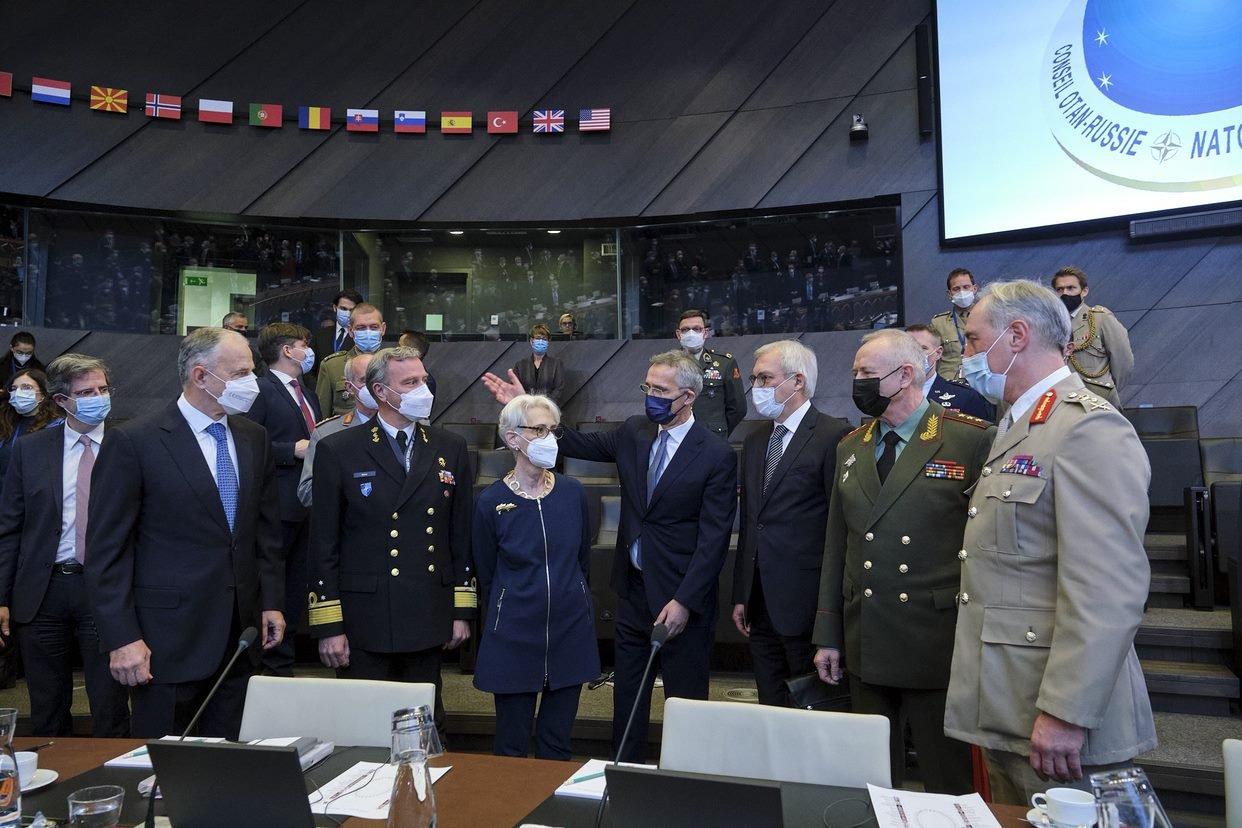
As the NATO–Russia Council prepared to meet in January 2022, Russian troops were massing on the Ukrainian border. The article assesses the diplomatic efforts just before the invasion.
PUGAT News Analysis / Mehmet Kılıçparlar
According to a statement by a NATO official, NATO Secretary General Stoltenberg, in his capacity as chairman of the NATO–Russia Council, has decided to convene the council on 12 January.
The official said: “We are in contact with Russia regarding the meeting.”
On 12 January, the date set for the council meeting, a meeting of NATO Chiefs of Defence will also be held in Brussels.
NATO’s Activities Had Been Suspended
NATO had previously made proposals for dialogue to continue, but had received no positive response from Moscow.
Last month Russia suspended the activities of NATO’s missions in Moscow and put a lock on the doors of the offices.
After the Russian army’s military build-up on the Ukrainian border in recent months, tension between NATO and Russia had risen and relations had fallen to their lowest level since the Cold War.
NATO had warned that if Russia showed aggression towards Ukraine, there would be “serious consequences and a heavy price”.
Dialogue Between NATO and Russia Was Expected
NATO Secretary General Stoltenberg had at the same time reiterated that they were open to meaningful dialogue with Russia. It had been reported for some time that Stoltenberg was preparing to call for the Council to meet.
A statement on 16 December from the North Atlantic Council, NATO’s decision-making body, had stressed that any dialogue with Russia must proceed on the basis of reciprocity, address NATO’s concerns and be based on the core principles and foundational documents of European security.
Russia’s Demands from the US and NATO
In the draft agreement on security guarantees that it submitted to the US and NATO on 15 December, Russia demands a commitment from the US that NATO will abandon eastward expansion and the admission of former Soviet countries.
The draft agreement texts also include demands that the US not set up military bases in former Soviet countries and in non-NATO countries, not use the infrastructure of these countries for any military activity and not engage in military cooperation with them.
Russia’s proposal also contains provisions that nuclear weapons not be deployed outside national territory and that such weapons deployed outside national territory be withdrawn.
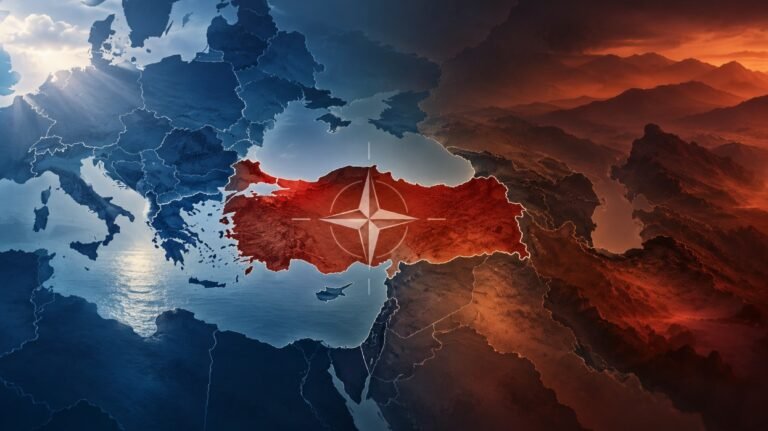
NATO Force Under Turkish Command Is Ready Against Russia
Command of NATO’s fastest unit, the “Very High Readiness Joint Task Force” (VJTF), is currently held by Türkiye. Turkish units are reportedly on standby as the spearhead force and would be ready for operations within two to seven days. Command of the VJTF, which Türkiye took over from Poland last year, will pass to France at the beginning of next year. French units are also said to be ready for operations within 45 days.
The VJTF is the fastest-moving unit of the multinational NATO Response Force (NRF) of about 40,000 troops. The NRF, which is activated in the Alliance’s defence and in crises around the world, most recently took part in the evacuation operations in Afghanistan. The VJTF, set up for deterrence after Russia’s annexation of Crimea, can mobilise about 20,000 troops in a short time and deploy them to a designated crisis area.
Ukraine Asks to Take Part in the Russia–NATO Security Talks
Ukrainian Foreign Minister Dmytro Kuleba said his country should take part in the security talks Russia will hold with the US and NATO. In a statement on his Twitter account, Kuleba said their priority was ending the international armed conflict.
Saying that they supported the idea of the US, the European Union (EU) and NATO holding talks with Russia in the event of Russian aggression against Ukraine, Kuleba said: “Euro-Atlantic security is at stake in Ukraine. Ukraine must therefore be part of the security consultations.”
The NATO–Russia Council
The NATO–Russia Council was set up at the NATO–Russia Summit held in Rome in 2002 as a mechanism for consultation, consensus-building, cooperation, joint decision and joint action.
After Russia’s illegal annexation of Crimea in 2014, NATO suspended all cooperation with Russia, including the Council’s activities. However, the allies decided to keep communication channels open in the Council.
After this period, the NATO–Russia Council met three times each in 2016 and 2017, and twice each in 2018 and 2019.
On the other hand, the Council, in which NATO member states and Russia are represented equally, is considered an important forum for establishing dialogue between the parties, exchanging information, reducing misunderstandings and increasing predictability.
The views expressed in this article are the author’s own and do not necessarily reflect PUGAT’s institutional position. Editorial Principles
Monthly · free
Compass of the Month
PUGAT’s monthly newsletter.
Read next


What is PUGAT? A non-profit community publishing independent analysis from Europe on security, migration and society in Turkish, German and English.
Go to the homepage