
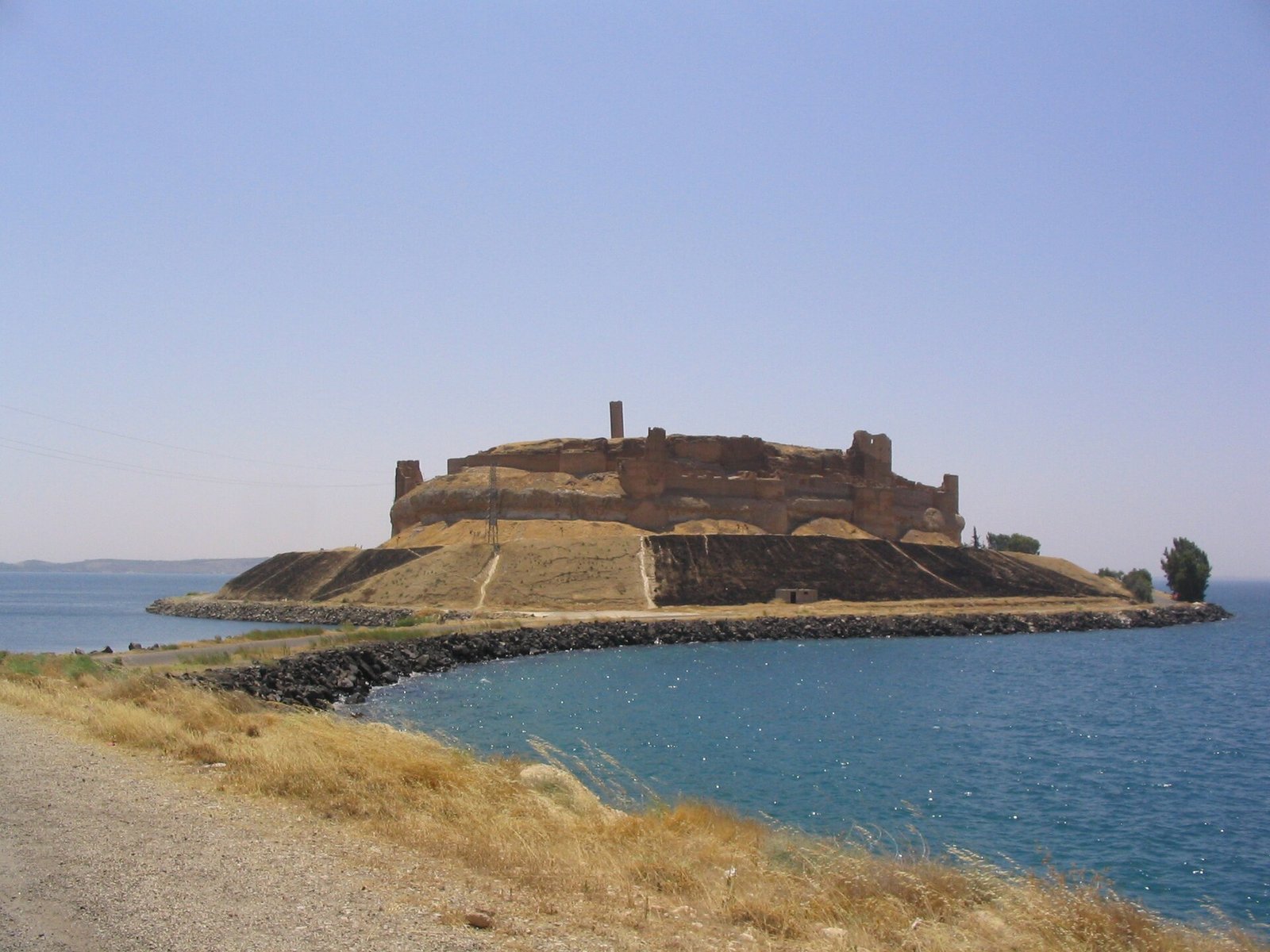
In February 2015 the TSK carried out an operation without fighting to bring back the soldiers at the Tomb of Süleyman Shah. According to the author, it was the only and most measured cross-border operation before 15 July.
Cross-Border Operations in Syria | 2
Because of growing security problems and the ISIS threat, the Turkish Armed Forces entered Syria in a military operation named “Shah Euphrates” to bring back to Turkey the 40 soldiers on duty at the Tomb of Süleyman Shah. The operation involved 572 soldiers, 50 M-60A3 tanks of the 20th Armoured Brigade and F-16 aircraft patrolling the border. After the remains of Süleyman Shah and other objects of spiritual value at the tomb had been removed, the Tomb of Süleyman Shah and a nearby outpost were blown up with explosives. After the tomb had been destroyed, the Turkish soldiers in the area withdrew to Turkey via Şanlıurfa.
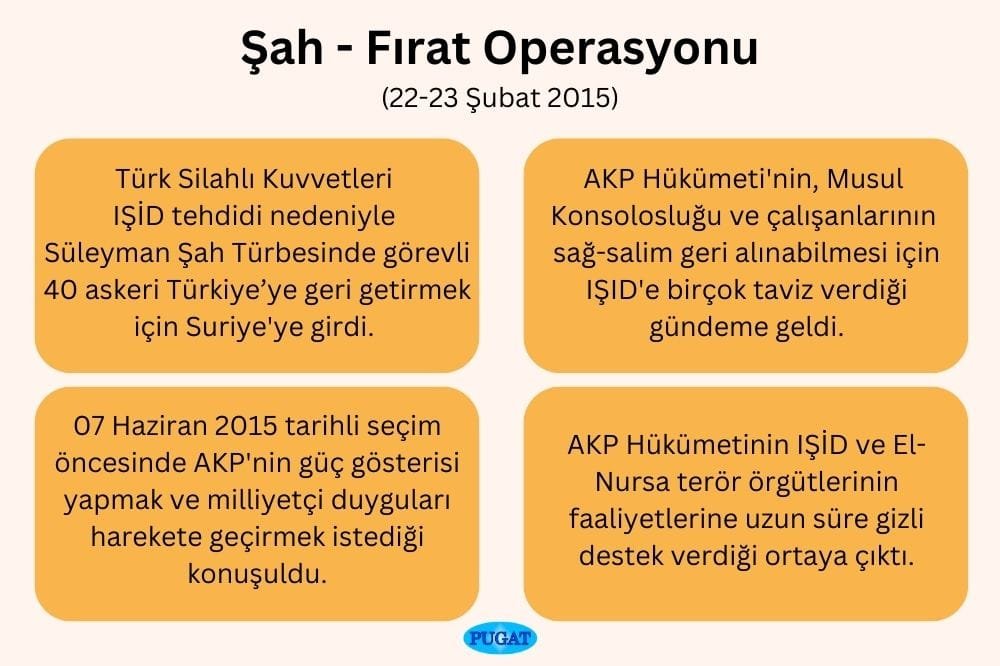
The Only Cross-Border Operation Before 15 July
The operation can be assessed from many angles, and this has already been done many times. As time passes, it becomes possible to read the process and the specific events within it more clearly. Operation Shah Euphrates differs from the other operations in scope and timing. It is very important as the only cross-border operation carried out in Syria between the start of events there under the influence of the Arab Spring and 15 July 2016. It is important because it is the only operation carried out before the TSK lost a large part of its trained senior personnel and while there was still a command echelon that would not allow the political leadership to send the TSK into the field recklessly.
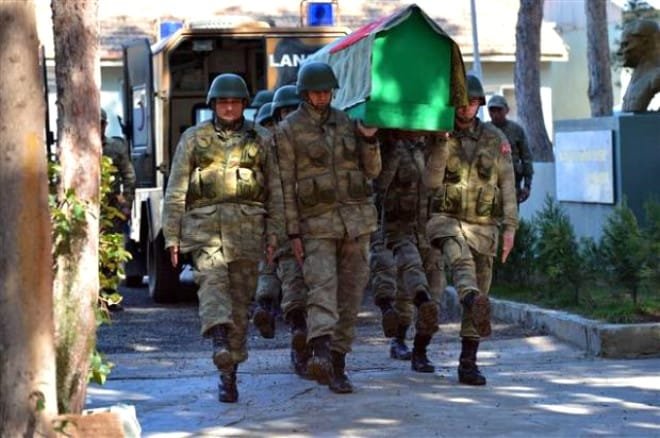
Another striking feature of the operation is that it was a targeted pinpoint operation that avoided fighting and was cautious about intervening on Syrian territory. There was no fighting in the operation, which was completed in a short time of about nine hours from the order to begin. Only one soldier was reported killed (in an accident).
Looking at the publicly known reasons for Operation Shah Euphrates, the main ones can be listed as follows:
- The wish to secure the only piece of territory outside the national borders and within ISIS’s area of advance against a possible retaliatory operation by ISIS, which had lost some important areas and seen its battle front widen because of the train-and-equip programme Turkey also supported and the Kobani operations.
- Preventing an attempt by the organisation to stage a show of strength with a possible sensational attack, given that Turkey’s support for the international coalition against ISIS and intelligence sharing had reduced the number of people joining the organisation.
- Preventing the Tomb of Süleyman Shah, which is important for Turkish history, and the spiritual relics there from falling into the hands of ISIS, known for destroying and abusing sacred values, and from being used as blackmail material.
Some reasons for the operation that were not openly stated in public can also be added:
- It is important as a measure taken to avoid a repeat of the raid on the Mosul consulate. As will be recalled, on 11 June 2014 Turkey’s consulate in Mosul and its staff were taken hostage in a raid by ISIS militants. It was reported that many concessions were made to bring back safe and sound the staff of the consulate, which had not been allowed to be evacuated despite repeated warnings before the raid.
- Organising a cross-border operation to boost its falling votes is one of the methods resorted to by the AKP government, which wanted to show strength and stir nationalist feelings before the elections due on 7 June 2015. It is known that this route was taken so that citizens would vote on the road to the election on the basis of national issues rather than economic and social considerations.
- It can also be seen as a manoeuvre by the AKP government, which emerged as having long secretly supported the activities of the terrorist organisations ISIS and al-Nusra, to avoid a possible clash with an organisation that was hard to control. Indeed, many people sharply criticised the abandonment of national territory to avoid a clash with ISIS.
The Votes the Operation Did Not Bring, Exploding Bombs Did
Indeed, as a result of this operation, carried out without fighting and in a short time, the AKP failed to achieve the change of attitude it wanted among voters and lost its single-party majority in the 7 June 2015 elections. The period after the election and the revived climate of conflict gave the AKP back the power it wanted in the elections of 1 November 2015. The years behind us have shown that it would not be wrong to claim that the unspoken reasons that actually led to the operation behind the scenes outweighed the visible ones. Although AKP government officials said in later years that the Tomb of Süleyman Shah would be moved back to its old site at the appropriate time, this has not yet happened.
(To be continued)
The views expressed in this article are the author’s own and do not necessarily reflect PUGAT’s institutional position. Editorial Principles
Monthly · free
Compass of the Month
PUGAT’s monthly newsletter.
Read next
What is PUGAT? A non-profit community publishing independent analysis from Europe on security, migration and society in Turkish, German and English.
Go to the homepage