
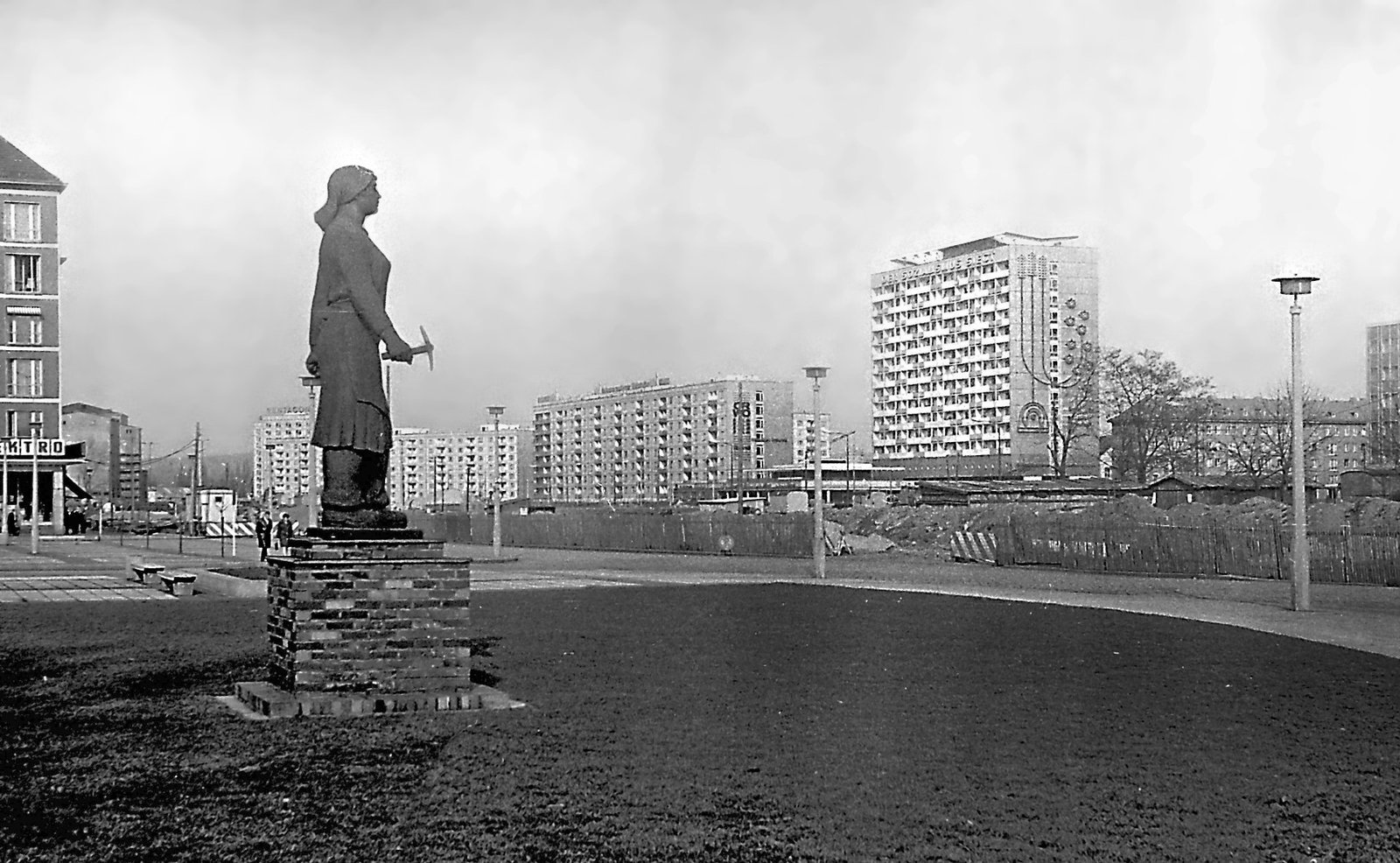
Germany and Japan emerged from the war in ruins and within a few decades joined the world’s largest economies. Why has Turkey, which has not experienced a major war on its own soil for a hundred years, not made the same leap?
Image: Jörg Blobelt / Wikimedia Commons, CC BY-SA 4.0
The stories that find their place on the dusty pages of history are the greatest teachings, inspiring us from the past to the present. In the first half of the 20th century, the world was crushed under the devastating blows of two great wars. Almost everyone had their share of the blows that human beings dealt one another. These were wars in which winners and losers alike were badly wounded.
Japan and Germany were left alone with destruction at the end of the Second World War. The cause of this result they had not expected was in fact none other than themselves. They received their share of the bitter slap dealt to those who see themselves as bigger than they are and who bully others trusting in their power. Their cities had turned into heaps of rubble, their economies had been flattened, and a large part of their young population had been killed or wounded.
This picture, which went down as a black mark in the history of both countries, did not lead to a result from which they could never rise again. They learned the lessons they had to learn; without denying the past, they focused on ways not to repeat the same mistakes. Today these countries are among the largest economies in the world and are held up as examples of trust, respect and discipline.
“I travelled the lands of the unbelievers and saw cities and mansions. I wandered the realm of Islam and saw nothing but ruins.” (Ziya Pasha)
By contrast, Turkey, which has not experienced a major war on its own soil for 100 years, faces various difficulties in the economy, education, social life and trustworthiness. Not even the right steps taken in the past and the investments that had begun to sprout have produced useful results. So how is it that in a century we have not achieved even half of the development Germany and Japan showed in half our time?
The most important factors that carried these states to their present position are disciplined work and established moral systems. Their diligence was known even before the war; but their arrogance and warmongering had damaged their morality and led them to shed the blood of millions. After the war they freed themselves, at least partly, from this mindset of superiority.
“A person’s mirror is their work; words are not what count. The rank of a person’s mind is seen in their deeds.” (Ziya Pasha)
When disciplined work is mentioned, the Germans and the Japanese are the first to come to mind. In our country, however, people assume that these nations work non-stop day and night. As far as Germany is concerned, I can say that this assumption is largely a misconception. According to statistical data, weekly working hours are 34.2 hours in Germany, 36.6 in Japan and 43.9 in Turkey. The decisive factor here is not the length of working hours but the productivity achieved in that time.
As someone who has worked both in Germany and in Turkey, I have seen this difference clearly. In Germany, not only is time spent on non-work matters during working hours not allowed, but dealing with work after hours is frowned upon as well. In working life nobody needs to rush. What matters is that a job is done not quickly but in the most solid and correct way. To put it another way, what matters is not handing over a building in six months but building it solidly enough that it will remain standing even in a very large earthquake. To compare Japan and our country when it comes to construction, it is enough to look at the recent earthquakes.
Unfortunately, in our country it has become normal for work to be done cheaply and over and over again rather than with quality and durability. A well-known photograph even shows that the amount of steel used in the stairs of a house built in Germany is almost the same as the amount used in an entire house in Turkey.
Another important difference between the countries is the attitude towards professions. While in Turkey people are respected according to the profession they practise and their status, in Germany and Japan the measure of respect is the quality of the work done. The first condition for a person to succeed in their work is to do it with love. In our country, however, when a profession is chosen, it is not the child’s talents or interests but the social status of the profession and the parents’ expectations that come to the fore. As a result, Turkey has become a “diploma dump”, overflowing with unqualified university graduates. Craft professions, regarded as worthless, have turned into jobs people do only reluctantly because they are not respected.
A Way Out for Turkey
Today, although Turkey has not experienced war, it is perhaps on the brink of a social crisis far more destructive than war. Social polarisation, lack of merit, a corrupted value system and loss of trust threaten people’s trust in one another, their sense of belonging and their vision of a common future. It is clear that in the long run this increases the likelihood of a major social conflict and internal collapse. History has taught us this: War begins not with tanks but first in minds; when the soul of a society is destroyed, internal collapse begins without any need for an attack from outside.
To repair these wounds, Turkey needs to:
- invest truly in education,
- produce free thought and a scientific approach,
- put merit back at the foundation of the state,
- eliminate favouritism and nepotism,
- take steps to establish social peace,
- bring different views and identities together around common values without turning them into enemies,
- value craftsmanship and production again,
- build a culture in which every job is honourable and necessary,
- increase transparency and accountability,
- and create an environment of trust in both politics and the economy.
Historical examples show us that yesterday’s destruction can lay the foundations of today’s growth. For Turkey to overcome the difficulties it faces in the economy and education, it needs to invest more in education and strengthen merit, skill and discipline at all levels of the state. We need this in order to walk a stronger and brighter path into the future in the light of the past.
Sources
- OECD – Hours worked data.oecd.org
The views expressed in this article are the author’s own and do not necessarily reflect PUGAT’s institutional position. Editorial Principles
Monthly · free
Compass of the Month
PUGAT’s monthly newsletter.
Read next

What is PUGAT? A non-profit community publishing independent analysis from Europe on security, migration and society in Turkish, German and English.
Go to the homepage