
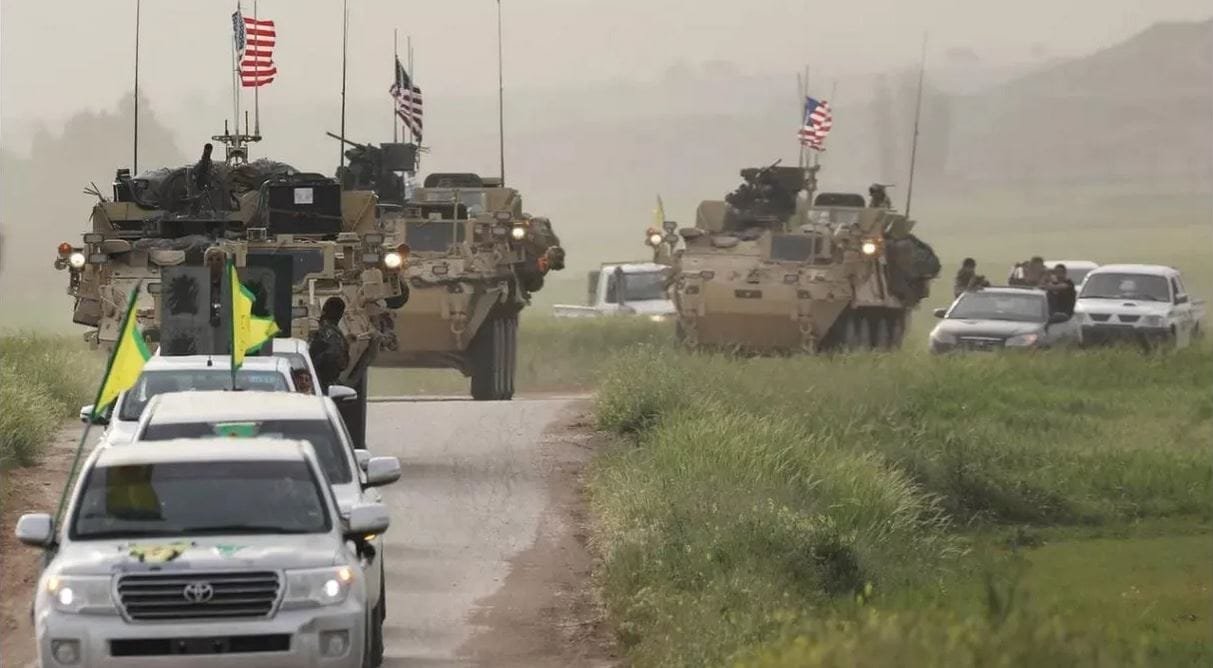
What happens if the US withdraws from Syria? The article assesses the SDF’s manpower, weapons capacity and ability to resist a possible Turkish operation in a scenario where US protection is lifted.
The war in Syria, one of the most devastating internal conflicts in recent history, upended the lives of millions and dragged the region into a lasting spiral of instability.
Going beyond a mere internal conflict, this war also showed how non-state actors can play a decisive role in international politics. While the brutal rise of ISIS and its attempt to gain control in the region became the most striking example of this new era, another non-state actor, the Syrian Democratic Forces (SDF), played a key role in the fight against this organisation, which posed a threat to the Western world.
In this period, the complex balance of power in Syria closely concerns not only regional actors but also global powers. In particular, US support for the SDF and the US presence in the region remain on the agenda of both the actors on the ground and American domestic politics.
Trump’s victory in the American elections has sparked a new debate. Many people are wondering what the consequences would be if Trump withdrew the US troops stationed in the Rojava region of Syria and ended de facto US protection over the region.
Although a US withdrawal from Syria seems unlikely under current conditions in the Middle East, Trump’s unpredictable personality and the radical decisions he takes are leading the parties to review their alternative plans.
In this context, I will try to assess the capacity of Rojava’s armed forces to resist the Turkish Armed Forces in a possible Turkish operation should they lose US protection.
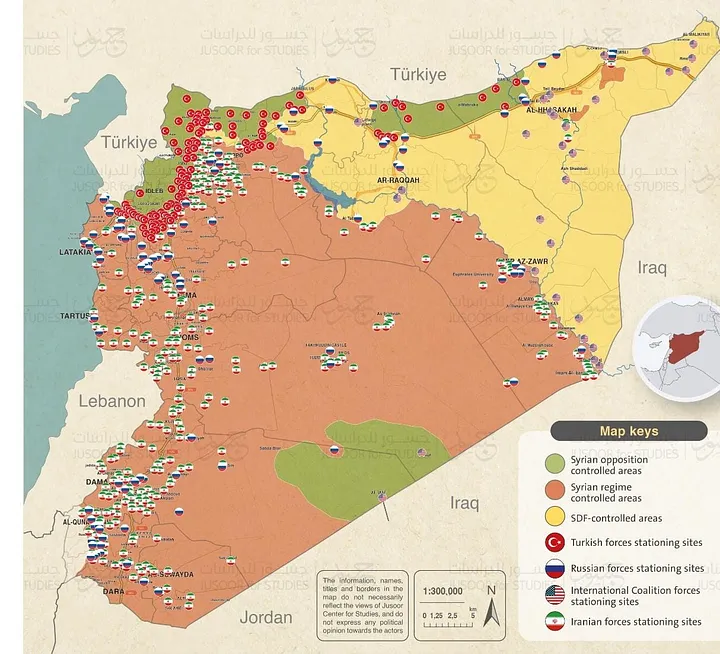
The Syrian Democratic Forces (SDF)
In the area controlled by the SDF, more than 4 million people live under an autonomous administrative structure comprising 6 major cities, 40 towns and 105 townships.
The SDF’s founding declaration was signed by thirteen groups on 12 October 2015 and took effect. These groups are, in order:
- YPG
- YPJ
- Al-Sanadid Forces
- Syriac Military Council (MFS)
- Burkan al-Furat
- Liwa Thuwar al-Raqqa
- Northern Sun Brigade
- Seljuk Brigade
- Al-Jazira Brigades
- Kurdish Front
- Army of Revolutionaries (with sub-groups)
- Tahrir Brigade
- Liwa 99 Mushat Brigade
The SDF, whose main headquarters is in the city of Hasakah, is known to have close to 60,000 active fighters. This number can vary depending on the course of the war and the situation in the region.
The YPG (People’s Protection Units), the backbone of the SDF, is estimated to have had between 30,000 and 50,000 fighters during the most intense periods of the Syrian civil war. The YPG’s women’s branch, the Women’s Protection Units (YPJ), is thought to have between 6,000 and 8,000 female fighters. However, current and verified information on exactly how many fighters the Kurdish forces have is limited.
Heavy Weapons Capacity
The YPG’s heavy weapons capacity developed thanks to US support, especially in the war against ISIS. The weapons provided to the YPG generally include anti-tank missiles, armoured vehicles, mortars and heavy machine guns. However, the YPG’s inventory does not contain a substantial number of tanks or heavy artillery systems.
Although the US and coalition forces generally provided the YPG with light armoured personnel carriers for defensive purposes, anti-tank missiles such as the TOW and 120 mm mortars, they did not supply heavy weapons systems such as tanks or large-calibre guns. Such weapons are generally state-level systems requiring substantial logistical support. The YPG may have acquired a limited number of armoured vehicles and some old Soviet-made light armoured vehicles from its regional allies or by capturing them in the field, but such heavy weapons systems are limited.
What Is the SDF’s Capacity to Resist a Possible Turkish Operation?
The answer to this question may vary depending on several factors.
The SDF’s potential to resist may vary according to the scope of Turkey’s operation, geographical conditions, the support that actors such as the US and Russia would provide, and the local population’s capacity for resistance.
Main Factors Affecting the Capacity to Resist:
Military capacity: The SDF has defensive weapons such as light arms suited to guerrilla warfare, anti-tank missiles and a limited number of armoured vehicles. However, the lack of heavy weapons such as tanks, heavy artillery and combat aircraft will certainly create difficulties in the long run against a conventional army such as Turkey’s.
Turkey will take the SDF’s lack of such heavy weapons into account and use its superior air power and heavier weapons capacity. Since the SDF’s air defence systems are inadequate, we can say that they would be helpless especially against fighter jets and drones.
US and coalition support: The SDF’s alliance with the US makes outside intervention in operations possible. However, direct US military intervention should not be expected. Moreover, Turkey would not launch an operation without guaranteeing that the risk of such intervention is zero. As seen in Operation Peace Spring in 2019, in such situations the US generally prefers to apply diplomatic pressure on Turkey and provide logistical support to the Kurdish forces.
Local support and guerrilla tactics: The imbalance between the forces makes it necessary for the SDF to wage guerrilla warfare using its geographical advantage and the support of the local population. Together with the forces affiliated with it, the SDF will try to stop Turkey’s operations by also organising the local population in the cities. Intelligence reports mention that tunnels and shelters for guerrilla-style warfare have already been prepared in cities and at defensive positions.
Time and resistance: I think that in a possible Turkish operation the SDF would play for time and, after getting through the initial shock, turn to a strategy of wearing down the Turkish army with hit-and-run tactics. Prolonged resistance and the resulting losses could raise the cost of the operation and make it harder to sustain. Such resistance would also likely support the narrative internationally that the Kurds are exercising their “right to legitimate self-defence” and that Turkey is an “occupying power”. In such a case, reactions against Turkey could grow and this characterisation could find wider support.
The SDF’s Trump Cards
ISIS militants and al-Hol camp: About 10,000 ISIS-linked convicts and detainees are still held in prisons under SDF control. They include both Syrians and foreign fighters from various countries.
The families of these militants are held mainly in the al-Hol and Roj camps, most of them women and children. While al-Hol camp holds about 60,000 people, the number is lower in Roj camp. The total number of family members staying in these camps exceeds 70,000.
While this carries the potential for a serious security and humanitarian crisis for Syria, it is also a ticking time bomb for the West, left at the discretion of the SDF. In other words, citing Turkey’s growing pressure and operation as a reason, the SDF could empty these prisons.
Syria’s internal balances changed by the Israel–Palestine war: One of Israel’s most important strategic goals in Syria is to limit Iran’s growing presence in the region. After the Syrian civil war, Iran greatly increased its military presence in the country and, through Hezbollah, deployed to points close to the Israeli border. A possible Turkish operation in northern Syria could change the balance in Syria by narrowing Iran’s room for manoeuvre in some areas. This could be seen as a positive development for Israel, since it has the potential to weaken Iran’s control over strategic positions that could threaten Israel.
On the other hand, Israel maintains indirect diplomatic relations with Kurdish groups in Syria and sees the Kurdish presence in the region as an important buffer against Iran and radical groups. If Turkey’s operations lead the SDF to lose power or weaken its position in the region, Israel could face the risk of losing one of its indirect allies there. Israel may therefore not want Turkey’s operations to reach a scale that weakens the Kurdish groups, and may in the long run regard the Kurds becoming more vulnerable to Turkey as a threat to its own security.
It is also clear that neither the US nor Israel would prefer the Kurds to be replaced by Salafist and anti-Israel jihadist groups.
Conclusion
The balance of power in Syria continues to be shaped by the strategies of internal and external actors in the region. A possible Turkish operation against the SDF-controlled area has the potential to produce multifaceted consequences both regionally and internationally.
The SDF’s current military capacity, local support and experience of guerrilla warfare may be seen as insufficient to stop the Turkish army. However, a conflict between the Turkish army and the SDF cannot be assessed solely on the basis of the parties’ military strength, because it would produce far-reaching consequences that bring the interests of external actors into Syria’s already complex political and strategic equation.
The success of a Turkish operation depends not only on the military balance on the ground but also on many factors affecting diplomatic manoeuvres, international reactions and the long-term sustainability of the operation. The real factor determining the success or failure of such an undertaking is therefore not military capacity alone, but whether a multidimensional strategy can be pursued. Update (October 2026): The picture changed fundamentally after this article was written. The Assad regime fell in December 2024. In mid-January 2026, government forces launched a large-scale offensive east of the Euphrates; many Arab tribes switched sides, and Raqqa, Tabqa and Deir ez-Zor quickly came under Damascus’s control. Under the comprehensive agreement reached on 30 January, the SDF’s integration into state structures began, and Mazloum Abdi announced on 25 August 2026 that the SDF had been officially dissolved.
Sources
- Military Review (May–June 2020), Portzer: The People’s Protection Units armyupress.army.mil
- The Conversation: US military presence in Syria carries substantial risks, but so does complete withdrawal theconversation.com
- SWP Berlin (2020/A74) swp-berlin.org
- Enab Baladi (August 2023): Two currents within the Kurdish SDF english.enabbaladi.net
The views expressed in this article are the author’s own and do not necessarily reflect PUGAT’s institutional position. Editorial Principles
Monthly · free
Compass of the Month
PUGAT’s monthly newsletter.
Read next

What is PUGAT? A non-profit community publishing independent analysis from Europe on security, migration and society in Turkish, German and English.
Go to the homepage