
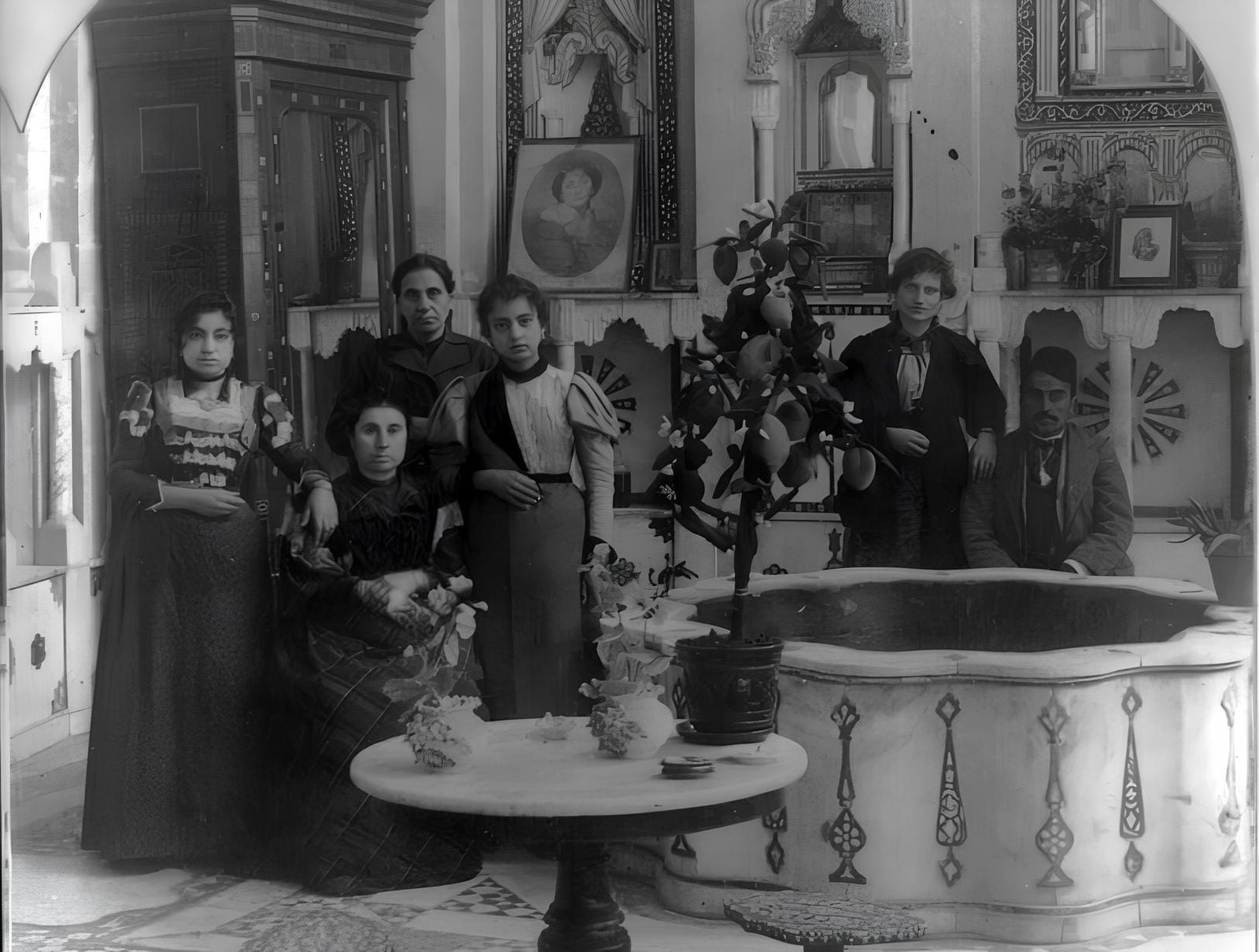
The Ashkenazi cadre of the newly founded Israel was a stranger to the Arab world. Mizrahi Jews who spoke Arabic as their mother tongue became intelligence’s most valuable resource, but at the price of having their identity instrumentalised.
In our previous article we tried to examine the migration journey to Israel of Jews from Arab countries from the 1940s onwards and the difficulties they faced. In this article we will analyse how the roots of these immigrants were transformed in the context of state security. In the following parts we will look at the influence of the Mizrahi experience on Israeli politics today and its reflections in the process of social integration.
***
A look at the founding period of the Mossad reveals a striking paradox that turned a strategic weakness of the state into a powerful operational weapon.
The newly founded State of Israel had to monitor the Arab neighbours that threatened its existence in every sense, yet its ruling cadre (mostly Ashkenazi Jews from Europe) was entirely foreign to that culture. It was in this gap that the Mizrahi Jews, who had lived in the Arab world for centuries, spoke Arabic as their mother tongue and had adopted Arab culture as their natural way of life, suddenly became a unique treasure. Of course, the price of this treasure was that Mizrahi identity was reshaped and instrumentalised for the security interests of the state.
Mista’arvim: Turning Identity into a Weapon
The “Mista’arvim” (those who live like Arabs) unit, which forms the basis of this analysis, is the most concrete example of this process. Intelligence’s need to remain invisible within Arab societies naturally made it necessary to employ Mizrahi officers and field operatives at every level.
The Mista’arvim possessed not only knowledge of the language but also the finest details of Arab culture, its gestures, accent-free Arabic and, most importantly, the ability to think like an Arab. Alongside flawless language skills, these natural abilities therefore meant the capacity for a flawless simulation of identity in the field.
Thus Mizrahi Jews began to be infiltrated, this time as “agents”, into the world they had once naturally been part of, and to be employed in strategy centres as experts analysing hostile states.
Clashing Identities: From Arab Jew to Israeli in Arab Disguise
In the published memoirs of Mizrahi agents, especially those of the first generations, some drew particular attention to the existential dilemma they experienced. They were not people who had learned to speak Arabic but people whose mother tongue was Arabic. Yet while Arabic, Arab culture and Islam were coded in the public sphere of Israel’s national identity narrative as “the enemy side”, the same language and culture were becoming intelligence’s most critical tool.
Although this caused a rift of identity in the inner world of some agents, most carried out the tasks entrusted to them at the cost of their lives. While figures such as Eli Cohen, who managed to infiltrate the Syrian regime, became part of an intelligence myth identified with personal sacrifice, the Lavon Affair of the same period revealed the dark side of this approach.
In this covert operation in Egypt in 1954, young Egyptian Jews, most of them Mizrahi Jews, had been secretly organised by Israeli intelligence and encouraged to sabotage Western targets. The aim was to attribute these attacks to Arab nationalists and so weaken relations between Egypt and the West. When the operation was uncovered, some of the agents were executed and others spent many years in prison. The state, for its part, did not officially take responsibility for the incident for a long time.
The State’s Contradictory Dependence and the Price of Silence
The State of Israel maintained this paradoxical dependence vis-à-vis the Arab world for years. On the one hand it socially marginalised Arabic and forcibly suppressed the Mizrahi cultural heritage; on the other, it used this skill as a vital tool in the army and intelligence. Mizrahi agents became the invisible engine of the system in every field, from analysing radio traffic to preparing propaganda.
Yet for many years this contribution was kept out of the national narrative. Being of Arab origin was a flaw and was never to find a platform on which to be presented as a virtue; it always had to remain in the shadows.
In conclusion, despite the decades that have passed, Israel still lives in the shadow of this contradiction. Arabic is still valued not on the street but only in the security institutions. Mizrahi identity, meanwhile, still occupies an uncertain position on the margins of national identity.
Yet it can now be said that the balance has shifted: the second and even third generations of the Mizrahi communities, whom the state once saw merely as intelligence material, now carry decisive weight in decision-making mechanisms from politics to the army.
Those who were once tasked with speaking like Arabs today decide how Israel will speak to the Arab world.
In the next article, let us look at how this transformation, that is, the shift from a hidden identity to a guiding identity, is reflected in Israeli politics today.
The views expressed in this article are the author’s own and do not necessarily reflect PUGAT’s institutional position. Editorial Principles
Monthly · free
Compass of the Month
PUGAT’s monthly newsletter.
Read next

What is PUGAT? A non-profit community publishing independent analysis from Europe on security, migration and society in Turkish, German and English.
Go to the homepage