
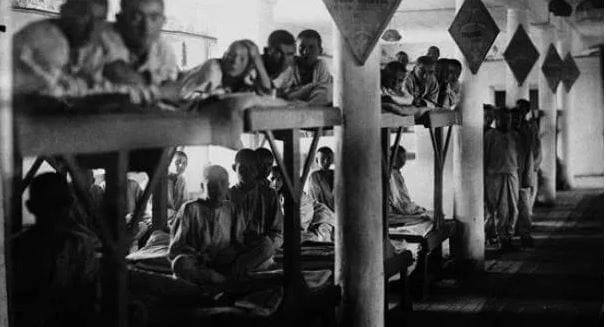
After the Kirov assassination, Stalin purged millions of people in the name of “the enemy within”. There are striking similarities between the Great Purge and what has happened in Turkey since 15 July.
In this article I have tried to describe the Soviet Union under Stalin, the details of the purges of that era, and their similarities with what has happened in Turkey since 15 July 2016.
After Vladimir Lenin’s death in 1924, Joseph Stalin won the ensuing power struggle and had become the undisputed leader of the Soviet Union by the end of the 1920s.[i1]
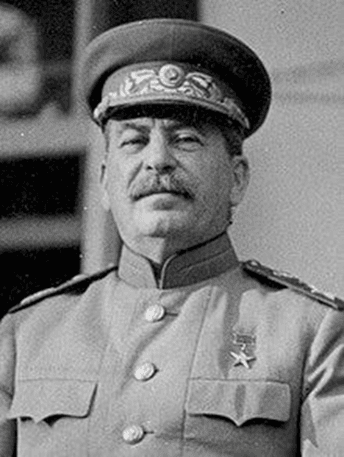
A Suspicious Death
By the early 1930s, failed policies and an atmosphere of insecurity had begun to prevail in the Soviet Union. In December 1934 Sergei Kirov, one of its popular senior officials, was assassinated. Historians still debate the suspicions surrounding his death.[i]
Historical Context
Citing Kirov’s death as a pretext, Stalin launched a sweeping operation to consolidate his power and eliminate potential rivals.[i]
The underlying motivation behind this operation was to destroy opposition groups, to carry out a large-scale internal security campaign on the claim that foreign enemies had infiltrated the country, and to tighten his control over the party.
The Great Purge
The Soviet Union under Stalin went through one of the darkest and most controversial periods of the twentieth century. The Great Purge was a large-scale political purge that Stalin launched to hold on to absolute power.
The operations did not target a single group; they covered the entire range of measures concerning state security. The purge was launched in the autumn of 1936, “potential enemies” were also drawn into the process, and families among Soviet citizens alleged to have a “suspicious social background” were singled out in particular.[i]
During this period millions of people were targeted on charges of treason, espionage and ideological deviation; they were arrested, tortured and even executed. The damage the Great Purge did to the Soviet Union and its society deeply affected not only the people of that time but later generations as well.
The Suspension of the Constitution
With constitutional safeguards effectively set aside, the scope of the charges was stretched arbitrarily. People were accused on the basis of groundless denunciations and forced to sign documents declaring that they had confessed to crimes they had not committed; often they signed these confessions because they could no longer endure cold, hunger, sleeplessness and torture. (Hosking, 2011; Ginzburg, 1996).[i]
Disregarding the rule of law, the state stripped the groups it excluded of their legal rights and thus removed, in its own favour, every obstacle to the process of punishing, using and destroying them.[i]
The main factor that brought the Great Purge to an end was the chaos caused by the chain of arrests set off by people trying to rise through denunciations. [i]
The Great Terror reached such a sweeping and frightening scale that Stalin finally realised the purge had destroyed too many people and that there was no longer enough manpower left to run the country properly.[ii]
Consequences and Effects
The Great Purge created deep fear and paranoia in Soviet society, and people began to suspect even their closest friends and family members. This shook social trust and eroded people’s trust in the state.
Many senior officials in the party and the Red Army were purged. This weakened the army, especially in the run-up to the Second World War. The elimination of military leaders seriously damaged the Soviet Union’s preparations for war.
By eliminating differences, Stalin consolidated his control. This strengthened conformity and authoritarianism in Soviet society.
The Great Purge also did serious damage to the Soviet economy and, in the long run, led to a loss of labour and the destruction of human capital. The purge of scientists, artists and intellectuals also harmed Soviet culture and scientific progress.
The Great Purge left deep trauma among the Soviet people: families were torn apart, people lost their loved ones and insecurity prevailed throughout society. This trauma lasted until the collapse of the Soviet Union.
Similarities with Turkey
There are many similarities between the period of the Great Purge and what is happening in Turkey today.
The purge in the Soviet Union was launched on the pretext of Sergei Kirov’s suspicious death; in Turkey, too, it began on the pretext of 15 July, an event whose perpetrators are still not all fully known.
What was done in Stalin’s Soviet Union to families alleged to have a “suspicious social background” happened in the same way in Turkey; the principle of individual criminal responsibility was even violated, and people were accused of treason on the basis of lists and family ties.
As in Stalin’s Soviet Union, people who were singled out in Turkey suffered inhumane treatment and torture; they were forced through torture and threats to sign documents declaring that they had confessed to crimes they had not committed; laws were trampled underfoot; a state of emergency was declared and the constitution effectively suspended; people were accused and punished on groundless denunciations; the purge cost the country a great many competent people, until there was no longer enough manpower left to run it properly; an atmosphere of fear and paranoia took hold, and people began to suspect even their closest friends and family members; the army was significantly weakened, authoritarianism grew stronger, the economy suffered serious damage and most people were pushed to the poverty line.
Conclusion and Assessment
The Great Purge under Stalin did enormous damage to the Soviet Union and its society. The erosion of social trust, economic and social losses and mass fear were the main consequences of this period.
Similar episodes in history matter because they teach us how a state can divide society through unjust accusations and damage trust in the justice system. That is why examining such events carefully and impartially is vital for achieving justice and social peace.
Similar events in history must be taken seriously, and we must not forget that achieving justice is critical for social peace.
[i] https://johschool.com/?mod=tammetin&makaleadi=&key=42873
[ii] “If the arrests had continued at the same rate, the whole of Soviet society would soon have been locked up in prison. Stalin stated plainly that the NKVD could not go on imprisoning people solely on the basis of denunciations without verifying them. He warned against careerists who made denunciations in order to climb to higher positions in society” (Figes, 2011, p. 320).
Sources
- Geoffrey Hosking, Rulers and Victims / A History of the Soviet Union
- Yevgenia Ginzburg, Into the Whirlwind
- Robert Conquest, The Great Terror
- Orlando Figes, The Whisperers
The views expressed in this article are the author’s own and do not necessarily reflect PUGAT’s institutional position. Editorial Principles
Monthly · free
Compass of the Month
PUGAT’s monthly newsletter.
Read next


What is PUGAT? A non-profit community publishing independent analysis from Europe on security, migration and society in Turkish, German and English.
Go to the homepage