
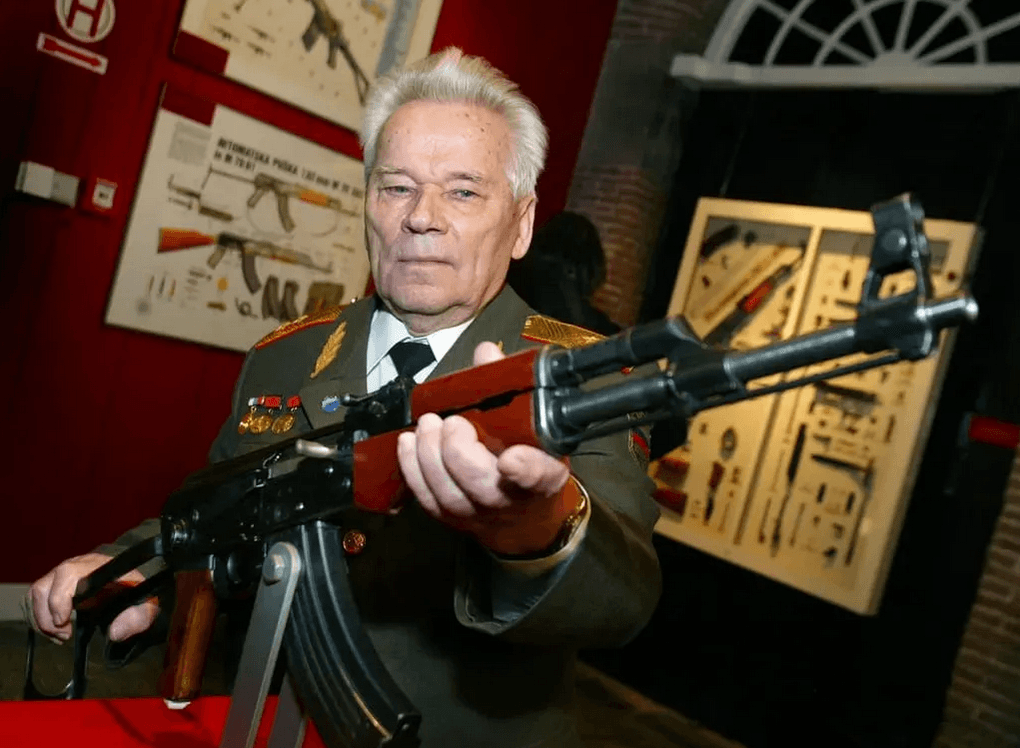
A farmer’s son born in the Altai Mountains became a weapons designer after the helplessness he experienced in war. With its ease of use and durability, Kalashnikov’s AK-47 became one of the deadliest weapons in the world.
Mikhail Timofeyevich Kalashnikov was born in 1919 in the Altai region, the child of a large Russian peasant family. During collectivisation he and his family were deported to Siberia in 1930. At sixteen he escaped from exile, went to Kazakhstan and worked for the railway until he began his military service in 1938.
Because of his interest in technology, he was trained as a tank mechanic in the army and made his first small inventions during this period. But the decisive turning point in his life came with Germany’s attack on the Soviet Union and the bitter experiences of the war. Wounded at the Battle of Bryansk in the autumn of 1941, Kalashnikov was attacked by German motorcyclists on the way to hospital. Only three soldiers survived the attack, and this incident became a basic motivation shaping his later career.
In his memoirs he says that the sense of helplessness he felt in the face of a German army with superior weapons never left his mind, and that this is why he decided to become a weapons designer. Before long, weapons specialists heard about the young soldier and told their superiors that his talent should be developed. Kalashnikov developed his first prototype under the supervision of the famous weapons designer Sergei Gavrilovich Simonov, and although it did not succeed in tests in the autumn of 1943, he stubbornly continued his work.
In 1946 he appeared again in another weapons competition under the pseudonym “Mikhtim”. Having successfully passed the design, maintenance, firing and durability tests, the weapon, completed in 1947 as the AK-47, officially entered Soviet Army service in 1949. The abbreviation AK-47 was formed from the Russian name “Avtomat Kalashnikova 1947”, referring to the year it was first produced.
Sergeant Kalashnikov from the Altai did not design an entirely new rifle; but with the experience he had gained on the battlefield, he developed an effective, light, rapid-firing and easy-to-use weapon that met an infantryman’s needs. The AK-47’s robustness and reliability even in harsh conditions were the features that made it unique among its peers.
An Icon of Violence Is Born
There is hardly another rifle in the world with such a legendary reputation as the AK-47. But calling it an “icon” is not meant to glorify the weapon. Throughout modern history, the Kalashnikov has been at the centre of violence, wars and acts of terror and has become the symbol of many movements.
Within the framework of the Soviet Union’s military export policies, the Kalashnikov was also produced in socialist countries such as China, North Korea and Yugoslavia. But the event that made the rifle famous worldwide was the Vietnam War. Used by the North Vietnamese army, the AK-47 gave a considerable advantage over the American M-14 and M-16 rifles, especially in short-range jungle fighting.
After the Vietnam War, the Kalashnikov became the symbol of world revolution and national liberation movements. Produced even on handmade workbenches in the mountains of Pakistan, this simple but effective rifle became the emblem of anti-American movements during the Cold War.
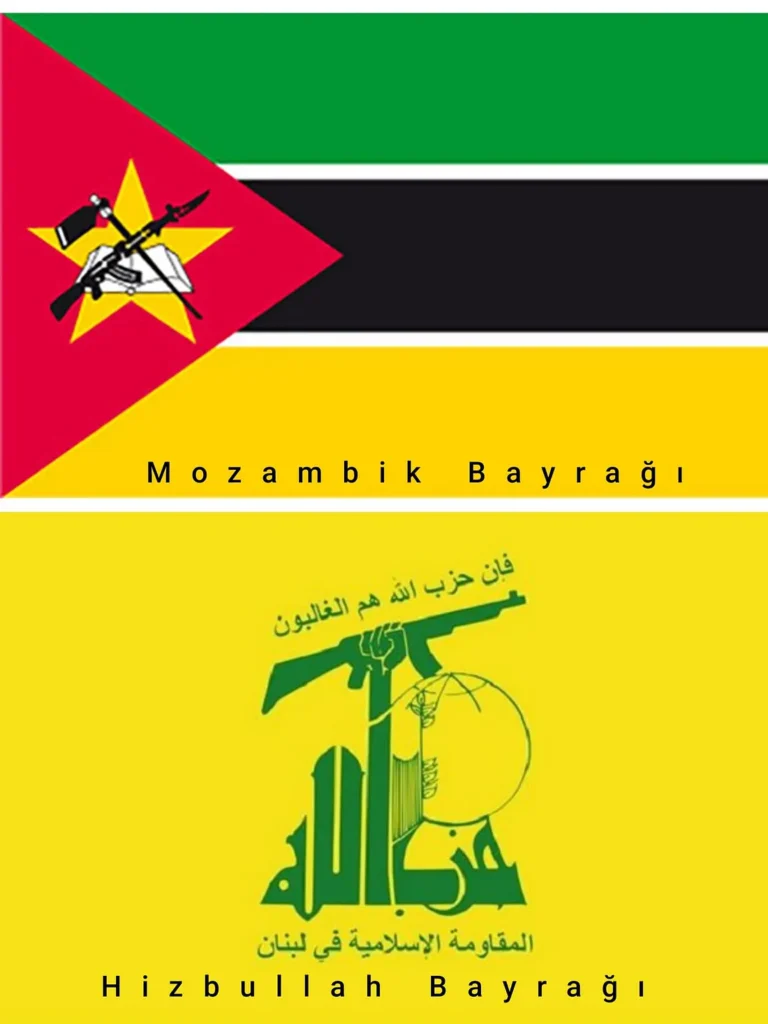
We can say that from the 1950s to the present day it has been used in almost every war in the world: in Afghanistan, Congo, Mozambique, Sierra Leone, the Balkans, Iraq… The list goes on.
After 1970, the Kalashnikov continued its development by finding new outlets, symbolically and militarily, in the Islamic world and in Africa. The hand holding a Kalashnikov on the Hezbollah flag, and figures such as Osama bin Laden and the Taliban frequently posing with a Kalashnikov, show how the rifle was adopted by radical Islamist organisations.
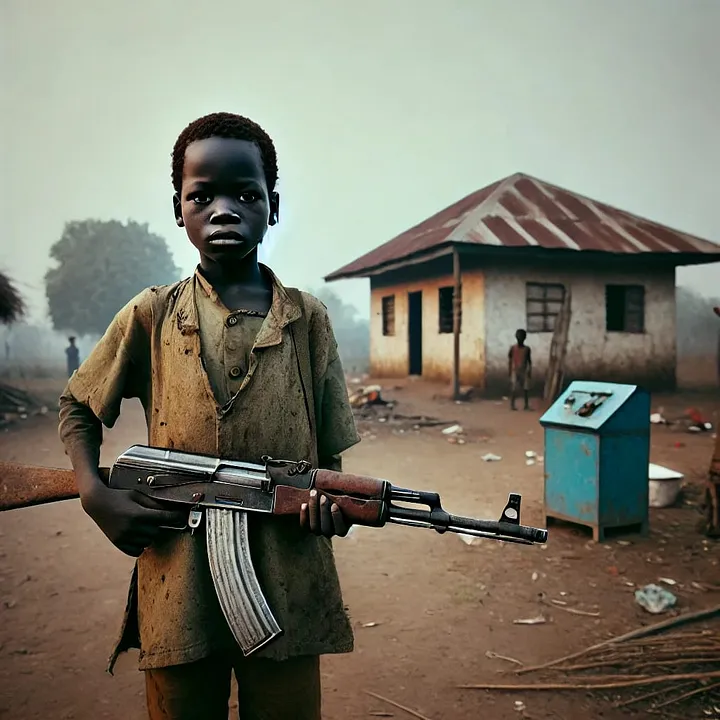
Besides religious extremist groups, the Kalashnikov also became popular in images of African child soldiers. African children who posed for photographers with 1950s-model Kalashnikovs as tall as themselves continued, with these weapons, enmities inherited from tribal wars. Thus, as the scale of destruction grew in conflicts that raged on mercilessly, the foundations of civil war economies in Africa were laid.
The Turkish Army’s Ordeal with the Kalashnikov
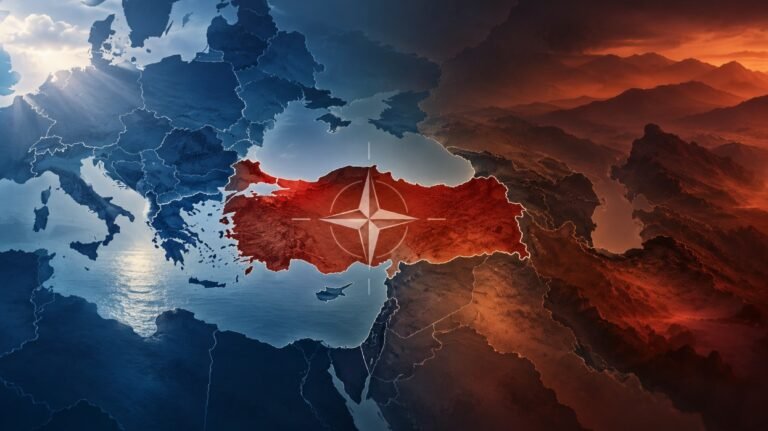
As an active part of the Cold War, Turkey was an important member of the Western bloc. While, as a NATO member, it developed armament policies against the Soviet threat, the Soviet-made AK-47 was often seen in the hands of the terrorist organisations Turkey faced.
During the armed attacks the PKK launched in south-eastern Turkey from 1984 onwards, the Turkish army faced its greatest ordeal with the AK-47. The AK-47s that PKK militants obtained illegally from Soviet-backed countries gave them considerable advantages in mountainous and difficult terrain.
This called into question the adequacy of the G3 infantry rifle in the Turkish Armed Forces’ inventory. In later years it led the armed forces to search for a new light infantry rifle.
Conclusion
As a result of Cold War propaganda, the Kalashnikov rifle gained a reputation as the bad guy’s weapon. Beyond that, however, it cannot be denied that it has become a symbol embedded in the spirit of the 21st century.
From rap songs to computer games, from terrorist organisations to national movements and from there to mafia groups, it has become a cultural image in every field.
Going beyond being merely a weapon, the Kalashnikov has become a global symbol of wars, conflicts and resistance. At the same time, the Kalashnikov, which we could call the rifle that has killed more people than the atomic bomb, will remain on the stage of history as one of the greatest tragedies of modern warfare because of its destructive power and widespread use.
Kaynaklar:

https://www.spiegel.de/panorama/zeitgeschichte/ak-47-geburtstag-einer-todesmaschine-a-493106.html

https://arms.fandom.com/de/wiki/AK-47

https://www.mdr.de/geschichte/zeitgeschichte-gegenwart/politik-gesellschaft/kalaschnikoff-gewehr-waffe-zweiter-weltkrieg-100.html
Sources
- C. J. Chivers, The Gun (2010)
The views expressed in this article are the author’s own and do not necessarily reflect PUGAT’s institutional position. Editorial Principles
Monthly · free
Compass of the Month
PUGAT’s monthly newsletter.
Read next


What is PUGAT? A non-profit community publishing independent analysis from Europe on security, migration and society in Turkish, German and English.
Go to the homepage