
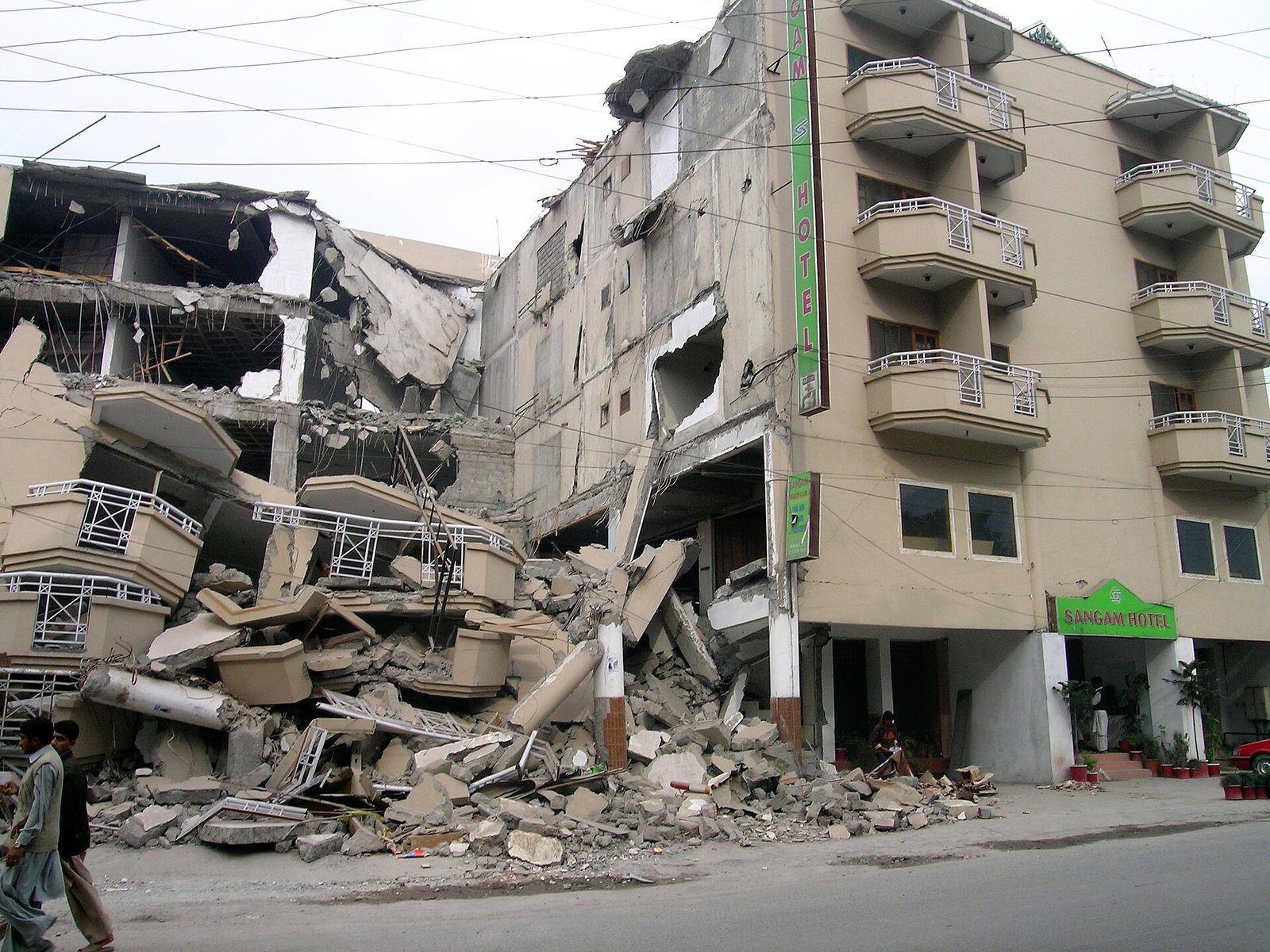
On the first anniversary of the earthquake, a letter written from a tent among the ruins to a family that was lost. A personal testimony of grief, neglect and loneliness.
Yes, it’s me again. What can I do, I miss you. Until evening I somehow forget your absence with work and chores. But on my way home from work, your absence comes back to me. Don’t mind that I call it home: it is a makeshift tent among the ruins. Haluk Levent’s association gave it to me. They in turn bought it from the Red Crescent.
Ironic, isn’t it? The Red Crescent, which bought tents with our money, sells the tents to us. If you were here, that tent would be a palace to me, but never mind. Containers are supposedly coming to our neighbourhood soon, but we won’t be given one.
No, no, not because I’m an opposition supporter. It seems citizens who will receive housing aid from the state won’t get that aid if they stay in a container. You would say, “Let’s be grateful even for this”, but I can’t stomach a “great state” doing such things.
* * *
We are still well off. People dismissed by emergency decree, they say, won’t even get this aid.
All along the way I struggle to hold back my tears. On the lively street once lined with shops, the silence and the scream of death now echo. Concrete blocks scattered everywhere, furniture trapped between collapsed floors, roofs that have become one with the ground; believe me, it looks nothing like our neighbourhood.
As I approach our ruined home, I can no longer hold back my sobs. When I meet the eyes of the woman on the street who used to complain about the children’s noise, we both let our tears fall. Then the corner shopkeeper’s shop catches my eye. Picturing it as it was, I talk to him. “Our children won’t be buying sweets and chocolate from you any more,” I manage to say. Perhaps, if he could answer, he too would say with a bitter smile, “I still put some aside for them.”
* * *
Do you know, today is the first anniversary of that earthquake.
I don’t know how I endured a year without you. In fact, time stopped for us that day; only the hands of the clock keep turning. Just as the poet said, “We all died, they only buried you.” And this place is a garden of sorrow underground, where numbers rather than names are written on the gravestones, where more than one person has been buried in the same grave, many of them children and babies.
In fact, I am even lucky to be here now. Being able to sit by your grave and pour out my heart, to bring flowers and toys now and then and pour water, has become a luxury. Some could not even find their families’ graves; the lifeless bodies of others were mixed in with the rubble and used as material for the new buildings they will put up.
* * *
The other day at work I heard your favourite song.
As I strained to listen to it, I suddenly began to hear your screams. The echo of “Save us, we’re so cold” stayed in my ears for months. Now I think how empty the words I used to try to calm you were.
Soldiers, AFAD, would come soon and save you. Where once rescue teams used to shout, now those under the rubble shout: “Is anyone there?” Our soldiers came even later than the rescue teams from foreign countries. The “presidential system” we adopted so that the state could take quick decisions has turned into a “whatever the president feels like” system.
Do you know what he said the other day? “If central government and local government don’t work hand in hand, nothing comes to that city. Did anything come to Hatay?” He implied that this was how he punished those who did not vote for him. You know how there are those who say that if a wolf ate a lamb on the banks of the Euphrates they would be responsible for it? The banks of the Euphrates were razed to the ground, and they did not even accept that it concerned them. No one resigned, no one apologised.
For a long time after the earthquake the state was nowhere to be seen, but from the very first hour we always felt the support of ordinary citizens. People mobilised whatever they had for us. Acquaintances and strangers, locals and foreigners, everyone tried to help us. Except, that is, the institutions whose very job this is. AFAD, whose task is to provide aid in disasters, even refused to pass on to us the aid others had sent. And do you know why? Supposedly, relief supplies not labelled “AFAD” were not to be delivered to citizens. In short, officials who did not do even half their job, and aid organisations that did not even know their responsibilities, sat on all the aid and sought to profit from it.
* * *
Recently, it was said, a minister on television let slip the real number of people who died in the earthquake. According to that claim we lost 130,000 lives; the official figure is around 53,000. Yet even if you saw the state of our beautiful neighbourhood from afar, you would realise that the official figure is a big lie.
* * *
Last month there was an earthquake in Japan. They did not call it “the disaster of the century”. Perhaps because the number of people who died was not even one per cent of ours. If new houses and new buildings keep going up on earthquake and fault lines without any rules being followed, the number of “disasters of the century” will keep growing. I don’t know if there is any other country that shakes so much and cares so little.
All right, all right, I’ll stop talking politics in front of the children. There is so much eating at me, so much injustice that hurts, that sometimes I just can’t hold my tongue. I’ve been rambling again today. Anyway, don’t forget to tell them stories. You know they are afraid of sleeping in the dark. I’ll tell them their favourite story. I don’t have the strength to light a lamp for them, but at least they can hear my voice. Then I’ll go. I’ll come back tomorrow anyway. How I wish I could say, “Is there anything you’d like me to bring?” I miss you so much that sometimes I don’t even know why I leave here. But life goes on. Even without a soul, somehow the body goes on living.
The views expressed in this article are the author’s own and do not necessarily reflect PUGAT’s institutional position. Editorial Principles
Monthly · free
Compass of the Month
PUGAT’s monthly newsletter.
Read next



What is PUGAT? A non-profit community publishing independent analysis from Europe on security, migration and society in Turkish, German and English.
Go to the homepage