
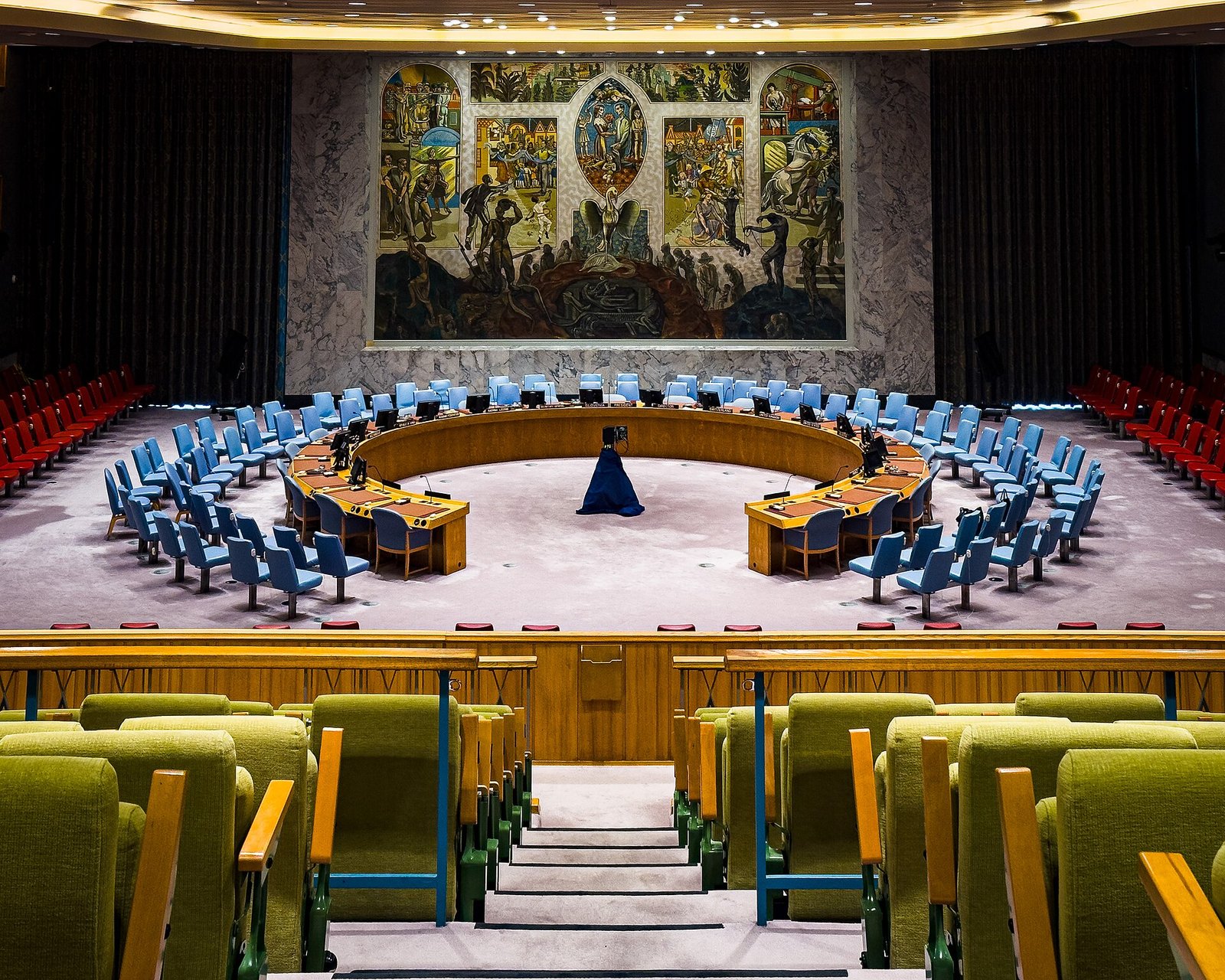
Russia’s invasion of Ukraine has again brought to the fore the inadequacy of the UN, and especially the Security Council, in preventing conflicts. Pope Francis’s call stood out in the reform debate.
Putin’s military operation against Ukraine has also reopened the debate on the structure of the United Nations (UN), the most important international organisation, founded to preserve world peace and security and to build economic, social and cultural cooperation among states.
One of the most resounding interventions on this subject came recently from Pope Francis.
The Italian newspaper La Stampa published excerpts from the Pope’s forthcoming book “I Ask You in the Name of God: Ten Prayers for a Future of Hope”.
Pope Francis’s Assessment
Stating that when they speak of peace and security on a global scale the first institution that should come to mind is the UN, and in particular the UN Security Council, the Pope said: “The war in Ukraine has once again clearly shown that the existing multilateral structure needs to find quicker and more effective solutions to conflicts.” Pope Francis stressed that times of war call for more multilateralism.
Noting that the UN was built on an agreement that humanity should never again live through the horrors of the two great wars of the first half of the 20th century, the Pope commented: “Today’s world is no longer the same. That is why these institutions need to be rethought so that they give the most effective response to the reality that exists, with the broadest possible consensus.”
The spiritual leader of the Catholics had touched on similar issues before. In 2015, for instance, he addressed the 70th UN General Assembly, said he expected greater efforts from world leaders on poverty, wars and environmental problems, and pointed out that the UN needed reform.
In that speech Pope Francis, who advocated the equal participation of all countries in decision-making on global problems, said that to fight poverty and inequality effectively the UN needed to undergo reform, above all the UN Security Council (UNSC) and its financial institutions.
Emphasising the concepts of pluralism and the limitation of power, the Pope also noted: “If the rules of the UN become a tool applied when it suits interests and avoided otherwise, uncontrolled powers will do great harm to defenceless people.”
Germany’s Approach
And yet with what ideals the UN had been founded. People who had witnessed all the suffering of war at close quarters were, no doubt, also those who best understood the value of peace. Willy Brandt’s speech to the UN General Assembly in 1973, as the first German chancellor to address it, for example, was a great moment for Germany.
The Federal Republic of Germany, and at the same time the German Democratic Republic, joined this community of nations, which had been founded in response to the devastation of the Second World War and Germany’s aggression. Admission to the UN was the most important sign of becoming part of the international community again. In his emotional speech Brandt said: “In a world in which everyone increasingly needs and depends on everyone else, no one can stand outside the policy of peace.”
More than 40 years on, these words have lost none of their relevance. They also show very clearly why the UN is one of the cornerstones of German foreign policy. For this institution, despite certain criticisms, offers a structure of international order without which the international community would fall back into a 19th century dominated directly by nation states. Since becoming part of the UN, Germany has followed this structure of order as its basis in matters of war and peace.
In this respect Germany, through its democratic institutions, its economic strength and its major contributions to maintaining international peace, is one of the countries that play the greatest role in enabling the UN to fulfil its functions.
Accordingly Germany, which after the US is the second-largest funder of the UN system including voluntary contributions, wants to be represented on the Council as a permanent member, as befits its position in the global arena, and is calling for reform.
The UN’s Increasingly Passive Stance in Recent Years
Today, as always, the UN is the principal actor expected to produce solutions to all the problems that arise in the international arena. Yet in recent years the UN has also been seen to grow increasingly passive. Figures such as Javier Pérez de Cuéllar, who served from 1982 to 1991, Boutros Boutros-Ghali, who served from 1992 to 1996, and Kofi Annan, who served from 1997 to 2006, were highly active as UN Secretaries-General. They shaped politics globally. They worked effectively for world peace. Although they were sharply criticised on some issues, such as the US operation in Iraq under Kofi Annan, it cannot be denied that they tried to pursue an active policy. In the following years, however, under Ban Ki-moon and then António Guterres, the UN began to adopt a very passive stance, particularly from 2007 onwards. As a result the UN came to be perceived as a symbolic institution with enormous potential but very little influence.
Meanwhile, in this period the world again began to face very serious problems. In many countries, including on the European continent, dictatorships returned to the stage and the winds of a new cold war began to blow. Refugee movements reached incredible proportions. Many cases reminiscent of genocide appeared, along with countries reaching the point of economic bankruptcy. Dictators again began living in palaces while their peoples went hungry. Capitalism reached an insatiable, savage dimension. Something like a modern form of slavery emerged, and as a result many problems arose, including the degradation of natural resources and the natural order and, with it, global warming. Of course, it would be too bold to point to the UN’s passive stance alone as the source of all these problems. But it is obvious that it contributed to them to some degree.
Germany’s long-standing efforts to reform the UN Security Council, in the belief that the veto power of the five permanent members, the US, Russia, China, the United Kingdom and France, does not reflect the balance of power of the 21st century, are also an indication of this.
We cannot know exactly what kind of world order awaits us in the future, but I think the current situation can be explained with the following example.
The emergency UNSC meeting on Ukraine, convened after Russia launched its operation in Ukraine in February 2022, was a session of historic firsts. The draft resolution submitted to the Council by the US and Albania was rejected by Russia’s veto. Yet what made the meeting remarkable was that Russia chaired the very meeting held against it.
At this session the permanent member Russia vetoed the draft resolution, which condemned in the strongest possible terms Russia’s attack on Ukraine and stressed that its military operation violated Article 2, paragraph 4 of the UN Charter. In the vote of the 15 members, 11 votes were cast in favour. The US, France, the UK, Albania, Brazil, Gabon, Ireland, Mexico, Norway, Ghana and Kenya voted yes, while China, India and the United Arab Emirates abstained.
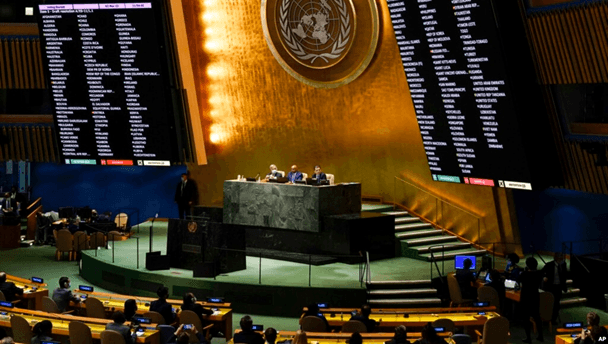
The UN General Assembly, which then convened, condemned Russia by a majority vote for its operation in Ukraine. But, as we all know, because of the UN’s current structure this had no effect.
In conclusion, we can safely say that the UN’s passive stance in recent years is unfortunately a reality. But the silence of the world’s leading policymakers cannot be a coincidence. Could this relative silence be the herald of an important change? In short, is the world slowly preparing for a new political order? Or will Russia’s operation in Ukraine, just like the 11 September attacks, change all the dynamics of international relations at their roots? It seems we will not have to wait long to find out.
What Change Can Be Foreseen in the UN Structure?
At this point, what change can be foreseen in the structure of the UN?
For example, the Russian Federation could be removed from the Security Council. The justification could be Russia’s open violation of the UN’s founding treaty and principles. In fact, whether it is right that the Russian Federation sits in this seat as the sole heir of the Soviet Union, when the original member of the Security Council was the Soviet Union, has been debated for years.
The other idea for change is the admission of a new permanent member to the Security Council, and in recent years the most important country to express this intention, directly or indirectly, has been Germany. Indeed, at the end of 2020, as Germany’s two-year non-permanent membership of the Security Council came to an end, Foreign Minister Heiko Maas stated this intention openly.
However, during their non-permanent membership of the Security Council in 2019–2020, German diplomats drew as much criticism as praise for their policies. Germany, for example, which was heavily criticised for its balancing act between trade and political relations and for staying passive so as not to lose world market share, has to overcome this problem. It often remains silent in the face of open human rights violations in many countries such as China or Turkey, or brushes the matter aside with a very mild condemnation. On the other hand, it was sharply criticised by Jewish advocacy organisations for its position on certain resolutions condemning Israel, and it was even claimed that its stance was reminiscent of “antisemitism”. These criticisms at times grew so fierce that Germany’s UN Ambassador Christoph Heusgen was named in 2019 by the Simon Wiesenthal Center, a Jewish advocacy organisation based in the US, among the world’s 10 leading antisemites (in the original wording: “one of the world’s top 10 anti-Semites”). In this context it may be assumed that whether Germany can overcome these prejudices and win the support of Jewish advocacy organisations, especially those influential in the United States, will also be an important determining factor.
ANNEX:
UN Charter Art. 2(3), 2(4)
2(3). All Members shall settle their international disputes by peaceful means in such a manner that international peace and security, and justice, are not endangered.
2(4). All Members shall refrain in their international relations from the threat or use of force against the territorial integrity or political independence of any state, or in any other manner inconsistent with the Purposes of the United Nations.
The views expressed in this article are the author’s own and do not necessarily reflect PUGAT’s institutional position. Editorial Principles
Monthly · free
Compass of the Month
PUGAT’s monthly newsletter.
Read next

What is PUGAT? A non-profit community publishing independent analysis from Europe on security, migration and society in Turkish, German and English.
Go to the homepage