
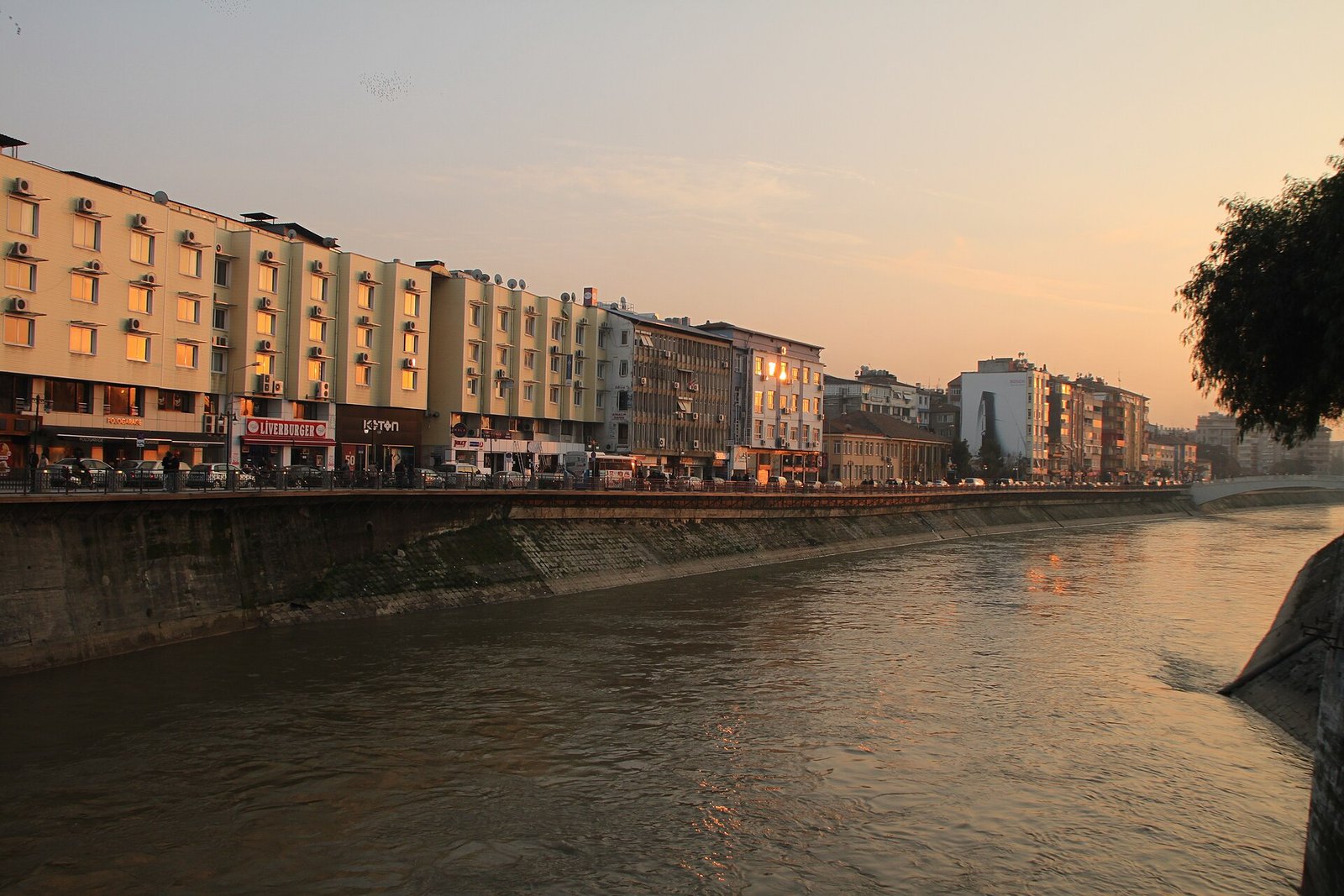
A 911-kilometre border, family ties and chronic crises: before 2002 Turkish–Syrian relations were shaped by the issues of Hatay, water and the PKK.
– Turkey’s Syria Policy –
Turkish–Syrian relations can be counted among relations whose historical roots run deep. The religious and socio-cultural ties inherited from history between the Republic of Turkey and the Syrian Arab Republic make this relationship different from those with the other neighbouring states in the region.
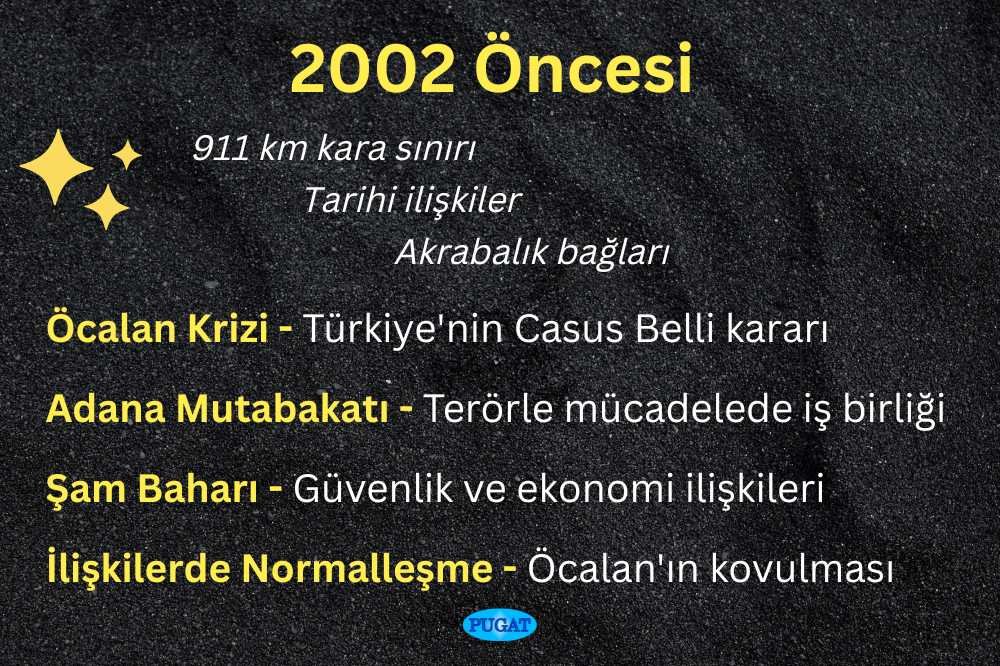
Although relations between the two neighbours, which share a 911-kilometre land border, have generally fluctuated over time, movement across the border, thanks to family ties, has always continued and is not peculiar to today’s Syrian migrants. Relations maintained through family ties, especially by people in the border region, took on new dimensions after 2011 with the arrival of Syrian migrants.
Despite all these human ties, however, Turkey regarded Syria as a hostile state because it hosted terrorism and laid claim to Turkish territory (Hatay), while Syria regarded Turkey as hostile because it did not share water resources fairly, interfered with Syria’s territorial integrity and supported the Western countries.
With Hatay joining Turkey in 1939 and, in the post-war world divided into blocs, Turkey and Syria seeing their interests in different blocs, developments in the Middle East also set the two countries against each other.[i] Tensions in Turkish–Syrian relations, sometimes visible and sometimes hidden but always present, gave rise to a new crisis when Syria under Hafez al-Assad hosted PKK training camps, Turkey then asked the Syrian government to close them, and Syria rejected the request.[ii]
The Öcalan Crisis
In 1998, after the PKK stepped up its terrorist attacks on Turkey from Syrian territory, the National Security Council decided that if Abdullah Öcalan continued to be allowed to stay in Syria, this would be regarded by Turkey as a cause for war (casus belli).
The words of the then Land Forces Commander General Atilla Ateş, speaking to the press on the Syrian border in Hatay, “We have run out of patience with Syria. If Turkey does not get the response it expects, it will be entitled to take all kinds of measures,” were influential in showing how serious the military bureaucracy was. Less than a month after this statement, on 9 October 1998, Abdullah Öcalan was forced to leave Syria.

The Adana Agreement
In this painful period, during which Turkey imposed certain embargoes on Syria, the Adana Agreement signed by the two countries on 20 October 1998, which provided for cooperation in the fight against terrorism, pulled them back from the brink of military conflict.
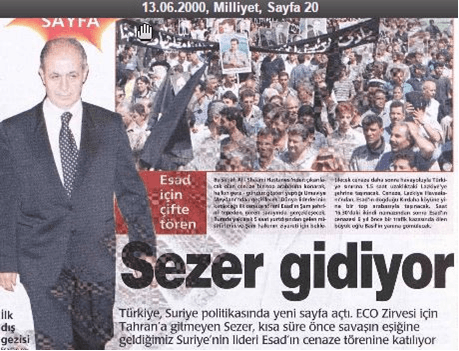
Relations, which began to improve with the Adana Protocol signed after the 1998 Öcalan crisis, improved further when President Ahmet Necdet Sezer attended Hafez al-Assad’s funeral in 2000.[iii]
What does the Adana Agreement contain?
1. On the basis of reciprocity, Syria will not permit any activity that originates from its territory and endangers Turkey’s security and stability. Syria will not permit weapons, logistical material or financial support to be supplied to the PKK on its territory, nor will it allow the PKK to carry out propaganda activities there.
2. Syria has recognised the PKK as a terrorist organisation. Along with other terrorist organisations, Syria has banned all activities of the PKK and its affiliates.
3. Syria will not allow the PKK to set up camps or facilities for training or shelter, or to engage in commercial activities on its territory.
4. Syria will not allow PKK members to use its territory for transit to third countries.
5. Syria will take all necessary measures to prevent the PKK leader from entering Syrian territory and will instruct all authorities at border points accordingly.
The Damascus Spring
Bashar al-Assad, who came to power in July 2000, launched in his first years a liberal opening in politics, the economy and society that Westerners called the “Damascus Spring”. This led Bashar al-Assad to pursue a more positive policy in relations with Turkey, and instead of emphasising issues that could lead to conflict, both countries looked for ways to develop cooperation.[iv]
The increase in mutual high-level visits between Syria and Turkey showed the political will of both countries to develop their relations. With the visit to Turkey by Syrian Interior Minister Harba on 26 September 2000, a healthy climate of dialogue emerged between the two countries. Relations were deepened through bilateral agreements in many fields, security first among them. Progress began to be made in relations on security, water and the economy.[v]
Normalisation of Relations
The ground softened by mutual visits of political figures later extended to the military sphere as well. The Syrian military delegation that paid two official visits to Turkey in 2001 took the first step towards a strategic change in the region. Turkey, for its part, wishing to give the impression that it was beginning to bring a little balance to its previously Israel-centred regional policies, and considering the effect this would have on building trust between the two sides, announced that joint military exercises might come onto the agenda in the following years. Thus, in the time that had passed since Öcalan’s expulsion from Syria, Syrian–Turkish relations had begun to return to normal in almost every field.[vi]
(To be continued)
[i] Duran, Hasan, ‘Adana Protokolü Sonrası Türkiye-Suriye İlişkileri’, Ortadoğu Yıllığı 2011, p.508
[ii]Serdar, İskender, Sosyal Araştırmalar ve Davranış Bilimleri Dergisi, dergipark.org.tr, p. 12 (accessed 10.09.2022)
[iii] Salık, Nuri, ‘Beşar Esad Dönemi Suriye Dış Politikasında Pragmatizm ve Türkiye-Suriye İlişkilerinin Geleceği’ Ortadoğu Analiz/November 2011, Vol. 2, No. 35
[iv] Arı, Tayyar, ‘Geçmişten Günümüze Ortadoğu: Siyaset, Savaş ve Diplomasi’, (2008) p. 638.
[v]Karabulut, Umut, Erzılmaz, Engin, ‘PKK Terör Örgütü ve Türkiye-Suriye İlişkilerine Etkileri’ (1991-2003). p.35
[vi]Duran, Hasan, op. cit. p.510
The views expressed in this article are the author’s own and do not necessarily reflect PUGAT’s institutional position. Editorial Principles
Monthly · free
Compass of the Month
PUGAT’s monthly newsletter.
Read next


What is PUGAT? A non-profit community publishing independent analysis from Europe on security, migration and society in Turkish, German and English.
Go to the homepage