
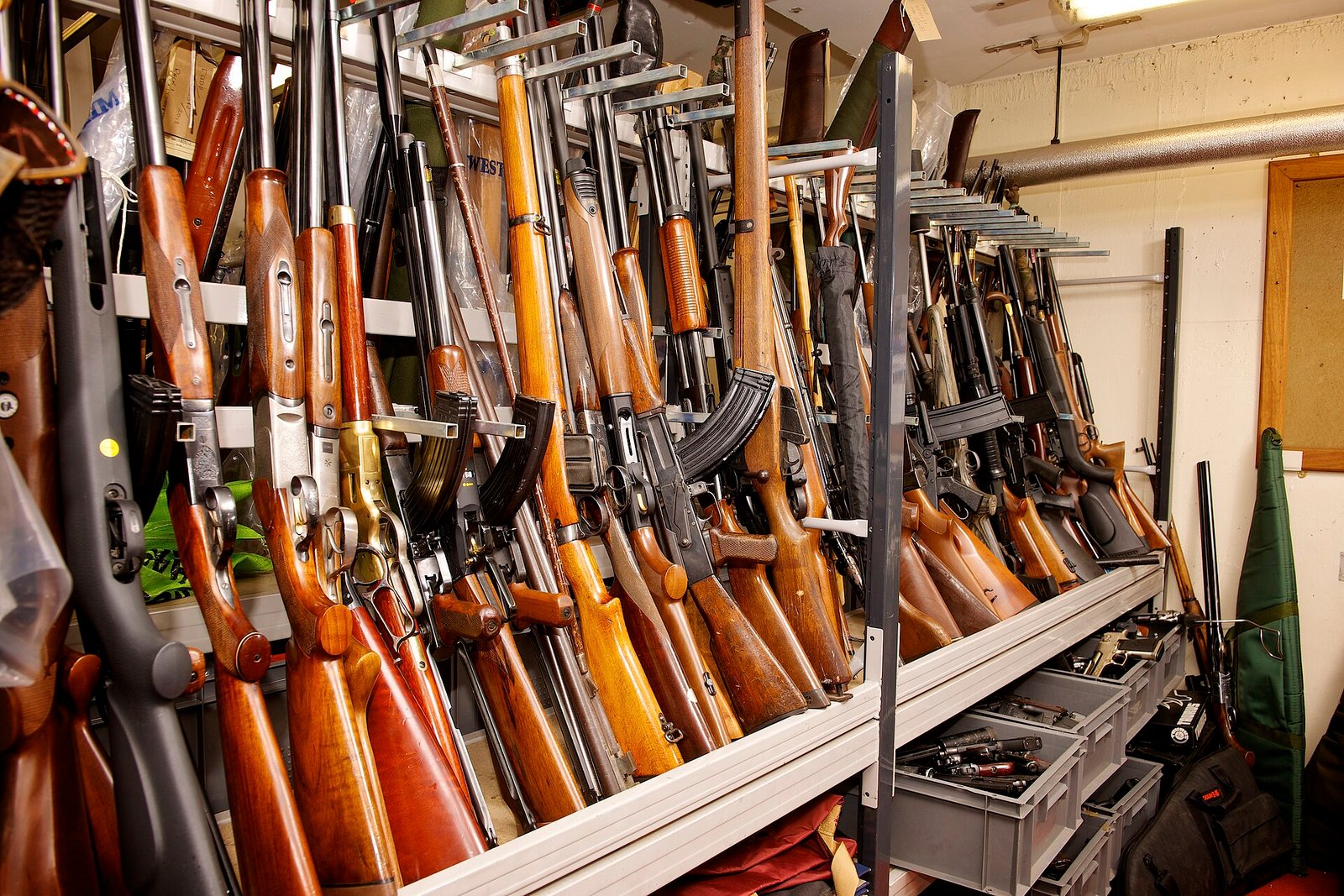
From the MİT trucks to specialist sergeants caught at a border gate: Syria-linked arms smuggling and incidents involving public officials.
Turkey–Syria Criminal Links | 5
Many illegal activities related to Syria-linked arms smuggling have been reported in the press. That public officials are sometimes involved in these activities is a very grave matter. Beyond individual cases, there are also allegations about large shipments, for example the incident known to the public as the “MİT trucks”. In the incidents in which “MİT trucks were stopped” in the Kırıkhan district of Hatay on 1 January 2014 and in the Ceyhan district of Adana on 19 January 2014, it was alleged that Turkey was sending weapons to illegal organisations in Syria.
On 29 May 2015 the newspaper Cumhuriyet ran the headline “Here are the weapons Erdoğan said did not exist”. The report shared photographs and information from the operation in which three trucks were stopped on 19 January 2014. It alleged that weapons and jihadists were being sent to groups in Syria with these trucks, and as evidence it presented footage said to have been taken from the prosecution file.

After the footage published by Cumhuriyet in May 2015, the People’s Liberation Party (HKP), which argued that the AKP government had committed “war crimes, aggression and crimes against humanity”, took the matter to The Hague and filed a criminal complaint against certain public officials with the International Criminal Court.
The subject is a very sensitive one with the potential to have major political and legal consequences. It should therefore be examined in a separate file of its own.
It is worth including two individual examples of arms smuggling here. The first, as it was reported in the press, is as follows: during checks at the Çıldıroba border gate in Kilis, long-barrelled weapons, a pistol and a large amount of ammunition were found in the suitcases and bags of two specialist sergeants serving in Syria. The two sergeants were detained. A search of their three suitcases and bags turned up 23 Kalashnikov rifles, 32 Kalashnikov magazines, 1,435 rounds of Kalashnikov ammunition, one round of machine-gun ammunition, one pistol and three 5.56 mm cartridges.

The other report concerns arms smuggling from Syria in an official vehicle: acting on a tip-off, teams of the Karkamış Customs Enforcement Anti-Smuggling and Intelligence Regional Directorate stopped a minibus coming from Syria to enter Turkey. Searching the service vehicle, said to belong to the Provincial Health Directorate, customs officers found 13 long-barrelled Kalashnikov rifles packed in sacks, 22 magazines for these weapons and 195 bullets.
Another important development was the information that emerged after the capture of former soldier and MİT member Nuri Gökhan Bozkır. The headline in the German press read: “Erdoğan wants to silence Bozkır, who knows about the illegal arms trade.”
The German investigative journalism platform Correctiv published an extensive analysis of former special forces member Nuri Gökhan Bozkır, who MİT announced had been brought to Turkey from Ukraine. The report noted that AKP Chairman and President Recep T. Erdoğan was trying to silence everyone who knew something about the arms shipments made through MİT from Turkey to certain organisations in Syria and shared it, and that in this context he had made a particular effort to have Bozkır brought to Turkey. In summary, the analysis made the following points:
“As more and more weapons and ammunition went to the civil war in Syria via Turkey from 2011 onwards, Bozkır also got involved. Together with a partner, he set up a company to buy ammunition from former Soviet countries and South-Eastern Europe and bring it to Turkey. The Turkish secret service MİT organised the transport of the weapons Bozkır brought to Syria, to be passed on to groups backed by Turkey. When Bozkır was threatened with arrest over an arms shipment that came to light in 2015, he fled to Ukraine. He had been warned by his contacts in the Turkish state. The Turkish judiciary initially investigated violations of the law in connection with arms shipments to Syria. But in recent years, under the AKP government, the judiciary has largely lost its independence.
The Turkish government is taking action against those who know about the arms shipments to Syria. This applies, for example, to the trucks loaded with ammunition that prosecutors stopped at the Syrian border on 19 January 2014. About two dozen people who knew something about the delivery or wanted to clarify its background were sentenced to prison. They included journalists, a member of parliament, four prosecutors, a judge and more than a dozen soldiers. Can Dündar was sentenced to 27 years in prison for investigating the arms shipment. Dündar now lives in exile in Berlin. The Turkish state apparently used businessmen who also delivered civilian aid supplies to Syria, or former members of the Turkish army, for its arms deliveries to Syria. Many of these people fell out with their contacts in Turkey and fled abroad, such as the former soldier Serkan Kurtuluş, who is being held in Argentina. Kurtuluş is said to have handled the distribution of Turkish weapons to civil war groups in Syria for the Turkish secret service. Kurtuluş initially fled to Georgia. His continuing flight from the Turkish state took him as far as South America. He was arrested in Argentina in 2020. Turkey had requested his extradition.”
The views expressed in this article are the author’s own and do not necessarily reflect PUGAT’s institutional position. Editorial Principles
Monthly · free
Compass of the Month
PUGAT’s monthly newsletter.
Read next

What is PUGAT? A non-profit community publishing independent analysis from Europe on security, migration and society in Turkish, German and English.
Go to the homepage