

Migrant, irregular migrant, refugee, asylum seeker, conditional refugee… These concepts are used interchangeably in everyday language, yet in law they mean different rights and obligations.
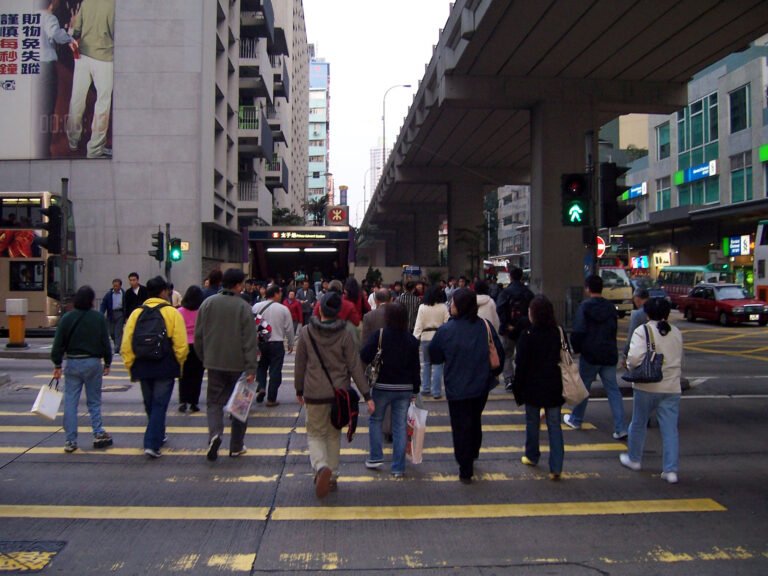
Image: Eweht / Wikimedia Commons, CC BY-SA 4.0
We continue explaining the basic concepts related to migration!
Migrant
In the broad sense, a migrant is a person who voluntarily leaves their own country and moves to another country or region in order to achieve a better standard of living or fulfil their expectations for the future. Migrants mostly move not because of persecution or war but for economic, educational or family reasons. In international law, the concept of “migrant” can sometimes be used in a way that also covers asylum seekers and refugees. Migrants continue to enjoy the citizenship protection of their own country; in other words, if they wish to return, their country must accept them. It must be stressed that terms occasionally found in the media, such as “illegal migrant” or “illegal refugee”, are wrong and should not be used because they criminalise people’s status. Terms such as “irregular migrant” should be preferred instead.
Irregular Migrant
This term is used for a person who enters the destination country in breach of its legal entry conditions, stays beyond the period of their visa or residence permit, or has entered the country through illegal routes. For example, people who cross a border without a visa or who continue to stay in the country after their visa has expired are considered irregular migrants. Irregular status can sometimes arise without any intent on the person’s part (for example, through not knowing the procedures). It is critically important for migration advisers to give their clients accurate information about legal deadlines and procedures in order to protect them from this situation.
Refugee
This is the most important concept in the terminology of international protection. According to the 1951 Geneva Convention, a refugee is a person who, owing to a well-founded fear of being persecuted for reasons of race, religion, nationality, membership of a particular social group or political opinion, has left their country and is unwilling or unable to return. A person becomes a refugee as soon as they meet the criteria of international law; the decision of the competent authorities formally establishes and recognises this status. Under international law, refugees are protected by the principle of non-refoulement; in other words, they cannot be forcibly returned to a place where their lives are in danger. People granted refugee status can access rights such as education, work and health care in the country where they are and, in the long term, may even apply for citizenship (depending on the country’s legislation).
Note: Because Turkey is a party to the Geneva Convention with a geographical limitation, it does not grant refugee status to those coming from outside Europe and refers to them as “conditional refugees”. This leads to a different use of the concept of “refugee” among the public and in the media in Turkey. In the international context and in Europe, however, the concept of “refugee” is universally valid within the definition above.
Asylum Seeker
An asylum seeker is a person seeking international protection whose refugee status has not yet been officially recognised. In other words, a person who has applied for asylum to a country or to the United Nations and is awaiting the outcome is called an asylum seeker. Asylum seekers have the right to remain lawfully in the country until their application procedure is completed, and their fundamental rights are protected; during this process they cannot be forcibly returned to their countries. If the application succeeds, they may be granted refugee status or, where the conditions are met, another form of international protection; if it fails, they may have a right of appeal, or other forms of protection (such as subsidiary protection) may be considered. While the term “asylum seeker” is common in Europe and in the international literature, Turkey’s official legislation does not technically use the term “sığınmacı” (asylum seeker), speaking instead of an “applicant for international protection”; in this series, however, we will use “asylum seeker” for the sake of clarity.
Conditional Refugee
This concept is a status that arises from Turkey’s geographical limitation. People coming from outside Europe whose need for international protection is recognised are defined in Turkey as “conditional refugees” and are allowed to stay in Turkey until they are resettled in a third country. For example, people who come to Turkey from Iran, Iraq or Afghanistan and whose asylum applications are accepted are considered conditional refugees. There is no such geographical distinction in European countries; a person whose application is accepted receives refugee status or subsidiary protection status.
Subsidiary Protection
This is a protection status that some countries grant to people who do not meet the definition of a refugee but face a real risk of serious harm (torture, a war situation, etc.). In EU legislation it is referred to as subsidiary protection status, and holders of this status enjoy rights close to those of refugees.
Stateless Person
A stateless person is someone who is not recognised as a citizen by any state. Statelessness is also a significant problem in the field of migration, because stateless people face problems of legal protection and belonging. For example, some groups became stateless with the dissolution of the former Soviet Union. In international law, the 1954 Convention relating to the Status of Stateless Persons defines the rights of stateless people.
Expat (Expatriate)
Strictly speaking, an expat is also a migrant, since the word means a person living outside their own homeland. In practice, however, the term “expat” is generally used for employees of international companies, diplomatic staff or white-collar professionals. In Turkish, the word gurbetçi has historically been used especially for Turks working in Europe (for example, “Almancı”, literally “Germany Turk”). Today the term “expat” can be used for people who live and work in a foreign country (usually for a certain period) in a more elite framing than the concept of migrant.
Diaspora
A diaspora is the community of a country’s citizens who live in other countries and maintain their ties with it. For example, the Turkish diaspora refers to migrants of Turkish origin living in various parts of the world, above all in European countries. Diaspora communities play an important role in migrants’ economic and social relations with both their country of origin and their country of residence (remittances, cultural ties, lobbying activities, etc.). For migration advisers, diaspora networks are valuable for sharing information and opportunities.
Migrant Smuggling and Human Trafficking
These are two criminal phenomena linked to irregular migration. Smuggling is the illegal entry of people into a country with their consent, whereas human trafficking covers the recruitment, transport, transfer, harbouring or receipt of people by force, threat, deception or similar means for the purpose of exploitation. On irregular migration routes to Europe, both pose a serious problem.
Integration and Adaptation
These concepts, which describe the process by which migrants become part of the society they move to, will be discussed in detail in our later articles; in short, they describe migrants’ participation in the host society in areas such as language, employment and social acceptance.
***
Besides learning the basic concepts, it is also useful for anyone interested in migration to have a general knowledge of international migration law and its key legislation and of the national migration legislation of certain destination countries such as Germany and the Netherlands. We will also address this topic separately.
Sources
- IOM – Glossary on Migration publications.iom.int
- UNHCR unhcr.org
- Turkish Law No. 6458 on Foreigners and International Protection mevzuat.gov.tr
The views expressed in this article are the author’s own and do not necessarily reflect PUGAT’s institutional position. Editorial Principles
Monthly · free
Compass of the Month
PUGAT’s monthly newsletter.
Read next


What is PUGAT? A non-profit community publishing independent analysis from Europe on security, migration and society in Turkish, German and English.
Go to the homepage