
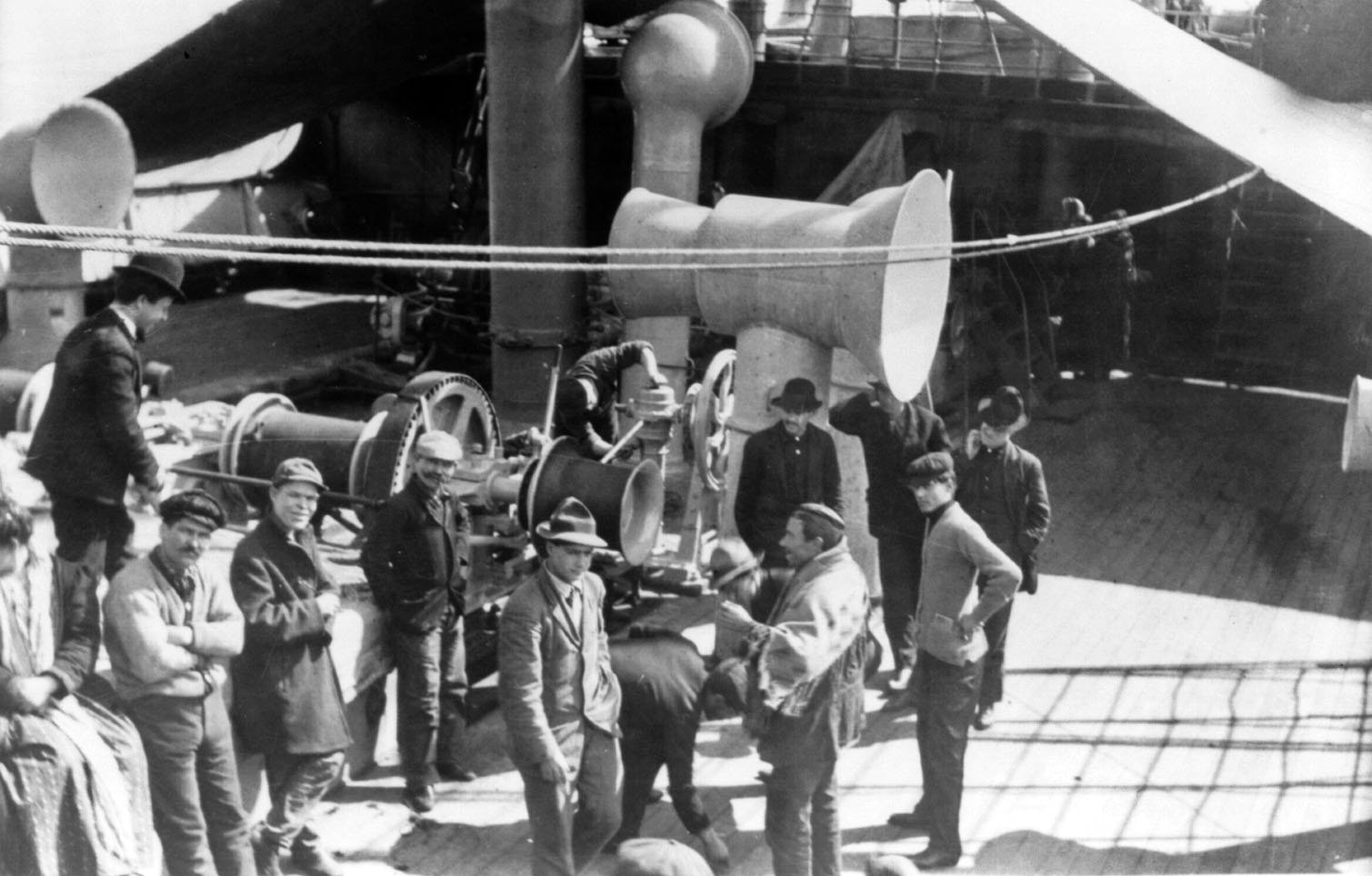
The human story of migration begins at birth and ends at death. The first article in the “Introduction to Migration” series looks at the definition and types of migration: internal and external, voluntary and forced, permanent and seasonal.
Image: George Grantham Bain Collection / Wikimedia Commons, Public domain
Anyone interested in migration from Turkey to Europe, or who wishes to engage with this field for any reason, should know the types and causes of migration, current global and European migration trends, the basic concepts, the legal framework and the policy dimensions.
In this series we will start with the definition of the concept of “migration” and its historical context. We will then look at the types of migration (external and internal migration; temporary and permanent migration; voluntary and forced migration, and so on) and the causes of migration. In our next article we will discuss the push and pull factors that influence migration decisions, as well as economic, social and political factors.
THE CONCEPT OF MIGRATION
In another article we said, “The World Is Built on Migration!” People’s migration stories begin in the mother’s womb and continue until they are laid on the funeral stone; between these two points, they are constantly migrating from one place to another. But what we mean here by migration is the movement of individuals or groups from where they are to another place (within the country or abroad) with the aim of settling there for a long period.
International migration, in turn, covers movements that cross a country’s borders.
As of 2024, there are around 304 million international migrants worldwide, equivalent to 3.8% of the world’s population. This number is truly remarkable and is growing day by day with modern transport and globalisation.
FORMS OF MIGRATION
As for the forms of migration, we can broadly classify them as follows:
- Internal Migration: The migration of people from one region to another within a country (such as rural–urban migration).
- External Migration (international migration): The migration of individuals to another country. Depending on the country of destination, they may be called immigrants or expats (expatriates).
- Voluntary Migration: People moving to another country of their own free will for reasons such as better living standards, education or job opportunities. For example, labour migration involves skilled workers going abroad for better opportunities. Education-based migration is students going abroad to study. Family reunification, which takes place for family reasons, also counts as voluntary migration.
- Forced Migration: Individuals being compelled to leave their country out of concern for their safety, for reasons such as war, internal conflict, natural disasters, political oppression or persecution. In this case the person often seeks asylum or applies for international protection (we will examine these concepts in more detail later).
- Seasonal Migration: Seasonal migration occurs when individuals migrate to another region or country for a certain period, usually to work in agriculture, tourism, construction or temporary industrial jobs. Because of the nature of the work, this type of migration is concentrated in certain months of the year, and migrants usually return to their countries of origin when the season ends. In Europe, for example, countries such as Poland, Spain and the Netherlands need seasonal migrants from Turkey, Morocco or Eastern Europe for agricultural work in the summer months. While this form of migration provides an economic opportunity for migrants, it helps to close labour shortages in destination countries in the short term.
In our next article we will discuss “The Causes of Migration”.
Sources
- UN DESA – International Migrant Stock 2024 un.org
- IOM – World Migration Report worldmigrationreport.iom.int
The views expressed in this article are the author’s own and do not necessarily reflect PUGAT’s institutional position. Editorial Principles
Monthly · free
Compass of the Month
PUGAT’s monthly newsletter.
Read next



What is PUGAT? A non-profit community publishing independent analysis from Europe on security, migration and society in Turkish, German and English.
Go to the homepage