
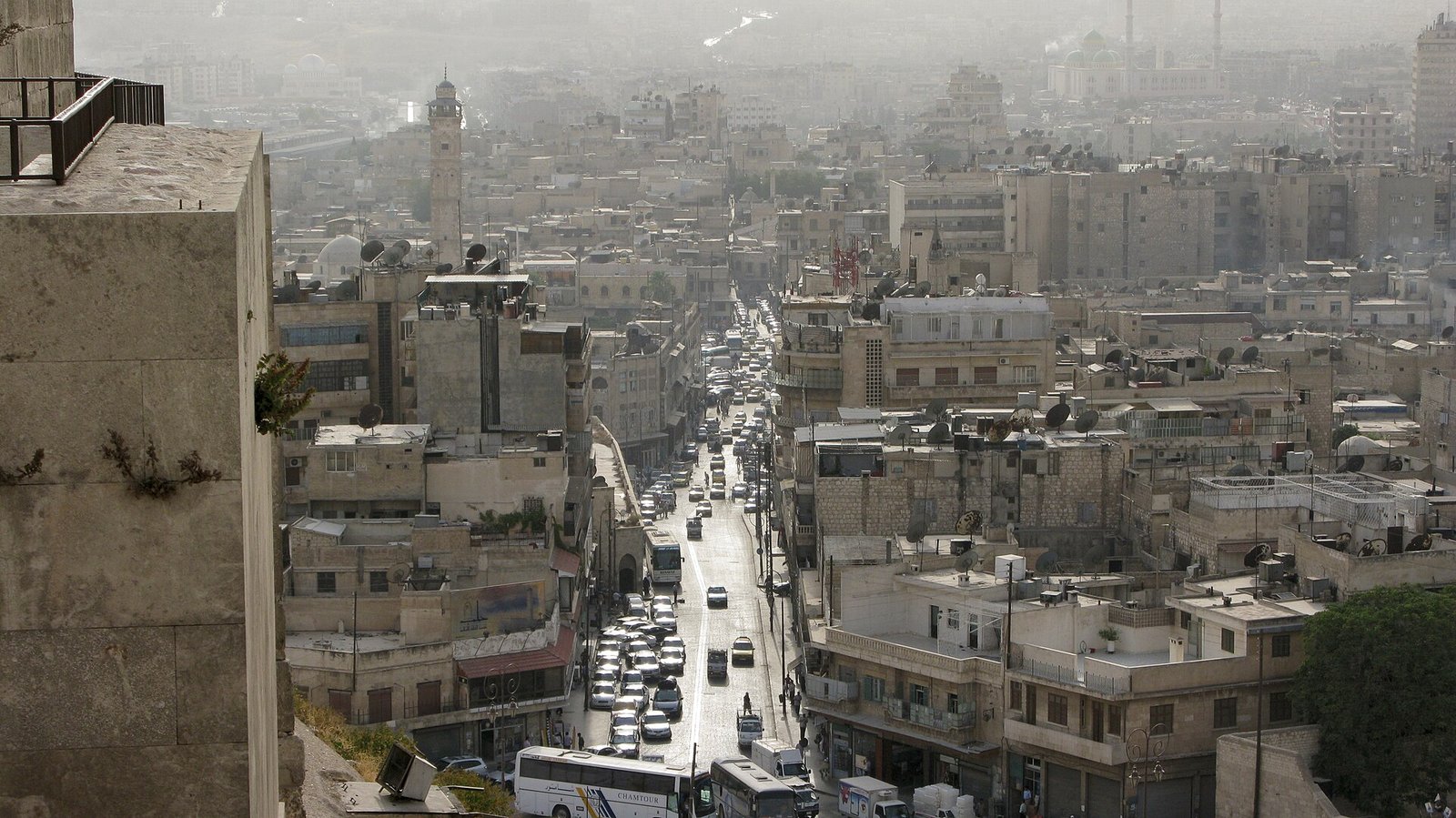
There are no winners in the war that has raged in Syria since 2011. Policies that misread the Arab Spring brought Turkey to a point where it contributes neither to ending the bloodshed nor to border security.
What Is Happening in Syria, What Is Turkey Doing? | 1
The war that has continued in Syria since 2011 has affected, and continues to affect, many countries in the world that have some connection with the Middle East, above all Syria’s neighbours. The policies towards Syria of the AKP, in power in Turkey since 2002, have served neither to stop the bloodshed nor to ensure border security.
The Arab Spring
In fact, nobody had been able to foresee that the process called the “Arab Spring” would affect Turkey to this extent. Yet when the first protests broke out in Tunisia in 2010, the fact that then Prime Minister Recep Tayyip Erdoğan conducted Turkey’s relations with Egypt through the Muslim Brotherhood organisation was already plainly a distorted policy in itself.
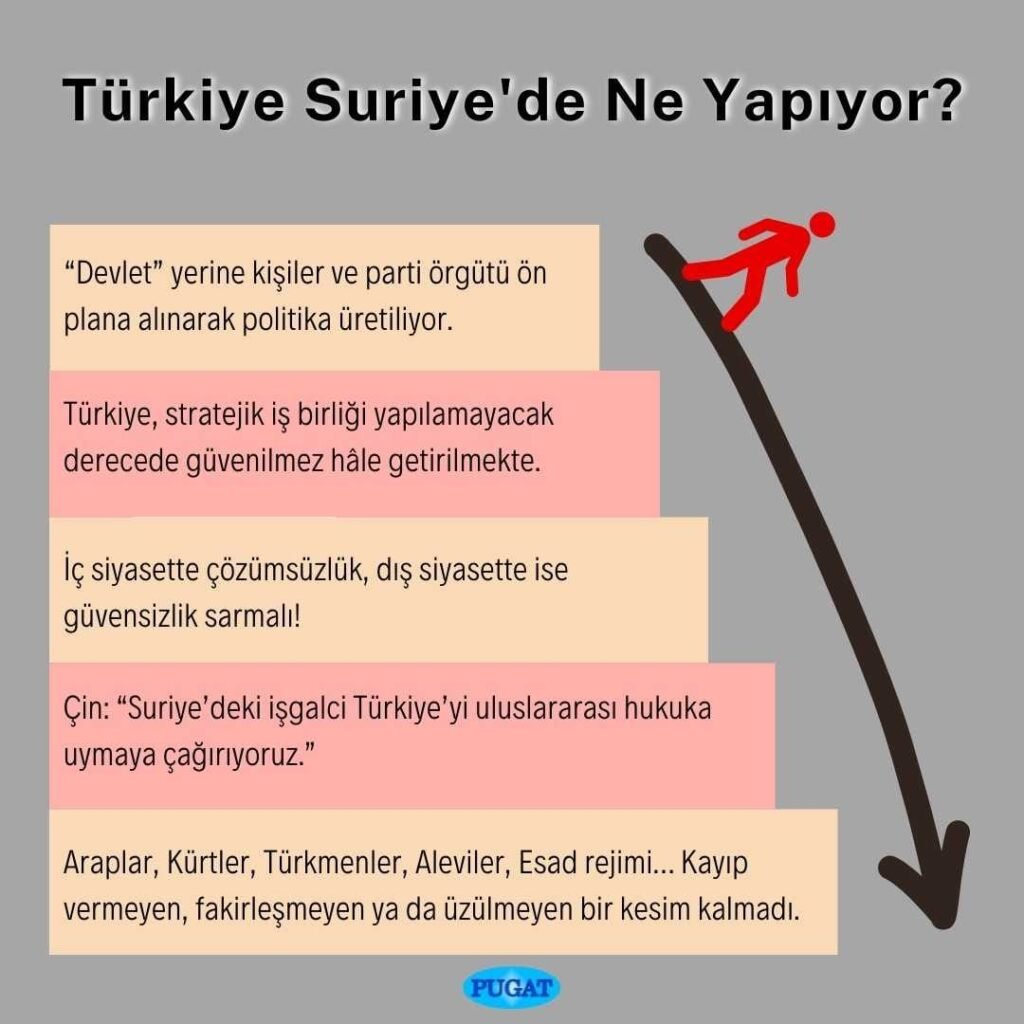
Making policy by putting individuals and the party organisation in the foreground instead of the “state”, the main actor in international relations, was the first sign of the troubles to come. Indeed, power in Egypt changed hands through a military coup. The Morsi government, with which the AKP government had developed special relations, was overthrown, and the Sisi government, against which hostile rhetoric was used, began to run the country.
This change of rhetoric became one of the important factors that deprived Turkey of the opportunity to be in a central position during the Arab Spring. Over time the bottleneck into which the Erdoğan government’s wrong Egypt policy had put Turkey became plainly visible, and it took on a new dimension in the war that broke out in Syria.
The Country Fanning the Flames
As things stand today, in the eyes of the world’s superpowers Turkey has become far from being a regional power in the shaping of Middle East and Syria policy, and so unreliable that no strategic cooperation can be undertaken with it. With the image of “the country fanning the flames” in the Syrian turmoil, which takes on a new dimension every day, it has fallen back to the position of an unwanted actor.
The efforts made to get out of this position were not enough. For Turkey, perhaps the country most affected, as a “neighbouring country”, by a regional turmoil with global consequences, failed to put the state’s collective wisdom to work. Because Erdoğan set out like a knight to run Syria policy almost through party programmes and intelligence games. And he still has not given this up.
The AKP government’s jingoistic rhetoric, very effective in domestic politics for gathering supporters or votes, disturbed and continues to disturb the countries of the region. The global powers ignored this for a while. But it was clear that this could not last very long.
Who Is the Neighbour?
The territory of northern Syria changed hands many times. Flags displaying all shades of ethnic and religious separatism kept flying south of our border. The scale of the destruction caused both in Turkey and in Syria by the AKP government, which set aside any concern to put out the flames right next to us and instead fanned the fire, became more visible by the day.
The problem we face today is now too broad to fit under the headings of a migrant crisis and border security alone. National interests were sacrificed to individual interests and party ambition. The people’s feelings of hospitality evolved into a drive of radical intolerance. A spiral of deadlock in domestic politics and insecurity in foreign policy set in. From now on the probability of Turkey facing all kinds of surprise losses over the Syria question is very high.
A War of Losers
In its 11th year, the Syria question has turned into a war with no winner. In fact, in describing this process it would be more accurate to use the verb “to lose” rather than “to win”. Yes, today the Syria question has become one with many losers.
The masses who have no power to intervene in what is happening, the groups that preserve their ethnic or ideological motivation, Arabs, Kurds, Turkmens, Alevis, the Assad regime… No group is happy at the end of this process. There is no group that has not suffered losses, become poorer or grieved.
The United Nations Security Council (UNSC)
The UNSC has not been able to adopt an effective resolution to be implemented in Syria to stop the war or carry out a humanitarian intervention. We can say that the fact that Russia and China pursue policies different from those of Western countries in developments in the region played a part in this. This has opened the way for the countries involved in developments in the region to act independently or in coalitions.
Oriental Cunning
In this process Turkey first became involved in developments on its border as part of the US and the Western coalition, but at times it also chose to act in line with Russia’s policies in the region. Indeed, in 2015, when Russia began to intervene actively in developments on Assad’s side, the AKP government pursued a very curious policy:
- Against Assad, the PKK/PYD and ISIS,
- On the side of the West, the US and at the same time Russia,
- And on the other hand, with the image of supporting many jihadist groups in the region, the government left the whole world bewildered.
This dual (even triple) approach, which could be called oriental cunning, was naturally found insincere by Western states. Indeed, the repercussions of the AKP government’s inconsistent policies were also voiced by the world’s countries at many international meetings.
For example, we can note here the words spoken by country representatives at the UNSC meeting held in October 2021, that is, ten years after the start of the Syrian civil war:
- China: “We call on Turkey, the occupier in Syria, to abide by international law.”
- Iran: “The foreign occupying troops in Syria must leave the country immediately.”
- Syria: “The Turkish occupation forces and the terrorists they use are obstructing humanitarian aid to the Syrian people.”
- Russia: “The Damascus government is fulfilling its obligations.”
- US: “The Syrian government is not sincere on the constitution.”
The words of Turkey’s Permanent Representative to the UN, Feridun Sinirlioğlu, in response to the accusations are far from satisfactory: “We do not need to take lessons from those who violate international humanitarian law.” For years the same arguments have been put forward, the same accusations and the same answers voiced, but nobody listens to anybody. A true dialogue of the deaf. So what are the parameters that have dragged Turkey into a “black” spot on the Syria question? The foreign service, MİT, NGOs, the Turkmens, the Free Syrian Army (FSA), Syrians in Turkey, jihadist structures such as ISIS and al-Nusra, the PKK-PYD… It is worth touching on each of them, if only briefly. But first we must seek an answer to the question of what is happening in Syria and what Turkey is trying to do there. Through which window does Turkey look at developments in neighbouring Syria? With which parameters does it seek a solution (!)?
The views expressed in this article are the author’s own and do not necessarily reflect PUGAT’s institutional position. Editorial Principles
Monthly · free
Compass of the Month
PUGAT’s monthly newsletter.
Read next

What is PUGAT? A non-profit community publishing independent analysis from Europe on security, migration and society in Turkish, German and English.
Go to the homepage