

In 2022 signals of a meeting with Assad began to come from Ankara. At the same time, preparations for a new cross-border operation were being made in full public view.
– Turkey’s Syria Policy –
By 2022, some signals began to emerge that relations between the two countries might improve. For example, at the press conference after the Prague Summit, President Erdoğan, asked whether there would be a meeting with Assad in Syria, replied “I cannot say it is impossible; when the time comes, we may meet”, and thus gave an important signal in this direction.
Meanwhile, in February 2022, US President Joe Biden announced that US forces had killed the Daesh leader Abu Ibrahim al-Hashimi al-Qurashi in an operation in Syria. The government in Turkey thereupon found a basis for its claims that it was right internationally in its Syria policy and, in particular, that there was nothing contrary to international law in the cross-border operations carried out inside Syria’s borders.
Immediately afterwards it stepped up its preparations for a new operation. It began to use all its propaganda channels to convince the public at home and abroad.
(There is a point worth stressing here: announcing a military operation so recklessly runs counter to the principles of military operations and strategy. But since the children of no politician or well-off section of society in Turkey serve in dangerous areas or run the risk of being killed, this is not given much importance. Since this is a complex sociological issue that needs to be assessed in its own right, it requires separate attention.)
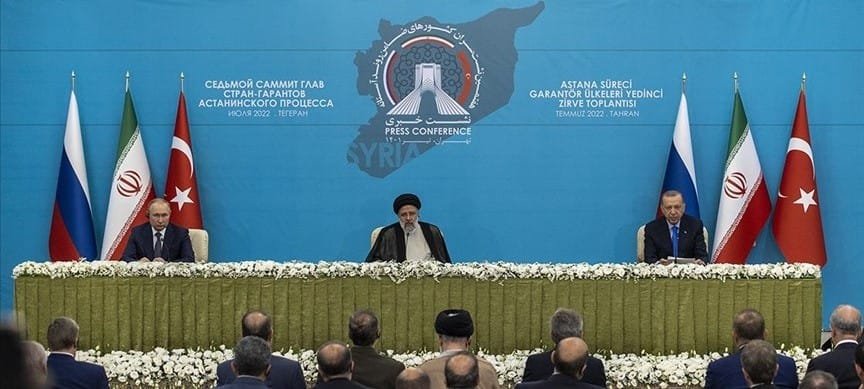
However, Turkey, which very clearly seemed eager for a new operation into Syria until the Tehran summit, had to change its plans when it failed to obtain consent from Iran and Russia.
Assad’s Five Demands of Erdoğan
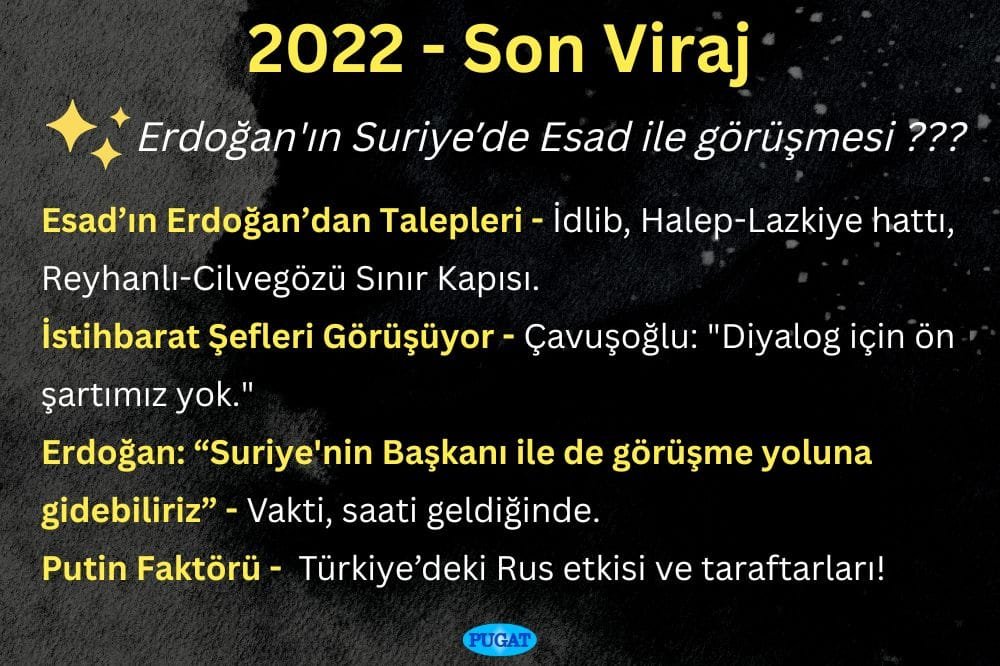
In the following days, after Erdoğan stepped back from the anti-Assad policy he had pursued in the Syrian civil war that began eleven years earlier, the Damascus government also announced its own conditions. In this context, while it was claimed that Erdoğan would speak with Syrian leader Bashar al-Assad by telephone, the government-controlled newspaper Türkiye wrote that Assad had five demands of Erdoğan.

The published report listed the conditions allegedly put forward by the Damascus government as follows:
- The return of Idlib to the control of the Syrian government,
- The handover of the Reyhanlı–Cilvegözü border gate and the Kassab customs post to the Damascus government,
- A trade corridor between Cilvegözü and Damascus,
- Full control by Damascus of the strategic transport corridor known as the M4, on the Deir ez-Zor–Hasakah and Aleppo–Latakia line in eastern Syria,
- Turkish support for lifting European and US sanctions on bureaucrats, businesspeople and companies backing the Assad government.
The Intelligence Chiefs Are Talking
At this point it can be seen that the intelligence units of the two countries are talking and that a permanent channel of communication is open. That MİT President Hakan Fidan has recently held numerous meetings with his Syrian counterpart Ali Mamlouk has been openly reported by many media outlets. Foreign Minister Mevlüt Çavuşoğlu also said that there were contacts between the Syrian and Turkish intelligence organisations and that there were no preconditions for a possible dialogue with Syria.
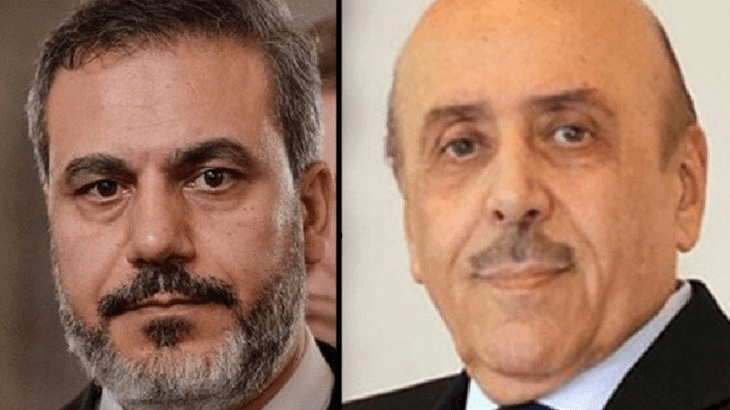
After President Erdoğan’s latest statements giving the green light to a meeting with Syrian President Bashar al-Assad, while debate continues over which topics Ankara and the Damascus government are addressing and whether they can reach agreement, the process is expected to take shape according to the outcome of the intelligence talks.
Turkey, which cut ties with the Assad regime in the civil war that began in Syria in 2011 and gave strong support to Syrian opposition groups, now wants to repair relations with the Damascus government over time, as part of the foreign policy openings it has made with other countries as geopolitical balances change, and also under the influence of domestic political considerations. (Update: the Assad regime was overthrown on 8 December 2024; the expected meeting between Erdoğan and Assad never took place.)
Erdoğan: “We may also go down the road of meeting the President of Syria”
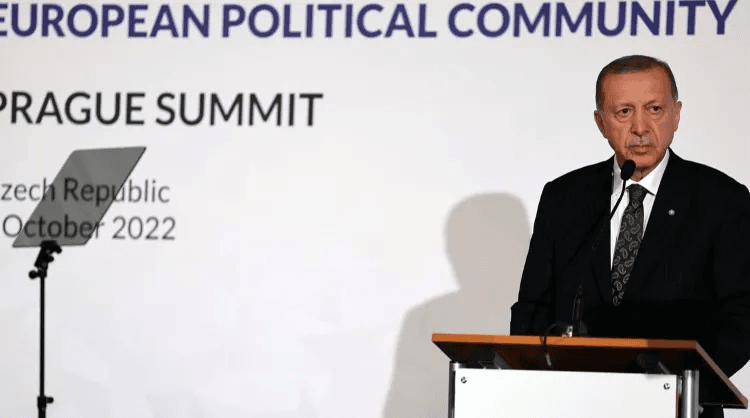
At the press conference held after the first meeting of the European Political Community in Prague, Erdoğan replied to a journalist’s question “Is it possible for you to have a meeting with the Syrian President?” with “As of now, of course, there is no such thing on the agenda. But I would not use an expression like it is impossible… I am not a conventional politician. So when the time and the hour come, we may also go down the road of meeting the President of Syria.”
Assessments made in the light of the information available show that both countries have expectations of the other side and that possible developments in relations depend on the steps taken on these issues. On the other hand, progress in relations may not necessarily lead to a meeting of the leaders; instead there could be a meeting at ministerial level.
The Putin Factor
The difficulty of predicting the future of the process and of relations, however, has to do with the situation of Putin, one of the key actors in the equation. It is a fact that Putin, held responsible for many deaths both in his own country and internationally, is going through hard times. But Russian influence and its supporters in Syria and in Turkey should never be underestimated.
Before finishing, it is worth noting the following as a clue: to predict the direction of Turkey’s Syria policy, it is enough to glance at the government-controlled media. If the Syrian president’s name is given as Esad, one can roughly infer a search for dialogue; if it is given as Esed, that the government needs confrontation and a change of agenda.
(End of Part 1)
(Part 2: What Is Happening in Syria, What Is Turkey Doing – to be continued)
The views expressed in this article are the author’s own and do not necessarily reflect PUGAT’s institutional position. Editorial Principles
Monthly · free
Compass of the Month
PUGAT’s monthly newsletter.
Read next


What is PUGAT? A non-profit community publishing independent analysis from Europe on security, migration and society in Turkish, German and English.
Go to the homepage